Love this? Save it for later!
Share the inspiration with your friends
Introduction
“You won’t believe this bread lasted almost a week fresh!” my friend László exclaimed, holding up a golden loaf with that unmistakable braided charm. I had just arrived at his countryside home outside Budapest on a chilly spring morning, hoping to learn a thing or two about traditional Hungarian baking. Kalács, the sweet milk bread loaf that lasts, was exactly what I needed after a few failed attempts at soft breads that turned out dry or crumbly.
It turns out, this isn’t just any bread. Kalács carries stories in every tender bite—of lazy Sunday breakfasts, of neighbors stopping by unannounced, and of a recipe passed down by László’s great-grandmother, scribbled in fading ink on a yellowed card. I remember the way the dough felt silky under my fingers, the smell of warm vanilla and sugar filling the kitchen as it baked, and the gentle hum of the radio playing somewhere in the background. Honestly, it was one of those rare moments when cooking felt like pure magic.
Maybe you’ve been there too—craving something soft and lightly sweetened, perfect for dipping in coffee or slathering with butter. That’s why I’m excited to share this tender Hungarian Kalács sweet milk bread loaf recipe with you. It’s an easy homemade bread that lasts longer than you’d expect, making it perfect for busy mornings or a cozy afternoon treat. I’ve tweaked it just a bit to fit a modern kitchen while keeping all the soul and comfort of the original.
Let me tell you, once you try this kalács, you might just find yourself baking it over and over again. It’s that kind of bread.
Why You’ll Love This Recipe
- Quick & Easy: Comes together in about 3 hours including rising time—perfect for a weekend project or a special breakfast treat.
- Simple Ingredients: Uses pantry staples like milk, eggs, and flour—no need for fancy shopping trips.
- Perfect for Celebrations: Traditional enough for holidays, yet simple enough for everyday enjoyment.
- Crowd-Pleaser: The soft, slightly sweet crumb wins over kids and adults alike, whether for sandwiches or just on its own.
- Unbelievably Delicious: The tender texture and subtle vanilla notes make each slice melt in your mouth.
- Unique Technique: The gentle braiding and milk-enriched dough create a loaf that stays fresh and soft for days.
This isn’t your average sweet bread recipe. It’s the kind of homemade bread that feels like a warm hug on a plate. Whether you’re new to bread baking or a seasoned pro, this kalács is forgiving, rewarding, and downright addictive. Honestly, I keep it on my baking list for those times I want comfort food that doesn’t vanish in a day.
What Ingredients You Will Need
This recipe uses simple, wholesome ingredients to deliver that tender crumb and subtle sweetness without fuss. Most are pantry staples you likely already have, and a few tips on choosing them will help your kalács come out perfect every time.
- All-purpose flour (500g / 4 cups) – I prefer King Arthur for consistent results, but any good-quality flour works.
- Whole milk (240ml / 1 cup), warmed – Adds richness and tenderness.
- Granulated sugar (75g / 1/3 cup) – Just enough to sweeten without overpowering.
- Active dry yeast (7g / 2 1/4 tsp) – Fresh yeast works too, but dry is easier to store.
- Unsalted butter (60g / 4 tbsp), softened – Adds moisture and flavor.
- Large eggs (2), room temperature – For structure and richness.
- Vanilla extract (1 tsp) – The secret to that warm, inviting aroma.
- Salt (1 tsp) – Balances sweetness and enhances flavor.
- Egg wash (1 egg beaten with 1 tbsp water) – For that shiny, golden crust.
- Optional: Poppy seeds or sesame seeds – Sprinkled on top for traditional flair.
If you want to swap out dairy, almond or oat milk works fine but might alter the tenderness slightly. For a gluten-free version, try a blend designed for yeast breads, but results will vary. I’ve kept the ingredients straightforward so you can bake this kalács anytime without hunting down rare items, but don’t skip the vanilla—it really makes a difference!
Equipment Needed

- Mixing bowls: One large for dough mixing, preferably glass or stainless steel.
- Measuring cups and spoons: For precise ingredient amounts.
- Stand mixer with dough hook (optional): Makes kneading easier, but hand kneading works just fine.
- Baking sheet or loaf pan: Loaf pan for traditional shape; baking sheet if you want a more rustic look.
- Clean kitchen towel or plastic wrap: To cover dough during rising.
- Pastry brush: For applying egg wash evenly.
I used a simple 9×5 inch loaf pan for neat braids, but I also love the rustic charm of free-form loaves on a baking sheet. If you don’t have a stand mixer, no worries—this dough is soft and manageable enough for hand kneading. Just be prepared for a bit of a workout! Also, keeping your butter softened but not melted is key for the right dough texture. If you don’t have a pastry brush, you can use a clean spoon or even your fingers (though less even!).
Preparation Method
- Activate the yeast: In a small bowl, combine warm milk (about 110°F / 43°C) with sugar and yeast. Stir gently and let sit for 5-10 minutes until foamy. If it doesn’t foam, your yeast might be expired—try again with fresh yeast.
- Mix the dough: In a large bowl or stand mixer, whisk together flour and salt. Add softened butter, eggs, vanilla extract, and the foamy yeast mixture. Mix until the dough starts to come together, about 3-4 minutes on low speed or by hand with a wooden spoon.
- Knead the dough: Knead on a lightly floured surface for 8-10 minutes until smooth and elastic. The dough should be soft but not sticky. If it’s too sticky, sprinkle a little more flour; if too dry, add a teaspoon of milk.
- First rise: Place the dough in a lightly greased bowl, cover with a towel or plastic wrap, and let it rise in a warm spot for 1 to 1.5 hours until doubled in size. I like to set mine near the oven while it preheats.
- Shape the loaf: Punch down the dough and divide it into three equal strands. Roll each into a 16-inch (40 cm) rope. Braid the strands loosely, pinch the ends to seal, and tuck them under to form a neat loaf. Place it seam-side down in your greased loaf pan or on a parchment-lined baking sheet.
- Second rise: Cover again and let the braided dough rise for another 45-60 minutes until puffy but not over-proofed (it should spring back slowly when poked).
- Preheat the oven: Set to 350°F (175°C) about 20 minutes before baking.
- Apply egg wash and add seeds: Brush the loaf gently with the egg wash for that glossy finish. Sprinkle poppy or sesame seeds if desired.
- Bake: Bake for 30-35 minutes until golden brown and hollow-sounding when tapped. If the crust browns too fast, tent loosely with foil halfway through baking.
- Cool: Transfer the loaf to a wire rack and cool completely before slicing. This step is crucial for the perfect crumb texture.
Pro tip: Don’t rush the rising stages—good bread needs patience. I once got distracted by a phone call during the second rise and ended up with a slightly over-proofed loaf, which was still tasty but a bit denser. Also, the egg wash makes a huge difference in appearance, so don’t skip it! Feel the dough as you knead—it should feel soft and springy, like a gentle pillow.
Cooking Tips & Techniques
One key to this kalács’s tender crumb is the milk—warm, but not hot—to activate the yeast without killing it. When I first tried this recipe, I overheated the milk and ended up with dough that barely rose. Lesson learned!
Use unsalted butter so you can control the salt level yourself. Salt is essential but too much can slow yeast activity.
When braiding, keep the strands even and don’t pull too tight—this helps the bread stay soft and airy after baking.
Timing is everything: let the dough rise until doubled, not more. Over-proofing makes the bread collapse or become gummy inside.
If you’re multitasking, prepare the yeast mixture first and let it bloom while gathering your other ingredients. This saves time and ensures the yeast is alive and kicking.
Finally, cooling the loaf fully before slicing prevents a gummy, doughy texture. I know it’s tempting to dig in immediately, but trust me on this one.
Variations & Adaptations
- Nutty Kalács: Add 1/3 cup chopped walnuts or almonds to the dough for a crunchy surprise.
- Chocolate Swirl: Spread softened chocolate hazelnut spread inside the strands before braiding for a decadent twist.
- Gluten-Free Version: Use a gluten-free flour blend with xanthan gum. Note that texture will be different but still delicious.
- Dairy-Free Adaptation: Swap whole milk with coconut or almond milk, and use vegan butter for a plant-based loaf.
- Seasonal Fruits: Fold in dried cranberries or raisins during kneading for a fruity touch.
Once, I tried a version with orange zest and a sprinkle of cardamom—it was a lovely nod to Hungarian flavors and a hit with friends. Feel free to experiment within the framework of this recipe to find your own favorite.
Serving & Storage Suggestions
Serve kalács slightly warm or at room temperature, sliced thick with butter, jam, or honey. It pairs beautifully with morning coffee or afternoon tea. For a heartier snack, spread cream cheese or layer with smoked salmon and fresh herbs.
Store the bread wrapped tightly in plastic or a bread box at room temperature for up to 4 days. For longer storage, slice and freeze in an airtight bag for up to 3 months. Thaw slices at room temperature or toast them directly from frozen.
Reheating kalács in a low oven (300°F / 150°C) for 5-7 minutes refreshes the crust and softens the crumb. Flavors deepen over time, so leftovers often taste better the next day.
Nutritional Information & Benefits
This tender Hungarian Kalács sweet milk bread loaf provides about 200 calories per 2-inch (50g) slice, with moderate protein and fat from eggs and butter. Milk enriches the bread with calcium and vitamin D, while the moderate sugar content offers just a touch of sweetness without going overboard.
While not a low-carb option, it’s a wholesome treat that fits nicely into a balanced diet when enjoyed in moderation. For those with dairy sensitivities, alternatives like almond milk make it more accessible.
From a wellness perspective, homemade bread like this avoids preservatives found in store-bought loaves, giving you control over ingredients and freshness. Plus, the satisfaction of baking from scratch is a mental boost all on its own!
Conclusion
This tender Hungarian Kalács sweet milk bread loaf recipe is a little piece of baking joy that lasts beyond the first slice. Whether you’re new to bread or looking for a reliable homemade loaf that stays soft and flavorful, this recipe has you covered.
Feel free to tweak it to your taste—maybe a sprinkle of seeds, a swirl of chocolate, or a handful of nuts. I love it plain and simple, but there’s room for creativity here. Honestly, it’s become my go-to when I want something comforting that doesn’t disappear in a flash.
Give it a try, and let me know how your kalács turns out. Share your tweaks, questions, or that moment when you realized homemade bread isn’t as scary as it seems. Happy baking!
FAQs About Tender Hungarian Kalács Sweet Milk Bread Loaf
- Can I make kalács without a stand mixer? Absolutely! This dough is soft and manageable enough for hand kneading. Just give it a good 8-10 minutes of kneading on a floured surface.
- How long does kalács stay fresh? When stored properly at room temperature, it stays soft and fresh for about 4 days. You can freeze slices for up to 3 months.
- Can I use instant yeast instead of active dry yeast? Yes, just reduce the amount slightly (about 2 teaspoons) and mix it directly with the dry ingredients.
- What’s the best way to shape the braid? Divide the dough into three equal ropes and braid loosely, pinching the ends and tucking them underneath for a neat loaf.
- Is kalács suitable for vegans? Traditional kalács uses eggs and butter, but you can try plant-based milks and vegan butter substitutes, though texture will differ.
Pin This Recipe!
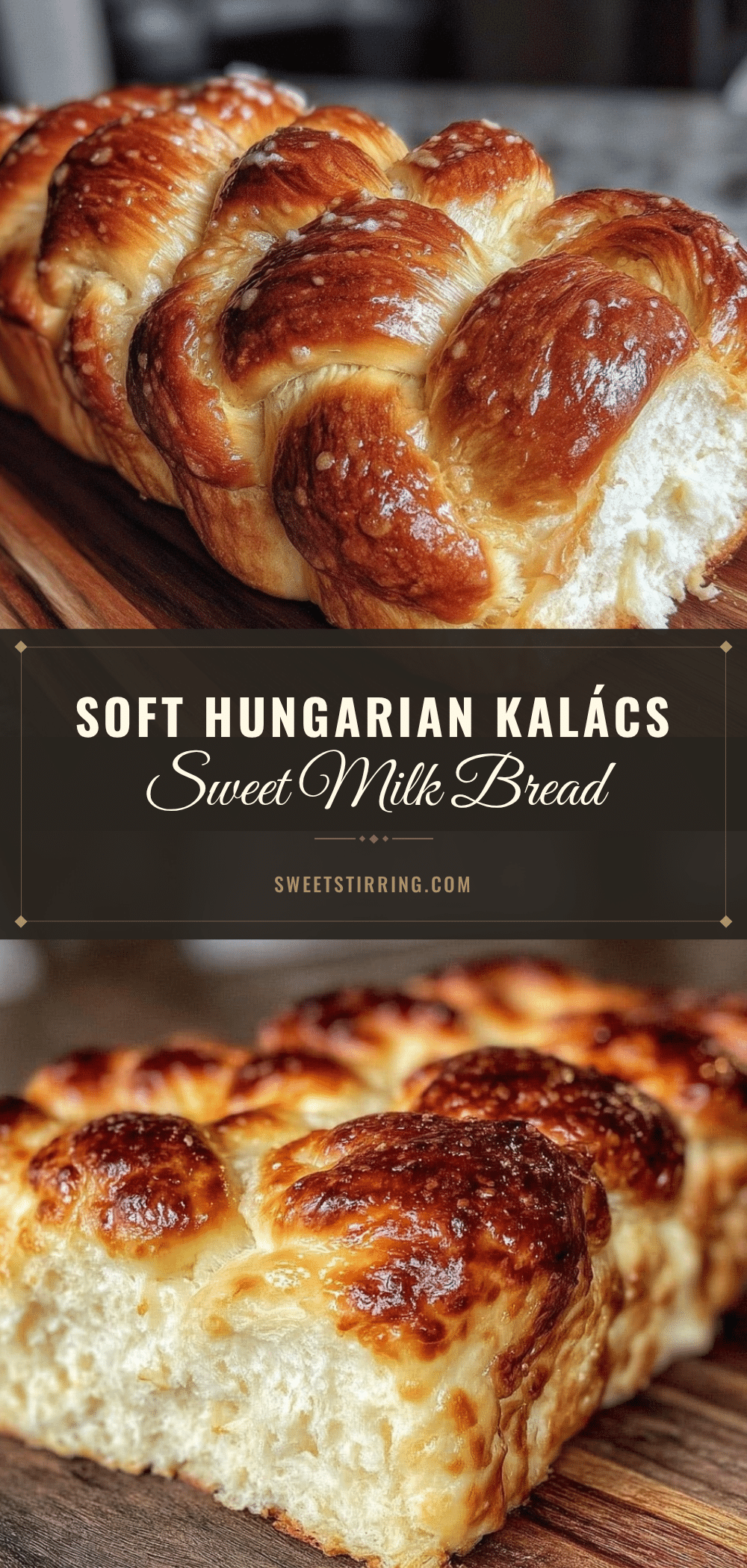
Tender Hungarian Kalács Sweet Milk Bread Loaf Recipe Easy Homemade Bread That Lasts

A tender, slightly sweet Hungarian milk bread loaf with a soft crumb and subtle vanilla notes, perfect for breakfasts or snacks. This easy homemade bread stays fresh for days and features a traditional braided shape.
- Prep Time: 20 minutes
- Cook Time: 30-35 minutes
- Total Time: 3 hours
- Yield: 1 loaf (about 12 slices) 1x
- Category: Bread
- Cuisine: Hungarian
Ingredients
- 4 cups (500g) all-purpose flour
- 1 cup (240ml) whole milk, warmed
- 1/3 cup (75g) granulated sugar
- 2 1/4 tsp (7g) active dry yeast
- 4 tbsp (60g) unsalted butter, softened
- 2 large eggs, room temperature
- 1 tsp vanilla extract
- 1 tsp salt
- 1 egg beaten with 1 tbsp water (egg wash)
- Optional: poppy seeds or sesame seeds for topping
Instructions
- Activate the yeast: In a small bowl, combine warm milk (about 110°F / 43°C) with sugar and yeast. Stir gently and let sit for 5-10 minutes until foamy.
- Mix the dough: In a large bowl or stand mixer, whisk together flour and salt. Add softened butter, eggs, vanilla extract, and the foamy yeast mixture. Mix until the dough starts to come together, about 3-4 minutes on low speed or by hand.
- Knead the dough: Knead on a lightly floured surface for 8-10 minutes until smooth and elastic. The dough should be soft but not sticky. Adjust flour or milk as needed.
- First rise: Place the dough in a lightly greased bowl, cover with a towel or plastic wrap, and let it rise in a warm spot for 1 to 1.5 hours until doubled in size.
- Shape the loaf: Punch down the dough and divide it into three equal strands. Roll each into a 16-inch rope. Braid loosely, pinch ends to seal, and tuck under. Place seam-side down in a greased loaf pan or on a parchment-lined baking sheet.
- Second rise: Cover and let the braided dough rise for another 45-60 minutes until puffy but not over-proofed.
- Preheat the oven to 350°F (175°C) about 20 minutes before baking.
- Apply egg wash and add seeds: Brush the loaf with egg wash for a glossy finish. Sprinkle poppy or sesame seeds if desired.
- Bake for 30-35 minutes until golden brown and hollow-sounding when tapped. Tent with foil if crust browns too fast.
- Cool: Transfer the loaf to a wire rack and cool completely before slicing.
Notes
Use warm milk (not hot) to activate yeast properly. Keep butter softened but not melted. Don’t rush rising times to avoid dense or gummy bread. Braiding loosely helps keep the bread soft and airy. Cool loaf completely before slicing to prevent gummy texture. Egg wash enhances crust color and shine.
Nutrition
- Serving Size: 1 slice (about 2 inc
- Calories: 200
- Sugar: 6
- Sodium: 180
- Fat: 7
- Saturated Fat: 4
- Carbohydrates: 30
- Fiber: 1
- Protein: 5
Keywords: Hungarian bread, Kalács, sweet milk bread, braided bread, homemade bread, soft bread, traditional bread, easy bread recipe