Love this? Save it for later!
Share the inspiration with your friends
Introduction
“I never thought a simple loaf could bring such warmth to an entire afternoon,” my neighbor Jana remarked last April as we sat on her porch, nibbling on slices of her homemade Mazanec. It was a chilly Saturday morning in Prague, and the scent of freshly baked sweet bread mingled with the soft spring breeze. Jana’s Mazanec wasn’t just any Easter bread—it was a labor of love, steeped in tradition, and brightened with toasted almonds and fresh lemon zest. Honestly, I was skeptical when she first mentioned it, having tried a few sweet breads before that felt more like dense cakes than something light and festive.
That day, I watched her carefully shape the dough, dust it with flour, and score a cross on top. It reminded me how food carries stories—how a recipe passed down from her great-grandmother could still make a kitchen feel like home. I spilled a bit of flour on my sleeve, laughed it off, and realized maybe this Mazanec was worth the fuss. You know that feeling when a dish surprises you, the kind that makes you want to slow down and savor each bite? That’s exactly what this classic Czech Mazanec Easter sweet bread with almonds and lemon zest does. Whether you’re new to baking or a seasoned pro, this recipe has a way of pulling you in—just like it did to me that morning in April.
Why You’ll Love This Recipe
After baking this Mazanec multiple times, I can confidently say it’s one of those recipes that feels both special and approachable. Here’s why it might become your go-to Easter treat, too:
- Quick & Easy: Despite its festive look, the dough comes together in under 30 minutes, perfect for busy mornings or last-minute baking sessions.
- Simple Ingredients: You won’t need to hunt down fancy items; most are pantry staples with the fresh touch of lemon zest and almonds.
- Perfect for Easter & Spring Celebrations: This bread fits the bill for a cozy brunch, a charming dessert, or a thoughtful gift to share with friends.
- Crowd-Pleaser: The tender crumb combined with the crunch of toasted almonds and a hint of citrus always wins over both kids and adults alike.
- Unbelievably Delicious: The secret? A slow rise for deep flavor and the delicate scoring on top that creates a beautiful crust.
This isn’t just another sweet bread recipe. The balance between the nutty almonds and zesty lemon peel makes it uniquely refreshing without being overly sweet. Plus, baking Mazanec connects you to centuries of Czech Easter tradition, which to me, adds a special kind of joy to every bite. Honestly, it’s the kind of recipe that stays with you long after the crumbs are gone.
What Ingredients You Will Need
This recipe uses simple, wholesome ingredients to deliver bold flavor and satisfying texture without the fuss. Most are pantry staples, with a couple of fresh additions that make all the difference.
- Flour: 4 cups (500 g) all-purpose flour, sifted for a light, airy crumb. I prefer King Arthur for consistent results.
- Milk: 1 cup (240 ml), whole milk warmed to about 110°F (43°C) to activate the yeast properly.
- Active Dry Yeast: 2 ¼ teaspoons (one packet), makes the dough rise beautifully. Use Red Star if you can find it.
- Granulated Sugar: ⅓ cup (65 g) to add gentle sweetness.
- Butter: 6 tablespoons (85 g), unsalted, melted and slightly cooled (adds richness).
- Eggs: 3 large, room temperature, for tenderness and structure.
- Lemon Zest: From one large lemon, freshly grated to brighten the flavor.
- Salt: 1 teaspoon (5 g), to balance the sweetness.
- Almonds: ½ cup (50 g), sliced and toasted, folded into the dough and for garnish on top.
- Optional Vanilla Extract: 1 teaspoon, adds a subtle warmth if you like.
Substitutions: If you need a dairy-free version, swap milk with almond or oat milk and butter with coconut oil or vegan margarine. For gluten-free, try a 1:1 gluten-free baking flour blend but note texture will differ slightly.
Equipment Needed
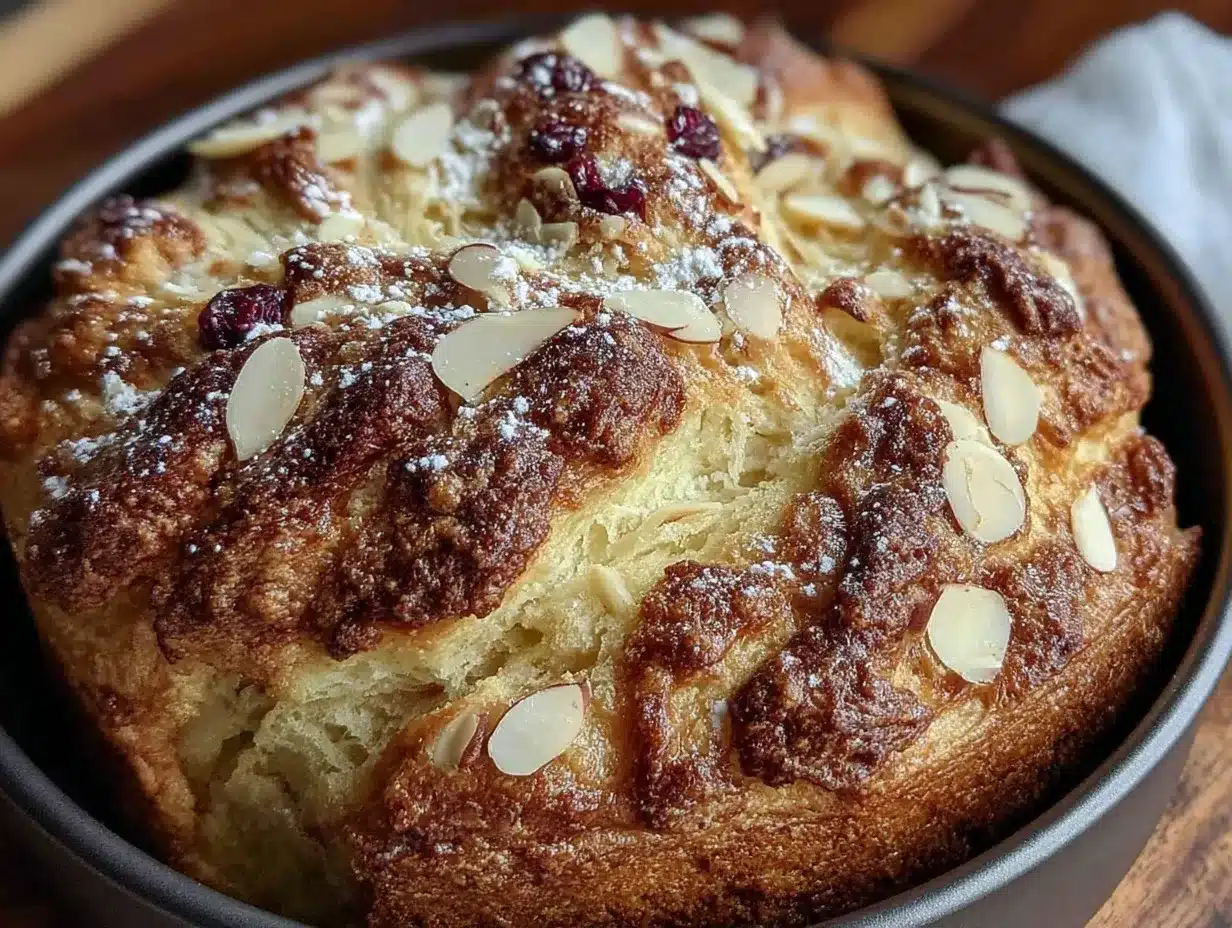
- Large mixing bowl for dough – I find a glass one helps me see the rising process better.
- Measuring cups and spoons – accuracy is key for yeast baking.
- Whisk or fork to blend eggs and sugar.
- Wooden spoon or dough hook attachment for mixing.
- Kitchen scale (optional but highly recommended) for precise flour measurement.
- Baking sheet or round cake pan (about 9 inches/23 cm diameter).
- Parchment paper or silicone baking mat to prevent sticking.
- Sharp knife or baker’s lame for scoring the cross on top.
- Clean kitchen towel or plastic wrap for covering the dough while rising.
If you don’t have a dough hook, mixing by hand works fine but requires a bit more elbow grease. I once tried using a regular mixer with a paddle attachment, and it worked, but the dough was stickier, so keep an eye on consistency. For budget baking, simple bowls and spoons do the job just fine.
Preparation Method
- Activate the Yeast (10 minutes): Warm the milk to about 110°F (43°C) — warm to the touch but not hot. Stir in the yeast and a pinch of sugar. Let it sit in a warm spot until foamy and bubbly on top, about 5-10 minutes. If it doesn’t foam, your yeast might be old, so swap it out.
- Mix Dry Ingredients: In a large bowl, whisk together the sifted flour, sugar, salt, and lemon zest until evenly combined.
- Combine Wet Ingredients: In a separate bowl, beat the eggs lightly. Add melted butter (cooled to avoid cooking the eggs) and vanilla extract if using. Slowly pour the activated yeast mixture into the egg mixture, stirring gently.
- Make the Dough: Gradually add the wet ingredients to the dry, stirring with a wooden spoon or dough hook until a sticky dough forms. It should be soft but not too wet. Add the toasted sliced almonds, folding them in carefully to distribute evenly.
- Knead the Dough (8-10 minutes): Turn the dough onto a floured surface and knead until smooth and elastic. If using a mixer, knead on medium speed for about 8 minutes. The dough should bounce back when poked.
- First Rise (1.5 hours): Place the dough in a lightly greased bowl, cover with a towel or plastic wrap, and leave in a warm place until doubled in size. I like to let it rest near the stove or in a turned-off oven with the light on.
- Shape the Mazanec: Gently punch down the dough to release air. Shape it into a round loaf about 8-9 inches (20-23 cm) in diameter. Place it on a parchment-lined baking sheet or into a round cake pan. Brush lightly with milk or egg wash for a golden crust.
- Score the Cross: Using a sharp knife or lame, carefully score a cross on top about ½ inch (1.5 cm) deep. This traditional mark not only looks beautiful but helps the bread expand evenly.
- Second Rise (30-45 minutes): Cover again and let the dough rise until puffy but not doubled. Preheat your oven to 350°F (175°C) during this time.
- Bake (35-40 minutes): Bake in the preheated oven until the crust is golden brown and the loaf sounds hollow when tapped underneath. If the top browns too fast, tent it with foil halfway through baking.
- Cool: Remove from oven and transfer to a wire rack. Let cool completely before slicing to avoid a gummy texture.
Pro tip: I once forgot to set a timer during the second rise and came back after an hour. The loaf was over-proofed but surprisingly still delicious, just with a more open crumb. So don’t stress too much—this bread is forgiving!
Cooking Tips & Techniques
Getting Mazanec just right can feel tricky, but here are a few things I’ve learned after many bakes:
- Temperature is key: Yeast loves warmth but hates heat. Milk too hot kills the yeast, so test with your finger or a thermometer.
- Kneading matters: Knead enough to develop gluten but don’t overdo it. The dough should be smooth and slightly tacky, not sticky and runny.
- Don’t rush the rise: The slow, patient rising is what gives Mazanec its signature texture and flavor. If your kitchen is cold, find a cozy spot (even inside a turned-off oven with the light on).
- Score with confidence: Use a very sharp blade and cut quickly to avoid dragging the dough. The cross is traditional and functional, so don’t skip it!
- Watch your bake time: Oven temps vary, so check at 35 minutes and tent if needed. A hollow tap on the bottom means it’s done.
- Multitask smartly: While dough rises, clean up or prep your Easter table. It saves time and keeps the kitchen calm.
My first Mazanec attempt ended with a flat, dense loaf. What went wrong? I skipped the second rise and baked too soon. Lesson learned: patience really pays off here.
Variations & Adaptations
This Mazanec recipe is quite flexible, so feel free to tailor it to your taste or dietary needs:
- Nut-Free Version: Omit almonds and sprinkle the top with pearl sugar for a sweet crunch instead.
- Fruit-Studded: Add ½ cup (75 g) chopped dried apricots or raisins for a fruity surprise.
- Gluten-Free: Use a gluten-free baking flour blend, but expect a slightly different texture and shorter rise time.
- Whole Wheat: Swap half the flour with whole wheat for a nuttier flavor and more fiber.
- Spiced Mazanec: Add a teaspoon each of ground cinnamon and cardamom to the dry ingredients for a warm twist.
I once tried adding orange zest instead of lemon and a handful of chopped pistachios—turned out to be a fun springtime surprise that impressed at my brunch table!
Serving & Storage Suggestions
Serve your Mazanec slightly warm or at room temperature, sliced thick with butter or a smear of your favorite jam. It pairs beautifully with a cup of strong coffee or herbal tea, making it a perfect centerpiece for Easter morning or a relaxed weekend brunch.
To store, wrap the cooled bread tightly in plastic wrap or place it in an airtight container. It keeps well at room temperature for up to 3 days. For longer storage, freeze sliced portions in a freezer bag for up to 2 months. Reheat slices gently in a toaster or oven to bring back that freshly baked feel.
Over time, Mazanec’s flavors deepen, and the crumb becomes even more tender. Honestly, sometimes the next day’s slice tastes even better than fresh out of the oven!
Nutritional Information & Benefits
Each serving (about one thick slice) of this Mazanec provides approximately:
| Calories | Carbohydrates | Protein | Fat | Fiber |
|---|---|---|---|---|
| 220 kcal | 35 g | 6 g | 6 g | 2 g |
This sweet bread offers a modest source of protein from eggs and milk, plus healthy fats from almonds. Lemon zest adds a fresh note and a bit of vitamin C. While it’s a treat, the recipe avoids overly processed ingredients, aiming for a balanced, homemade feel. It’s naturally vegetarian and can be adapted to gluten-free or dairy-free diets, too.
Conclusion
This classic Czech Mazanec Easter sweet bread with almonds and lemon zest is more than just a recipe—it’s a little celebration in bread form. Its tender crumb and bright, nutty flavors make it the kind of dish you want to share with friends, family, or even that neighbor you’ve been meaning to bake for. I love how it brings a touch of Czech tradition into my kitchen every spring, and honestly, it feels like a warm hug on a plate.
Feel free to tweak it to your liking or try some of the variations I mentioned. And hey, if you give it a try, I’d love to hear how it turned out—maybe you’ll have your own Mazanec story to tell! Don’t be shy to share your thoughts, tips, or even photos in the comments below. Happy baking and happy Easter!
FAQs About Classic Czech Mazanec Easter Sweet Bread
Can I make Mazanec without fresh lemon zest?
Yes! You can substitute with ½ teaspoon of lemon extract or a small amount of finely grated dried lemon peel, though fresh zest gives the best flavor.
How long does Mazanec keep fresh?
Stored properly at room temperature, it stays fresh for about 3 days. For longer storage, freeze sliced portions and toast them when needed.
Can I prepare Mazanec dough the night before?
Absolutely! After kneading, cover the dough tightly and refrigerate overnight. Let it come to room temperature and finish the second rise before baking.
What if my Mazanec doesn’t rise well?
Check your yeast’s freshness and milk temperature. Yeast needs warmth and food to activate. Also, avoid adding salt directly onto the yeast.
Is it possible to make Mazanec without nuts?
Definitely. Simply omit the almonds or replace them with other add-ins like dried fruit or pearl sugar for texture.
For a lovely twist on traditional bread, you might enjoy pairing this with a creamy ricotta spinach stuffed chicken or a fresh salad like cucumber tomato salad with feta to keep your Easter table bright and balanced.
Pin This Recipe!
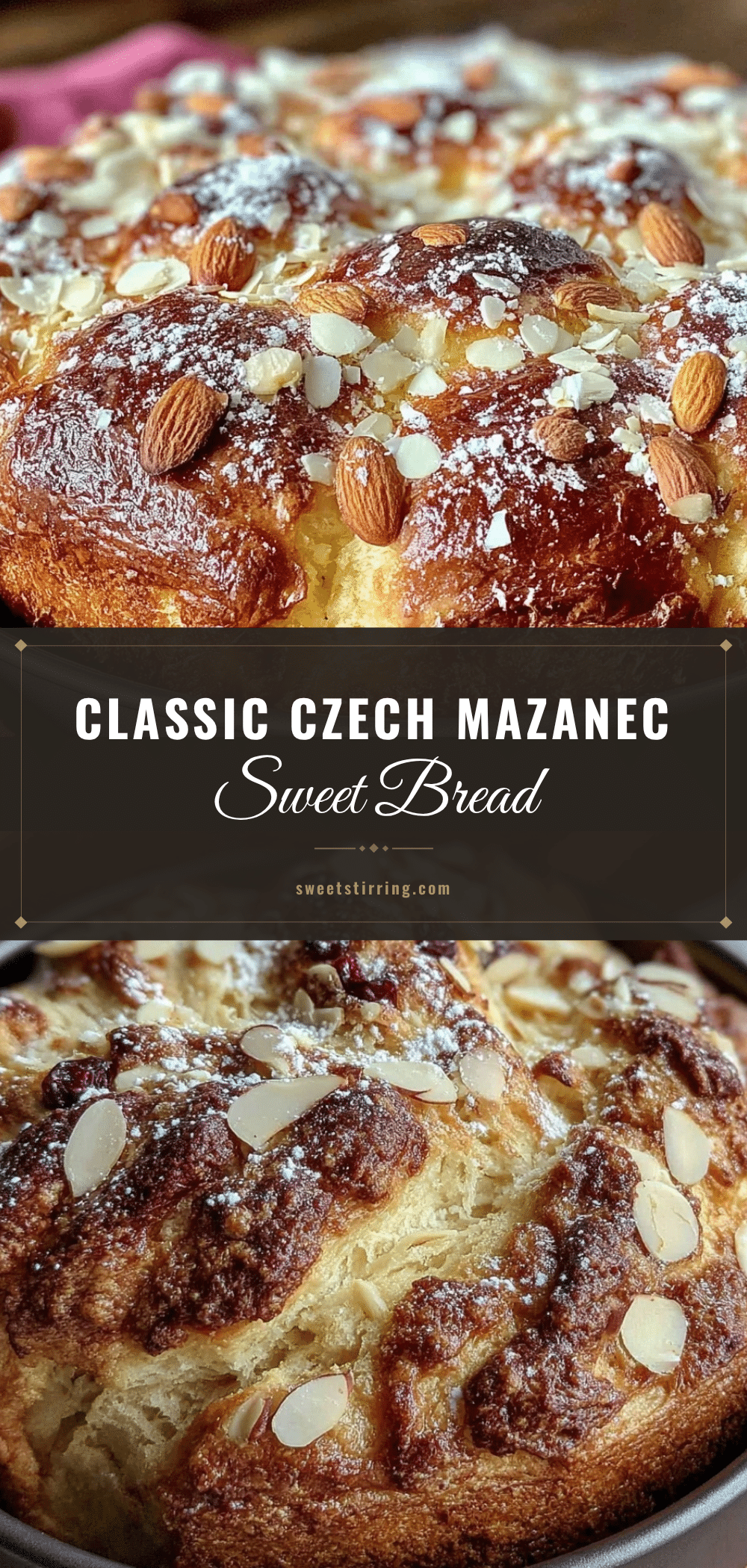
Classic Czech Mazanec Recipe Easy Homemade Easter Sweet Bread with Almonds and Lemon Zest

A traditional Czech Easter sweet bread featuring a tender crumb, toasted almonds, and fresh lemon zest. This festive bread is light, flavorful, and perfect for spring celebrations.
- Prep Time: 30 minutes
- Cook Time: 40 minutes
- Total Time: 2 hours 40 minutes
- Yield: 8 servings 1x
- Category: Dessert
- Cuisine: Czech
Ingredients
- 4 cups (500 g) all-purpose flour, sifted
- 1 cup (240 ml) whole milk, warmed to about 110°F (43°C)
- 2 ¼ teaspoons (one packet) active dry yeast
- ⅓ cup (65 g) granulated sugar
- 6 tablespoons (85 g) unsalted butter, melted and slightly cooled
- 3 large eggs, room temperature
- Zest of one large lemon
- 1 teaspoon (5 g) salt
- ½ cup (50 g) sliced and toasted almonds
- 1 teaspoon vanilla extract (optional)
Instructions
- Activate the Yeast (10 minutes): Warm the milk to about 110°F (43°C). Stir in the yeast and a pinch of sugar. Let it sit in a warm spot until foamy and bubbly on top, about 5-10 minutes.
- Mix Dry Ingredients: In a large bowl, whisk together the sifted flour, sugar, salt, and lemon zest until evenly combined.
- Combine Wet Ingredients: In a separate bowl, beat the eggs lightly. Add melted butter (cooled) and vanilla extract if using. Slowly pour the activated yeast mixture into the egg mixture, stirring gently.
- Make the Dough: Gradually add the wet ingredients to the dry, stirring with a wooden spoon or dough hook until a sticky dough forms. Fold in the toasted sliced almonds evenly.
- Knead the Dough (8-10 minutes): Turn the dough onto a floured surface and knead until smooth and elastic. If using a mixer, knead on medium speed for about 8 minutes.
- First Rise (1.5 hours): Place the dough in a lightly greased bowl, cover, and leave in a warm place until doubled in size.
- Shape the Mazanec: Punch down the dough, shape into a round loaf about 8-9 inches in diameter. Place on parchment-lined baking sheet or round cake pan. Brush lightly with milk or egg wash.
- Score the Cross: Using a sharp knife or lame, score a cross on top about ½ inch deep.
- Second Rise (30-45 minutes): Cover and let the dough rise until puffy but not doubled. Preheat oven to 350°F (175°C).
- Bake (35-40 minutes): Bake until crust is golden brown and loaf sounds hollow when tapped. Tent with foil if browning too fast.
- Cool: Remove from oven and transfer to wire rack. Let cool completely before slicing.
Notes
Milk should be warm but not hot to avoid killing the yeast. Knead until dough is smooth and elastic but not sticky. Score the cross quickly with a sharp blade to avoid dragging the dough. Tent with foil if the crust browns too fast. The bread is forgiving if the second rise is a bit longer.
Nutrition
- Serving Size: One thick slice
- Calories: 220
- Fat: 6
- Carbohydrates: 35
- Fiber: 2
- Protein: 6
Keywords: Mazanec, Czech Easter bread, sweet bread, almonds, lemon zest, traditional bread, Easter recipe, homemade bread