Love this? Save it for later!
Share the inspiration with your friends
Introduction
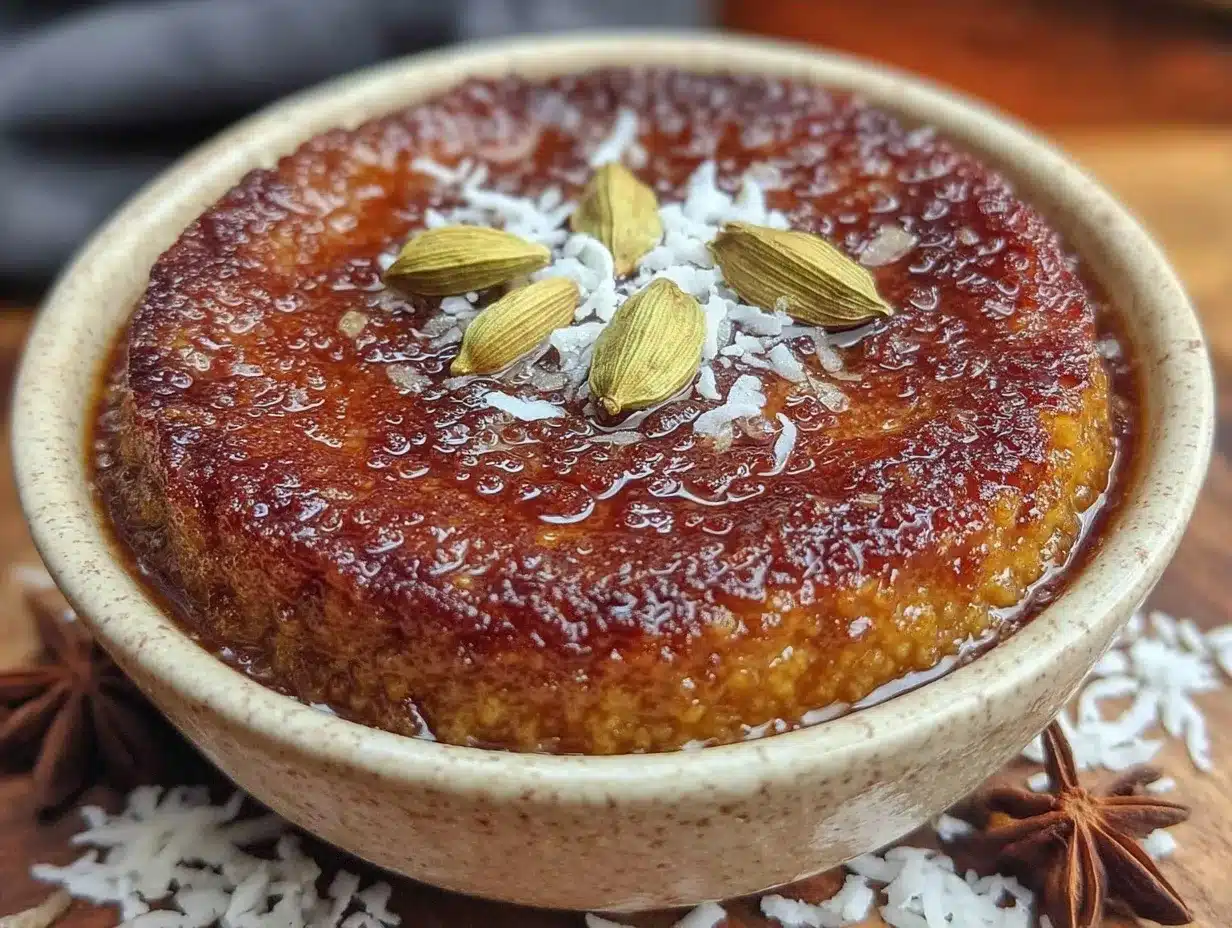
“I wasn’t expecting a roadside stall to become my go-to dessert spot,” I remember telling my friend last summer. It was a sultry afternoon in Colombo when the scent of warm spices and coconut carried me toward a tiny, almost hidden booth. The vendor, a cheerful woman named Nimmi, was stirring a pot of what she called watalappan—a Sri Lankan coconut jaggery custard that looked as silky as silk itself. I was skeptical at first; custards are usually heavy and overly sweet, you know? But this one was different. The moment I took a spoonful, the creamy texture danced on my tongue, and the subtle warmth from cardamom and cloves wrapped me in a cozy comfort I hadn’t anticipated. That cracked ceramic bowl I was handed wasn’t just dessert—it was a memory, a story, a secret recipe passed down through generations that Nimmi shared with the world in a bustling street corner.
Honestly, I made a bit of a mess trying to replicate this creamy Sri Lankan watalappan coconut jaggery custard in my own kitchen. I forgot to soak the jaggery properly the first time, and ended up with a grainy texture that was far from the smooth delight I’d tasted. But that little failure made me appreciate how special this recipe is. Maybe you’ve been there—chasing the perfect balance of sweetness and spice in a custard that’s both light and indulgent. It’s been months since that day, and I keep coming back to this recipe, tweaking and testing until it feels just right. Let me tell you, once you master this, you’ll want to make it over and over, just like I do.
Why You’ll Love This Recipe
This creamy Sri Lankan watalappan coconut jaggery custard is truly something special, and here’s why it’s earned a permanent spot in my dessert repertoire:
- Quick & Easy: Comes together in under 45 minutes, perfect for last-minute dinner parties or cozy nights in.
- Simple Ingredients: Uses pantry staples like coconut milk and jaggery, no fancy or hard-to-find items needed.
- Perfect for Celebrations: Traditional enough for Sri Lankan festivals yet simple enough for casual family dinners.
- Crowd-Pleaser: Loved by kids and adults alike, with a flavor profile that feels both exotic and comforting.
- Unbelievably Delicious: The silky texture combined with the rich, caramel-like sweetness of jaggery makes every bite memorable.
This recipe isn’t just another custard—it’s a little piece of Sri Lanka you can make right in your kitchen. The secret lies in the jaggery, that natural, deeply flavorful sweetener that brings a smoky complexity you won’t find in regular sugar. Plus, the warming spices add just enough kick to keep things interesting without overpowering the creamy coconut base. Honestly, it’s the kind of dessert that makes you close your eyes after the first bite and smile. Whether you’re new to Sri Lankan cuisine or a longtime fan, this watalappan recipe stands apart from others with its straightforward method and authentic flavor.
What Ingredients You Will Need
This recipe uses simple, wholesome ingredients to deliver bold flavor and satisfying texture without the fuss. Most of these items are pantry staples or easy to source at an international or Indian grocery store.
- Jaggery (Palan): 1 cup, grated or chopped (I recommend organic jaggery from Keela brand for best flavor)
- Coconut milk: 2 cups, full-fat (fresh is ideal, but good-quality canned coconut milk works fine)
- Eggs: 4 large, room temperature (helps create the custard’s smooth texture)
- Cardamom pods: 4, crushed (adds a subtle floral warmth)
- Cloves: 3 whole (for a gentle spiced aroma)
- Cashew nuts: 1/4 cup, chopped (optional, for garnish and a bit of crunch)
- Vanilla extract: 1 teaspoon (optional, enhances overall flavor)
- Salt: a pinch (balances sweetness)
- Water: 1/2 cup (to dissolve jaggery)
Ingredient Notes: If you can’t find jaggery, dark brown sugar is a last-resort substitute, but you’ll miss out on that rich molasses-like depth. For a vegan take, swap eggs for silken tofu blended smooth, though the texture will be a bit different. Freshly grated coconut milk from mature coconuts makes a big difference in creaminess if you’re up for it.
Equipment Needed
- Medium saucepan: For melting jaggery and warming coconut milk.
- Mixing bowl: To whisk eggs and combine ingredients.
- Whisk or fork: For beating the eggs smoothly.
- Fine sieve or cheesecloth: To strain custard mixture for a silky finish (optional but recommended).
- Steaming vessel or baking dish: For cooking the custard over gentle heat.
- Aluminum foil or lid: To cover the custard while cooking.
- Oven or stovetop steamer: This recipe works both ways; I prefer stovetop steaming to keep it moist.
If you don’t have a steamer, a large pot with a lid and a heatproof rack works just fine. I used a bamboo steamer basket once and it added a nice touch of natural wood aroma. For budget-friendly options, a simple deep pan with a tight lid can substitute for specialty equipment. Just remember to monitor the water level so it doesn’t dry out during steaming.
Preparation Method
- Dissolve the jaggery: In a medium saucepan, combine grated jaggery and 1/2 cup water over medium heat. Stir gently until fully melted and smooth—about 5 minutes. Be careful not to overheat or let it burn. Remove from heat and strain through a fine sieve to remove impurities. Set aside to cool slightly.
- Warm the coconut milk with spices: Add the crushed cardamom pods and cloves to the coconut milk in a clean saucepan. Warm over low heat for about 5 minutes to infuse the flavors. Remove from heat, strain out the spices, and let the milk cool to lukewarm.
- Mix eggs and vanilla: In a mixing bowl, whisk the eggs until well combined. Add vanilla extract and a pinch of salt.
- Combine jaggery and coconut milk: Slowly pour the lukewarm coconut milk into the eggs, whisking constantly to prevent curdling. Then gradually add the jaggery syrup, continuing to whisk until the mixture is smooth and uniform.
- Strain the custard mixture (optional): For the smoothest texture, pour the custard through a fine sieve or cheesecloth into another bowl to catch any lumps or cooked egg bits.
- Prepare the steaming setup: Pour the custard mixture into heatproof ramekins or a shallow baking dish. Cover tightly with aluminum foil to prevent condensation from dripping onto the custard.
- Steam the custard: Place the ramekins in a steamer basket or on a rack inside a large pot with simmering water. Ensure the water doesn’t touch the custard containers. Cover and steam gently for 30-40 minutes, or until the custard is set but still slightly jiggly in the center.
- Cool and garnish: Remove from heat and let the custard cool to room temperature. Refrigerate for at least 2 hours before serving. Garnish with chopped cashews or a sprinkle of cinnamon if desired.
Tips: If the custard cracks or curdles, it usually means the heat was too high. Keep your steaming water at a gentle simmer, not a rolling boil. Also, stirring the jaggery syrup gently helps prevent graininess. I learned the hard way that rushing this step can ruin the texture!
Cooking Tips & Techniques
Making a perfect watalappan custard is all about gentle heat and patience. Here are some of my learned tips:
- Slowly dissolve jaggery: Avoid boiling jaggery aggressively. Gentle melting preserves its complex flavors and prevents bitterness.
- Temper the eggs: Adding warm coconut milk to eggs too fast can scramble them. Whisk steadily while combining to keep a silky custard base.
- Straining matters: Skipping the sieve can leave you with an uneven texture. It’s a small extra step that makes a big difference.
- Steaming over baking: Traditional watalappan is steamed, which keeps it moist and creamy. Baking can dry it out unless you use a water bath.
- Use fresh spices: Cardamom and cloves lose aroma over time. Freshly crushed pods brighten the flavor significantly.
- Cooling is key: Allow the custard to cool fully before refrigerating to avoid condensation that can affect texture.
One time, I got distracted and let the water boil too hard during steaming, which cracked the custard’s surface. Lesson learned: keep a watchful eye, and use a low flame. Also, I’ve found that whisking eggs by hand feels more controlled for this delicate custard than using an electric mixer, which can add too much air.
Variations & Adaptations
Watalappan is versatile, and you can tweak it to suit your taste or dietary needs:
- Vegan version: Replace eggs with silken tofu blended smooth and use a plant-based milk alternative. The texture will be softer but still luscious.
- Spice variations: Add a pinch of nutmeg or cinnamon for a different aromatic profile or swap cloves for star anise.
- Nutty twist: Incorporate ground cashews or almonds into the custard mix for extra richness and texture.
- Sweetener swaps: Use coconut sugar or palm sugar if jaggery isn’t available, though flavor will be milder.
- Cooking method: Try baking the custard in a water bath at 325°F (160°C) for 30-35 minutes if steaming isn’t an option.
Personally, I once added a touch of dark rum to the mix for a festive holiday version—delicious but definitely adult-only! Feel free to customize the level of sweetness or spice according to your preference; just keep the ratio of wet to dry ingredients similar to maintain custard consistency.
Serving & Storage Suggestions
Serve this creamy Sri Lankan watalappan chilled or at room temperature. It’s lovely on its own, but pairing it with a cup of strong black tea or a lightly spiced chai brings out the flavors beautifully. For a fresh contrast, try a side of sliced mango or tropical fruit salad.
Store leftovers covered in the refrigerator for up to 3 days. The custard thickens and flavors meld over time, which some say makes it even better the next day. To reheat, gently warm in a microwave in short bursts or enjoy cold straight from the fridge.
Avoid freezing as the texture may suffer, becoming grainy or watery upon thawing. When transporting for potlucks or picnics, keep it chilled in a cooler to preserve that lovely creamy texture.
Nutritional Information & Benefits
This coconut jaggery custard is a treat that offers some nutritional goodness alongside indulgence. Here’s a rough estimate per serving:
| Calories | 220 kcal |
|---|---|
| Fat | 15 g (mostly healthy saturated fat from coconut) |
| Carbohydrates | 18 g (natural sugars from jaggery) |
| Protein | 5 g (from eggs) |
Jaggery provides iron and antioxidants that refined sugar lacks, while coconut milk contributes lauric acid, which may support heart health. This recipe is gluten-free and can be made dairy-free easily. Just watch for nut allergies if using cashews as garnish.
From a wellness perspective, I appreciate that this dessert is less processed and uses natural sweeteners, making it an occasional indulgence that feels a little kinder to the body than typical custards loaded with refined sugars.
Conclusion
This creamy Sri Lankan watalappan coconut jaggery custard is more than just a dessert; it’s a comforting slice of tradition that’s surprisingly easy to make at home. Whether you’re looking to impress guests or simply want a sweet finish to your day, this recipe offers a beautiful balance of rich, spiced flavors and silky texture that’s hard to beat. I encourage you to tweak the spices or nuts to suit your taste—it’s a forgiving recipe that welcomes creativity.
Honestly, I love this recipe because it connects me to a culture and a moment I treasure, and it’s something I can share with family and friends anywhere in the world. If you give it a try, please let me know how it goes! Your adaptations and stories always make my day. Go on, treat yourself to a little Sri Lankan magic in your kitchen.
FAQs
What is jaggery and can I substitute it?
Jaggery is an unrefined sugar made from palm sap or sugarcane, with a rich molasses flavor. You can substitute dark brown sugar or coconut sugar, but the flavor won’t be quite the same.
Can I make watalappan without eggs?
Yes, using silken tofu blended smooth can replace eggs for a vegan version, though the texture will be softer and less firm.
How do I know when the custard is done?
The custard should be set around the edges but slightly wobbly in the center when gently shaken. It will firm up more as it cools.
Can I bake watalappan instead of steaming?
Absolutely! Bake in a water bath at 325°F (160°C) for about 30-35 minutes, checking for doneness as you would with steaming.
How long can I store leftover custard?
Keep the custard covered in the refrigerator for up to 3 days. Avoid freezing to maintain the creamy texture.
For those curious about other rich yet simple desserts, my recipe for creamy mango sago pudding shares a similar tropical vibe, while spiced coconut lentil soup offers a savory balance to sweet treats like this custard.
Pin This Recipe!
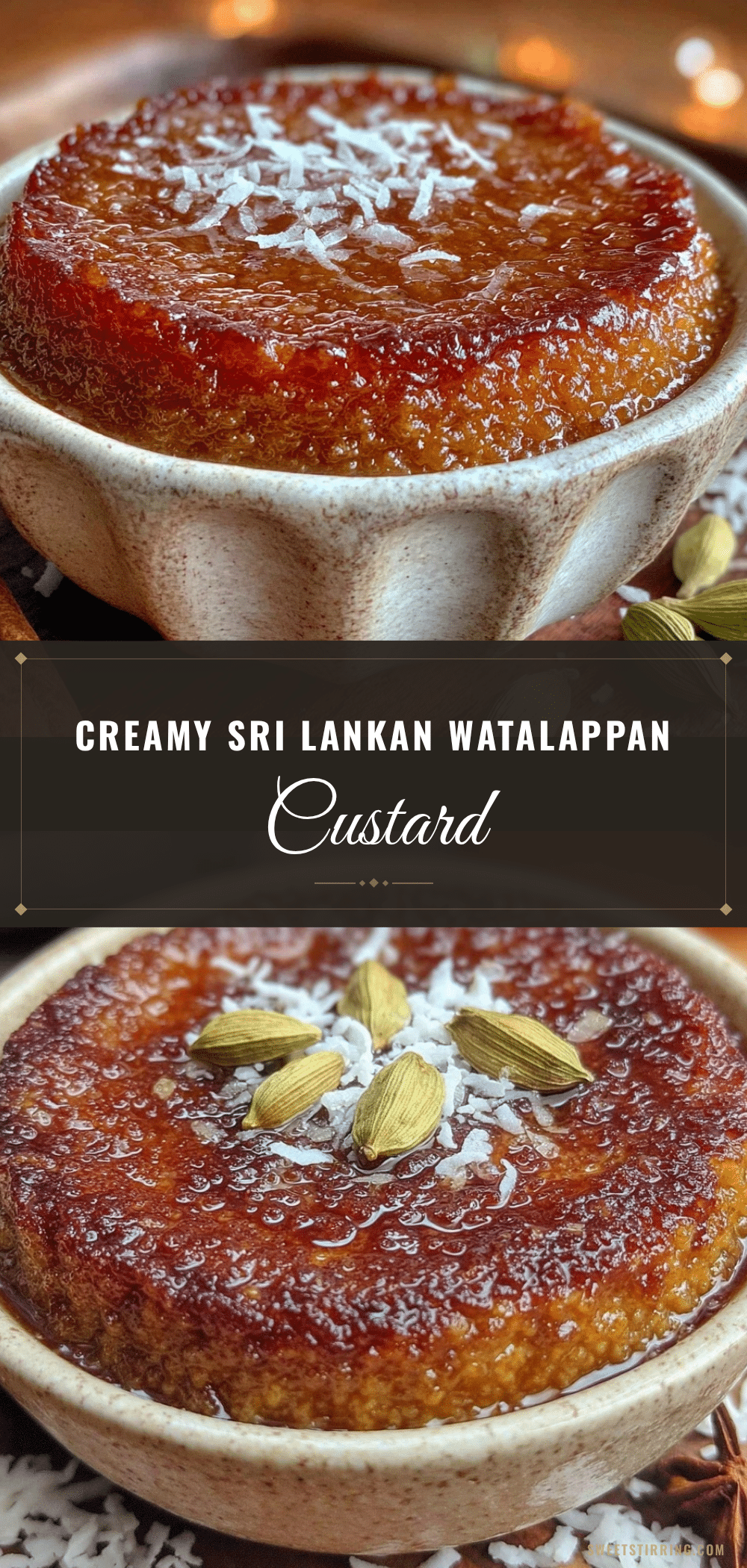
Creamy Sri Lankan Watalappan Recipe Easy Homemade Coconut Jaggery Custard

A silky, creamy Sri Lankan coconut jaggery custard infused with warming spices like cardamom and cloves. This traditional dessert is quick, easy, and perfect for celebrations or cozy nights in.
- Prep Time: 15 minutes
- Cook Time: 35 minutes
- Total Time: 50 minutes
- Yield: 6 servings 1x
- Category: Dessert
- Cuisine: Sri Lankan
Ingredients
- 1 cup jaggery (Palan), grated or chopped
- 2 cups full-fat coconut milk
- 4 large eggs, room temperature
- 4 cardamom pods, crushed
- 3 whole cloves
- 1/4 cup cashew nuts, chopped (optional, for garnish)
- 1 teaspoon vanilla extract (optional)
- Pinch of salt
- 1/2 cup water (to dissolve jaggery)
Instructions
- Dissolve the jaggery: In a medium saucepan, combine grated jaggery and 1/2 cup water over medium heat. Stir gently until fully melted and smooth—about 5 minutes. Remove from heat and strain through a fine sieve to remove impurities. Set aside to cool slightly.
- Warm the coconut milk with spices: Add the crushed cardamom pods and cloves to the coconut milk in a clean saucepan. Warm over low heat for about 5 minutes to infuse the flavors. Remove from heat, strain out the spices, and let the milk cool to lukewarm.
- Mix eggs and vanilla: In a mixing bowl, whisk the eggs until well combined. Add vanilla extract and a pinch of salt.
- Combine jaggery and coconut milk: Slowly pour the lukewarm coconut milk into the eggs, whisking constantly to prevent curdling. Then gradually add the jaggery syrup, continuing to whisk until the mixture is smooth and uniform.
- Strain the custard mixture (optional): For the smoothest texture, pour the custard through a fine sieve or cheesecloth into another bowl to catch any lumps or cooked egg bits.
- Prepare the steaming setup: Pour the custard mixture into heatproof ramekins or a shallow baking dish. Cover tightly with aluminum foil to prevent condensation from dripping onto the custard.
- Steam the custard: Place the ramekins in a steamer basket or on a rack inside a large pot with simmering water. Ensure the water doesn’t touch the custard containers. Cover and steam gently for 30-40 minutes, or until the custard is set but still slightly jiggly in the center.
- Cool and garnish: Remove from heat and let the custard cool to room temperature. Refrigerate for at least 2 hours before serving. Garnish with chopped cashews or a sprinkle of cinnamon if desired.
Notes
Avoid boiling jaggery aggressively to preserve flavor and prevent bitterness. Whisk eggs steadily while adding warm coconut milk to avoid scrambling. Straining the custard mixture ensures a silky texture. Steaming keeps the custard moist and creamy; baking is an alternative using a water bath at 325°F for 30-35 minutes. Keep steaming water at a gentle simmer to prevent cracking or curdling. Refrigerate for at least 2 hours before serving. Avoid freezing to maintain texture.
Nutrition
- Serving Size: 1/6 of the recipe
- Calories: 220
- Sugar: 18
- Sodium: 50
- Fat: 15
- Saturated Fat: 13
- Carbohydrates: 18
- Protein: 5
Keywords: watalappan, Sri Lankan dessert, coconut custard, jaggery custard, traditional Sri Lankan recipe, coconut milk dessert, cardamom custard, steamed custard