Love this? Save it for later!
Share the inspiration with your friends
I was standing in the middle of the grocery store parking lot last October when it hit me—that specific smell of damp fallen leaves mixed with someone’s car exhaust and, impossibly, the faintest wisp of maple and sourdough. I froze with my hand halfway to the car door handle. And suddenly I was seven years old at my neighbor Mrs. Kowalski’s kitchen table, watching her tear off a piece of something warm and golden-brown, the steam curling up like it had somewhere important to be.
She wasn’t my grandmother. She wasn’t even related. But every autumn, without fail, Mrs. K would knock on our door with a loaf wrapped in a tea towel that had little pumpkins all over it. “For the chill in the air,” she’d say, and I’d inhale half of it before I even got home. The bread was soft, faintly sweet, with this tangy undertone I couldn’t name as a kid. I just knew it tasted like October.
She moved away years ago, and I never got her recipe. So I’ve spent the last few autumns trying to rebuild that feeling from scratch—not just the bread, but the moment. That first bite where the maple hits your tongue right before the sourdough tang catches up, like two old friends meeting at a crosswalk. Honestly, maybe you’ve been there—chasing a taste you can’t quite describe but you’d know the second it landed on your tongue.
This cozy maple pumpkin sourdough discard bread is my best attempt yet. I’ve tested it maybe six times, and the last loaf made my husband say “oh” in that quiet way that means he’s not just being polite. The kitchen smelled like a candle store had a baby with a bakery. And for a minute, I was back at that table, the tea towel warm in my hands.
Why You’ll Love This Recipe
Let me tell you—this isn’t just another pumpkin bread recipe floating around the internet. I’ve tested enough soggy, bland, or just-plain-weird discard recipes to know the difference. This one works because it respects the sourdough discard while letting the pumpkin and maple actually shine.
Here’s why this cozy maple pumpkin sourdough discard bread will become your fall baking MVP:
- Uses up your discard—no more guilt over that jar of unfed starter taking up fridge space. This bread was practically made for those lazy Sunday mornings when you realize your discard jar is full again.
- Perfectly moist without being gummy—the pumpkin puree and maple syrup team up to create a crumb that’s tender but not wet. I’ve had too many pumpkin loaves that collapse into sad, soggy piles. Not this one.
- That tangy-sweet balance—the sourdough discard adds this subtle complexity that makes the bread taste more interesting than your average pumpkin loaf. It’s not sour like a sourdough boule, just… deeper.
- Simple ingredients—you probably have most of this in your pantry already. No weird specialty flours or hard-to-find extracts. I mean, unless you don’t keep maple syrup around, in which case, what are you even doing?
- Comes together in under an hour—active prep time is maybe 15 minutes. The rest is just waiting for the oven to do its thing.
- Freezes beautifully—I made two loaves last week and hid one in the freezer. My husband still hasn’t found it. That’s a win.
This cozy maple pumpkin sourdough discard bread is the kind that makes you close your eyes after the first bite. It’s comfort food reimagined—healthier than a bakery muffin, faster than a complicated yeast bread, but with the same soul-soothing satisfaction. Perfect for impressing brunch guests without stress, or turning a quiet Tuesday morning into something worth remembering.
What Ingredients You Will Need
This recipe uses simple, wholesome ingredients to deliver that cozy fall flavor without the fuss. Most of these are pantry staples, especially if you’re already a sourdough baker. Here’s what you’ll need and why each one matters:
For the Bread
- 1 cup (240g) pumpkin puree—not pumpkin pie filling. Make sure it’s 100% pure pumpkin. I prefer Libby’s for consistent texture, but any brand works. If your puree looks watery, let it sit in a fine-mesh strainer for 10 minutes to drain excess liquid.
- 1/2 cup (120ml) maple syrup—real maple syrup, not pancake syrup. Grade A dark amber has the strongest flavor, but any real maple syrup works. The flavor really comes through here, so don’t skimp.
- 1/3 cup (80ml) neutral oil—avocado oil or melted coconut oil work great. Vegetable oil is fine too. I’ve used melted butter in a pinch, and it works, but the texture is slightly denser.
- 2 large eggs, room temperature—cold eggs can make the batter seize up. Leave them on the counter for 30 minutes, or pop them in a bowl of warm water for 5 minutes.
- 1 teaspoon vanilla extract—adds warmth and depth. I use Nielsen-Massey because it’s worth the splurge, but any pure vanilla extract is fine.
- 1 cup (240g) sourdough discard—unfed, straight from the fridge. This is the perfect use for discard that’s been sitting for a few days. It shouldn’t smell like nail polish remover, but a little tang is great.
- 1 3/4 cups (220g) all-purpose flour—spooned and leveled. I’ve tested this with half whole wheat pastry flour, and it works, but the texture is slightly denser. Stick with AP for the softest crumb.
- 1 teaspoon baking soda—make sure it’s fresh. If it doesn’t fizz when you drop a pinch into vinegar, get new baking soda.
- 1/2 teaspoon baking powder—adds a little extra lift.
- 1/2 teaspoon salt—fine sea salt is best. It balances the sweetness.
For the Spice Blend
- 1 1/2 teaspoons ground cinnamon—I use Saigon cinnamon for its bold, warm flavor. It’s stronger than regular cinnamon, so adjust if you’re using a milder variety.
- 1/2 teaspoon ground nutmeg—freshly grated if you have it. The pre-ground stuff works, but fresh nutmeg has this floral note that’s hard to beat.
- 1/2 teaspoon ground ginger—adds a little warmth without being spicy.
- 1/4 teaspoon ground cloves—go easy here. Cloves can overpower everything if you’re heavy-handed.
- 1/4 teaspoon allspice—optional, but I love the extra layer of flavor.
Optional Add-Ins
- 1/2 cup (60g) chopped pecans or walnuts—toasted first for maximum crunch. I forgot to toast mine once, and they were just… sad. Don’t be me.
- 1/3 cup (50g) golden raisins or dried cranberries—adds little bursts of sweetness.
- 1 tablespoon turbinado sugar—for sprinkling on top before baking. That crunchy crust is everything.
Equipment Needed
You don’t need a fancy bakery setup for this cozy maple pumpkin sourdough discard bread. Here’s what you’ll need:
- 9×5-inch loaf pan—standard size. If you use an 8×4, the bread will dome more and take longer to bake. I’ve done it before, just adjust the time by 5-10 minutes.
- Parchment paper—I’m a big fan of the sling method. Cut a piece long enough to overhang on two sides, and you’ll never struggle to get a loaf out again.
- Large mixing bowl—for the wet ingredients. Any bowl works, but I prefer a wide one so I don’t splash batter everywhere.
- Medium mixing bowl—for the dry ingredients.
- Whisk—for mixing. A fork works in a pinch, but a whisk incorporates everything more evenly.
- Rubber spatula—for folding. Don’t use a whisk for this part. You’ll overmix and end up with tough bread.
- Measuring cups and spoons—for accuracy. I use a kitchen scale for the flour and discard because it’s more precise, but cups work fine if you spoon and level.
- Cooling rack—essential for even cooling. If you leave the bread in the pan, the bottom gets soggy. I learned this the hard way.
If you don’t have a loaf pan, you can use an 8×8 square pan and bake for 25-30 minutes. The bread will be thinner, but it’s still delicious. Honestly, I’ve baked this in a muffin tin before, and those little pumpkin sourdough muffins were gone in a day.
Preparation Method
Let’s get baking. This cozy maple pumpkin sourdough discard bread comes together quickly, so have everything measured and ready before you start. Trust me—it makes the whole process smoother.
- Preheat your oven to 350°F (175°C). Position the rack in the center. Line your 9×5 loaf pan with parchment paper, leaving a 2-inch overhang on the long sides. Lightly grease the exposed ends with butter or cooking spray.
- Whisk the dry ingredients together. In a medium bowl, combine the all-purpose flour, baking soda, baking powder, salt, and all the spices—cinnamon, nutmeg, ginger, cloves, and allspice if you’re using it. Whisk until everything is evenly distributed. Set this aside.
- Mix the wet ingredients. In a large bowl, whisk together the pumpkin puree, maple syrup, oil, eggs, and vanilla extract until smooth. The mixture should look like a thick, glossy orange sauce. If it looks separated or watery, your pumpkin puree might have too much liquid. Give it an extra whisk—it’ll come together.
- Add the sourdough discard. Pour in the discard and whisk until fully incorporated. The batter will look slightly thinner now, and you might see a few small bubbles. That’s fine. Don’t overmix here—just until it’s combined.
- Fold in the dry ingredients. Add the dry mixture to the wet mixture in two additions. Use a rubber spatula to fold gently—sweep around the edge of the bowl, then cut through the center. Repeat until just a few streaks of flour remain. The batter will be thick and slightly lumpy. That’s what you want.
- Add any mix-ins. If you’re using nuts, dried fruit, or chocolate chips, fold them in now. Don’t overmix—maybe 5 or 6 folds. The batter should look like it’s holding its shape but still soft.
- Transfer to the pan. Pour the batter into your prepared loaf pan and spread it evenly with the spatula. It should reach about 2/3 to 3/4 of the way up the sides. If you’re using turbinado sugar, sprinkle it evenly over the top now.
- Bake for 50-60 minutes. Place the pan in the center of the oven and bake until a toothpick inserted into the center comes out clean or with a few moist crumbs. Start checking at 50 minutes. The top should be deep golden brown and cracked in a few places. If the top is browning too fast (around 40 minutes), tent loosely with foil.
- Cool in the pan. Let the bread cool in the pan on a wire rack for 15 minutes. This gives it time to set so it doesn’t fall apart when you remove it.
- Remove and cool completely. Use the parchment sling to lift the bread out of the pan and transfer it to the wire rack. Let it cool completely—at least 1 hour—before slicing. I know, I know. It’s hard to wait. But if you slice it warm, it’ll crumble into a delicious but messy pile. I’ve done it. More than once.
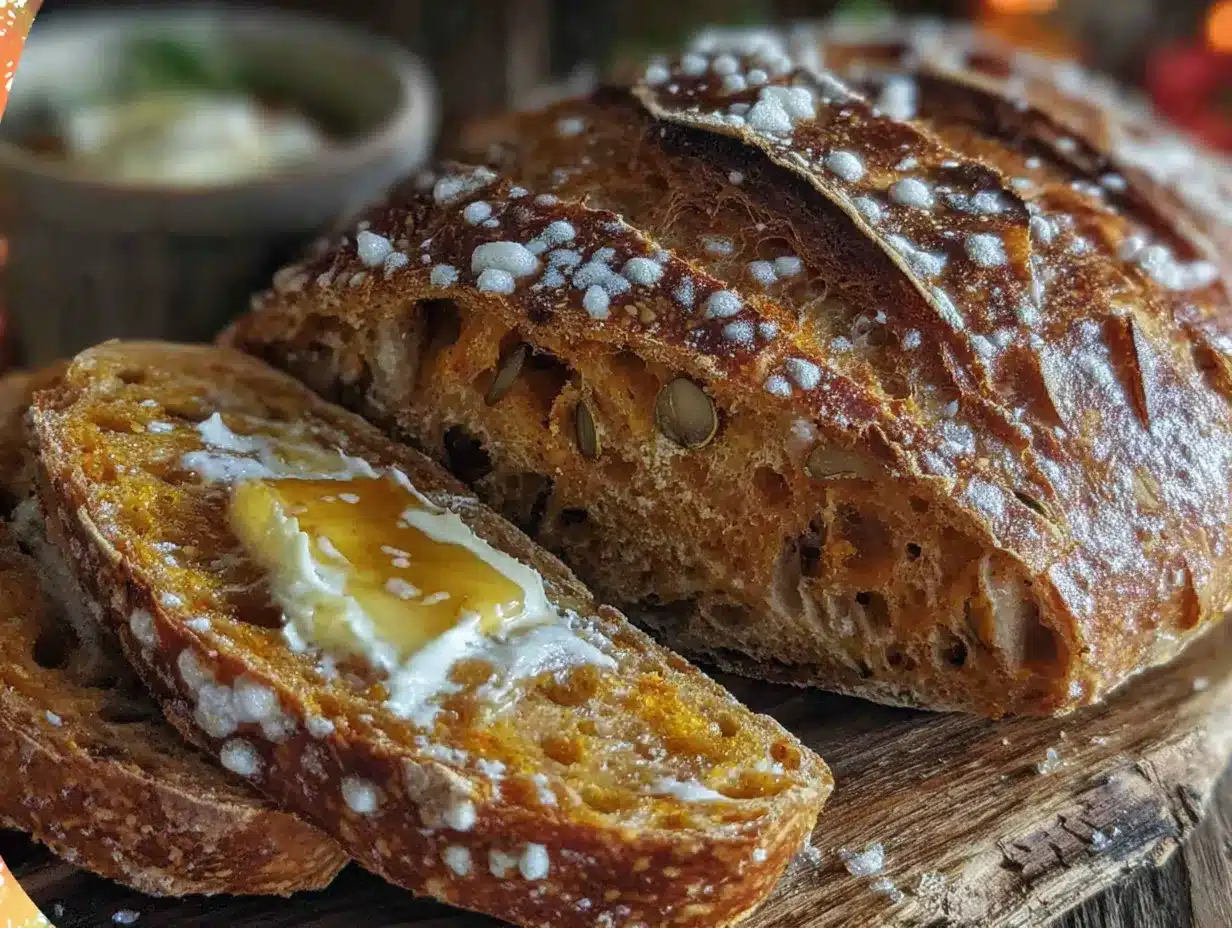
The kitchen will smell like a pumpkin spice dream while this bakes. Honestly, it’s worth making just for that alone. The maple and pumpkin caramelize on the edges, creating this slightly sticky, golden crust that’s absolutely irresistible.
Cooking Tips & Techniques
After testing this cozy maple pumpkin sourdough discard bread more times than I care to admit, I’ve picked up a few tricks that make a real difference. Here’s what I wish someone had told me:
Don’t skip the parchment sling. I know it’s an extra step, but the first time I made this bread, I greased the pan like my life depended on it, and it still stuck. The parchment sling guarantees a clean release every time. Cut the paper long enough to overhang by about 2 inches on each side.
Check your sourdough discard’s personality. Discard that’s been sitting in the fridge for a week will have a stronger tang than discard from yesterday. Both work, but the flavor profile changes. If your discard is very sour, you might want to reduce it by 1/4 cup and add 1/4 cup milk to keep the moisture balance. I learned this after a batch that tasted like a pickle had a fight with a pumpkin. Not great.
Room temperature ingredients matter. Cold eggs and cold discard can make the batter seize up, creating a dense, uneven crumb. Leave everything on the counter for 30 minutes before starting. If you’re in a hurry, place the eggs in a bowl of warm water for 5 minutes and microwave the discard for 10 seconds.
Measure flour correctly. Spoon the flour into your measuring cup and level it off with a knife. Scooping directly from the bag packs the flour down, and you can end up with 30% more flour than you need. That leads to dry, crumbly bread. I’ve ruined more loaves this way than I’d like to admit.
Don’t overmix the batter. Once you add the dry ingredients, mix just until combined. Overmixing develops the gluten, and you’ll end up with a tough, rubbery loaf instead of a tender, soft one. A few lumps are fine. They’ll bake out.
Test for doneness properly. A toothpick inserted in the center should come out clean or with a few moist crumbs. If it’s wet batter, bake for 5 more minutes and check again. If the top is browning too fast, tent with foil. I’ve had loaves that looked done on top but were still raw in the middle. Foil is your friend.
Let it cool completely. I know it’s torture, but this bread slices best when completely cool. The crumb needs time to set. If you cut into it warm, it’ll be gummy and fall apart. I’ve done it. I regretted it. Learn from my mistakes.
Variations & Adaptations
One of the best things about this cozy maple pumpkin sourdough discard bread is how flexible it is. Here are some variations I’ve tried and loved:
Gluten-free version: Substitute the all-purpose flour with a 1:1 gluten-free baking blend that contains xanthan gum. I’ve used Bob’s Red Mill 1-to-1 Baking Flour with good results. The texture is slightly more crumbly, but the flavor is still there. Add 1 extra tablespoon of oil to help with moisture.
Dairy-free option: This recipe is already dairy-free if you use oil instead of butter. Just make sure your sourdough discard wasn’t fed with dairy (which it shouldn’t be, but check). The bread is naturally dairy-free, which makes it perfect for anyone with sensitivities.
Vegan adaptation: Replace the eggs with flax eggs (2 tablespoons ground flaxseed mixed with 6 tablespoons water, let sit for 5 minutes). The texture will be slightly denser and less fluffy, but it still tastes amazing. I’ve made this for a vegan friend, and she asked for the recipe.
Chocolate chip pumpkin bread: Fold in 1/2 cup of dark chocolate chips along with the dry ingredients. The chocolate and pumpkin combination is underrated. I tried this on a whim, and now it’s my husband’s favorite version.
Spiced pecan topping: Mix 1/4 cup chopped pecans, 2 tablespoons brown sugar, and 1/2 teaspoon cinnamon. Sprinkle over the batter before baking. It creates a crunchy, caramelized crust that’s absolutely divine. I did this for Thanksgiving brunch, and it was the first thing to disappear.
Lower sugar option: Reduce the maple syrup to 1/3 cup and add 1/4 cup unsweetened applesauce to maintain moisture. The bread will be less sweet but still flavorful. I’ve made this for my mom, who watches her sugar intake, and she loved it.
Pumpkin spice swirl: Mix 2 tablespoons brown sugar, 1 teaspoon cinnamon, and 1 tablespoon melted butter. Drop spoonfuls into the batter and swirl with a knife before baking. It creates these beautiful ribbons of spiced sweetness throughout the loaf.
Serving & Storage Suggestions
This cozy maple pumpkin sourdough discard bread is versatile enough for breakfast, brunch, dessert, or a midday snack. Here’s how I like to serve and store it:
Serving temperature: Room temperature is best. The flavors are more pronounced, and the texture is at its peak. If you’re in a hurry, you can warm slices in the microwave for 10-15 seconds, or toast them lightly in a skillet with a pat of butter.
Toppings and pairings: A smear of salted butter is classic and perfect. For something sweeter, try cream cheese frosting or a drizzle of maple glaze (1/2 cup powdered sugar mixed with 2 tablespoons maple syrup). It also pairs beautifully with a hot cup of coffee, chai tea, or a glass of cold milk. For a brunch spread, serve alongside a frittata or fresh fruit salad.
Storage: Store the bread in an airtight container at room temperature for up to 4 days. Wrap it in plastic wrap or place it in a bread box to keep it from drying out. The flavors actually develop and deepen over the first 24 hours, so day-old bread is often even better.
Freezing instructions: This bread freezes beautifully. Wrap the completely cooled loaf tightly in plastic wrap, then in aluminum foil, and freeze for up to 3 months. To thaw, leave it on the counter overnight, or unwrap and microwave individual slices for 20-30 seconds. I always make a double batch and freeze one loaf for emergency fall cravings.
Reheating: For a fresh-from-the-oven experience, reheat slices in a 300°F (150°C) oven for 5-7 minutes. The edges get slightly crisp while the center stays soft. Or just toast slices and slather with butter. Honestly, that’s my favorite way to eat it.
How flavors develop: The maple and pumpkin flavors mellow and blend over the first 24 hours. The sourdough tang becomes more subtle. If you can resist eating it all on day one, day two is when this bread really shines.
Nutritional Information & Benefits
While this cozy maple pumpkin sourdough discard bread is definitely a treat, it does have some redeeming qualities. Here’s a rough breakdown per slice (assuming 10 slices):
- Calories: Approximately 220-250 per slice
- Fat: 8-10g (mostly from oil and eggs)
- Carbohydrates: 34-38g
- Fiber: 2-3g (from pumpkin and flour)
- Sugar: 14-16g (from maple syrup and natural sugars)
- Protein: 4-5g
Health benefits of key ingredients: Pumpkin is packed with vitamin A (beta-carotene), which supports eye health and immune function. It’s also a good source of fiber and potassium. Maple syrup contains antioxidants and minerals like zinc and manganese, though it’s still sugar, so moderation is key. The sourdough fermentation process can make nutrients more bioavailable and may be easier to digest for some people.
Dietary considerations: This recipe is naturally dairy-free and can be made gluten-free and vegan with the substitutions mentioned above. It contains eggs, gluten (unless substituted), and nuts if you add them. Always check your ingredients for potential allergens.
My personal perspective: I don’t pretend this is health food. But I love that it uses real ingredients, reduces food waste with sourdough discard, and gives me a moment of cozy comfort without a laundry list of preservatives. It’s about balance, you know?
FAQs
Can I use active sourdough starter instead of discard?
Yes, you can. If you use active starter, the bread will have a slightly milder tang and may rise a bit more. Reduce the baking soda to 3/4 teaspoon since the active starter provides some leavening. The texture will be slightly lighter but still delicious.
Why did my bread sink in the middle?
This usually happens for a few reasons: the oven wasn’t hot enough, the batter was overmixed, or the bread was underbaked. Make sure your oven is fully preheated to 350°F (175°C) before baking. Don’t open the oven door during the first 40 minutes of baking. And always test with a toothpick before removing from the oven.
Can I make this recipe without a loaf pan?
Absolutely. You can bake this in an 8×8 square pan for 25-30 minutes, or in a muffin tin for 18-22 minutes. For muffins, fill each cup about 3/4 full. The baking time will be shorter, so start checking early. The texture will be slightly different, but the flavor is just as good.
How do I know if my sourdough discard is still good to use?
Your discard should smell pleasantly sour, like yogurt or sourdough bread. If it smells like nail polish remover, acetone, or has visible mold, it’s time to toss it. Discard that’s been in the fridge for up to 2 weeks is usually fine. If it has a layer of dark liquid (hooch) on top, just stir it back in or pour it off—either works.
Can I reduce the sugar in this recipe?
Yes, you can reduce the maple syrup to 1/3 cup without major issues. The bread will be less sweet and slightly less moist. Add 2 tablespoons of milk or applesauce to compensate for the lost liquid. The flavor will still be delicious, just more subtly sweet.
Conclusion
This cozy maple pumpkin sourdough discard bread is more than just a recipe—it’s a way to use up that discard sitting in your fridge while creating something that tastes like autumn in every bite. The maple and pumpkin are perfectly balanced by the subtle tang of sourdough, and the texture is moist, tender, and absolutely irresistible.
I’ve made this bread on rainy Sunday mornings, for Thanksgiving brunch, and just because I needed something warm and comforting. It never disappoints. And honestly, the way it makes your kitchen smell is worth the effort alone.
I’d love to hear how yours turns out. Did you add pecans? Chocolate chips? Did you forget to set a timer and overbake it like I did once? (It’s still good, just a little crunchier.) Leave a comment below and let me know—I read every single one. And if you share it on social media, tag me so I can see your beautiful loaf. Happy baking, friends. May your kitchen smell like maple and pumpkin and everything cozy.
Pin This Recipe!
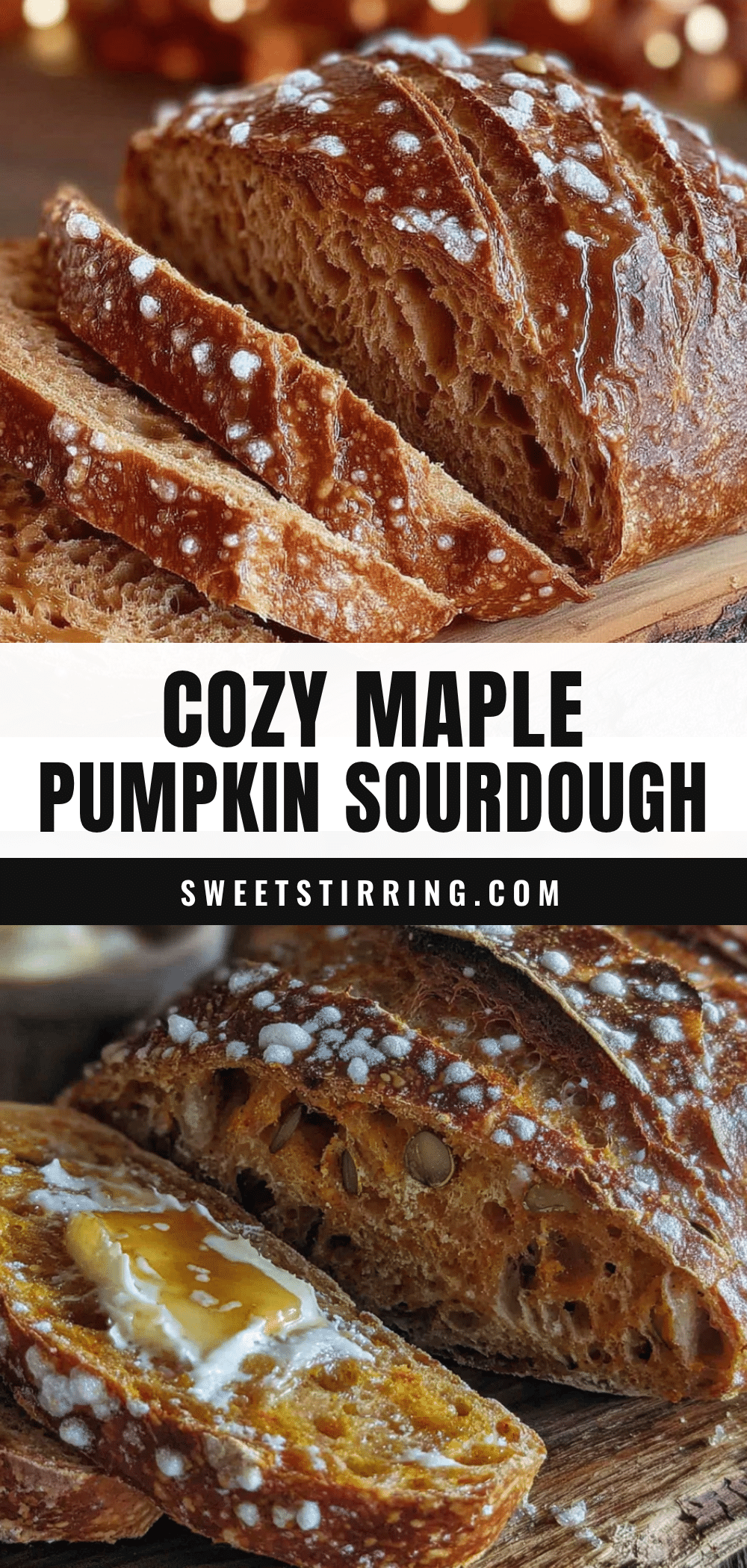
Best Easy Maple Pumpkin Sourdough Discard Bread Recipe
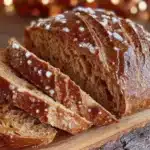
This cozy maple pumpkin sourdough discard bread is moist, tender, and perfectly balanced with tangy-sweet flavors. It uses up sourdough discard and comes together in under an hour, making it the ultimate fall comfort food.
- Prep Time: 15 minutes
- Cook Time: 55 minutes
- Total Time: 1 hour 10 minutes
- Yield: 10 servings 1x
- Category: Bread
- Cuisine: American
Ingredients
- 1 cup (240g) pumpkin puree (not pumpkin pie filling)
- 1/2 cup (120ml) maple syrup (real maple syrup)
- 1/3 cup (80ml) neutral oil (avocado, melted coconut, or vegetable oil)
- 2 large eggs, room temperature
- 1 teaspoon vanilla extract
- 1 cup (240g) sourdough discard (unfed, straight from the fridge)
- 1 3/4 cups (220g) all-purpose flour, spooned and leveled
- 1 teaspoon baking soda
- 1/2 teaspoon baking powder
- 1/2 teaspoon fine sea salt
- 1 1/2 teaspoons ground cinnamon
- 1/2 teaspoon ground nutmeg
- 1/2 teaspoon ground ginger
- 1/4 teaspoon ground cloves
- 1/4 teaspoon allspice (optional)
- 1/2 cup (60g) chopped pecans or walnuts (optional, toasted)
- 1/3 cup (50g) golden raisins or dried cranberries (optional)
- 1 tablespoon turbinado sugar (optional, for topping)
Instructions
- Preheat your oven to 350°F (175°C). Position the rack in the center. Line a 9×5-inch loaf pan with parchment paper, leaving a 2-inch overhang on the long sides. Lightly grease the exposed ends with butter or cooking spray.
- In a medium bowl, whisk together the all-purpose flour, baking soda, baking powder, salt, cinnamon, nutmeg, ginger, cloves, and allspice (if using) until evenly distributed. Set aside.
- In a large bowl, whisk together the pumpkin puree, maple syrup, oil, eggs, and vanilla extract until smooth and glossy.
- Add the sourdough discard and whisk until fully incorporated. The batter will look slightly thinner with a few small bubbles.
- Add the dry mixture to the wet mixture in two additions. Using a rubber spatula, fold gently—sweep around the edge of the bowl, then cut through the center—until just a few streaks of flour remain. The batter will be thick and slightly lumpy.
- If using nuts, dried fruit, or chocolate chips, fold them in with 5-6 folds. Do not overmix.
- Pour the batter into the prepared loaf pan and spread evenly with the spatula. It should reach about 2/3 to 3/4 of the way up the sides. If using turbinado sugar, sprinkle evenly over the top.
- Bake for 50-60 minutes, until a toothpick inserted into the center comes out clean or with a few moist crumbs. If the top is browning too fast (around 40 minutes), tent loosely with foil.
- Let the bread cool in the pan on a wire rack for 15 minutes.
- Use the parchment sling to lift the bread out of the pan and transfer to the wire rack. Cool completely—at least 1 hour—before slicing.
Notes
For best results, use room temperature ingredients. Do not overmix the batter. Let the bread cool completely before slicing to avoid a gummy texture. The bread freezes well for up to 3 months.
Nutrition
- Serving Size: 1 slice
- Calories: 235
- Sugar: 15
- Sodium: 280
- Fat: 9
- Saturated Fat: 1
- Carbohydrates: 36
- Fiber: 2.5
- Protein: 4.5
Keywords: pumpkin bread, sourdough discard, maple, fall baking, easy bread, pumpkin recipe, sourdough discard recipe