Love this? Save it for later!
Share the inspiration with your friends
My sister had refused to eat butternut squash for nearly a decade. Ten years. She claimed it was “too sweet for dinner food” and would push it around her plate like a stubborn kid. Then last Thanksgiving, I caught her standing at the kitchen counter, fork in hand, eating my creamy butternut squash mac and cheese straight from the baking dish. She wasn’t even pretending it was for quality control. She was just… gone. Lost in the creamy, sage-scented goodness.
“Wait,” she said, catching my eye with a look of genuine betrayal. “This has squash in it?”
I just smiled. Honestly, that moment made my whole month. See, I’d been working on this recipe for weeks, trying to figure out how to sneak all that velvety roasted squash goodness into a classic comfort dish without anyone feeling like they were eating “healthy mac and cheese.” You know that feeling when you want something indulgent but also want to pretend you’re making good choices? This recipe is that exact energy.
The first time I made it, I forgot to save some pasta water before draining. Total rookie move. I stood there staring at the colander, watching all that starchy gold disappear down the drain. But you know what? The roasted squash puree was so creamy it didn’t even matter. That’s when I knew this recipe was special.
The combination of sweet roasted butternut squash, nutty browned butter, and fragrant sage creates this sauce that’s somehow both lighter than traditional mac and cheese and more complex. It’s the kind of dish that makes you close your eyes on the second bite. And honestly? It’s the only way my sister will eat squash now. I’d call that a win.
Why You’ll Love This Recipe
Let me tell you why this creamy butternut squash mac and cheese with sage has become my most-requested recipe. I’ve tested this thing at least eight times, and each batch taught me something new about getting that perfect silky texture without heavy cream.
- Quick & Easy: From start to table in about 45 minutes. The oven does most of the work while you prep everything else.
- Simple Ingredients: No fancy cheese cave finds here. Sharp cheddar and Parmesan do the heavy lifting alongside humble butternut squash.
- Perfect for Fall Gatherings: This dish screams autumn. It’s my go-to for Friendsgiving, Sunday dinners, and those cozy nights when you want something that feels special.
- Crowd-Pleaser: Kids devour it. Adults ask for seconds. Even my squash-hating sister couldn’t resist.
- Unbelievably Delicious: The roasted squash creates this naturally creamy base that’s so velvety you won’t believe there’s no heavy cream involved.
What makes this version different from every other butternut squash mac and cheese out there? Two things. First, I roast the squash with garlic and sage leaves, which infuses the whole dish with deeper flavor. Second, I blend the sauce until it’s completely smooth—no stringy squash bits, just pure creamy perfection.
This isn’t just another healthy mac and cheese compromise. It’s comfort food that happens to have a vegetable hiding in plain sight. The kind of dish that makes you feel good about seconds because, hey, there’s squash in there.
What Ingredients You Will Need
This creamy butternut squash mac and cheese with sage uses simple, wholesome ingredients that work together to create something truly special. Most of these are pantry staples or easy fall finds.
For the Roasted Squash
- 1 medium butternut squash (about 2-3 pounds), peeled, seeded, and cubed into 1-inch pieces
- 3 tablespoons olive oil (I prefer extra virgin for roasting)
- 4 cloves garlic, smashed (skin on is fine—you’ll remove it later)
- 8-10 fresh sage leaves plus extra for garnish
- ½ teaspoon salt
- ¼ teaspoon black pepper
For the Pasta and Sauce

- 1 pound pasta (cavatappi, shells, or elbow macaroni work great)
- 4 tablespoons unsalted butter
- 3 tablespoons all-purpose flour
- 2 cups whole milk, warmed (adds richness—use 2% if needed)
- 1 cup reserved pasta water (this is liquid gold, don’t skip it)
- 2 cups sharp cheddar cheese, freshly grated (pre-shredded won’t melt as smoothly)
- ½ cup Parmesan cheese, freshly grated
- ½ teaspoon nutmeg, freshly grated if possible
- Salt and pepper to taste
For the Topping (Optional but Recommended)
- ½ cup panko breadcrumbs
- 2 tablespoons butter, melted
- 2 tablespoons Parmesan, grated
- 1 tablespoon fresh sage, finely chopped
I recommend using Tillamook or Cabot for the cheddar—they melt beautifully and have great flavor. For the Parmesan, buy a wedge and grate it yourself. Trust me on this. The pre-grated stuff has anti-caking agents that mess with the sauce texture.
If you’re looking for a gluten-free option, use gluten-free pasta and swap the flour for a 1:1 gluten-free blend. The sauce will still be plenty creamy.
Equipment Needed
You don’t need a professional kitchen to make this creamy butternut squash mac and cheese with sage. Here’s what you’ll need:
- Large baking sheet for roasting the squash (rimmed is best to catch any juices)
- Large pot for boiling pasta (at least 5 quarts)
- Colander for draining (and please save that pasta water!)
- Food processor or high-speed blender for pureeing the roasted squash
- Large skillet or Dutch oven for making the sauce
- Whisk for smooth sauce (a wooden spoon works in a pinch)
- Box grater for fresh cheese (microplane works great for Parmesan)
- 9×13 baking dish if you’re baking it with the topping
- Chef’s knife and cutting board for prep work
If you don’t have a food processor, a potato masher works surprisingly well. The texture won’t be quite as smooth, but it still tastes amazing. I’ve done it both ways, and honestly, the rustic version has its own charm.
For the blender method, let the roasted squash cool slightly before blending. Hot squash in a sealed blender can explode—learned that one the messy way.
Preparation Method
Let me walk you through making this creamy butternut squash mac and cheese with sage. I’ve broken it down so you can follow along without stress.
Step 1: Roast the Squash (25-30 minutes)
Preheat your oven to 400°F (200°C). Toss the cubed butternut squash with olive oil, smashed garlic cloves, sage leaves, salt, and pepper on your baking sheet. Spread everything in a single layer—crowding the pan leads to steaming instead of roasting. Roast for 25-30 minutes, flipping halfway through, until the squash is fork-tender and starting to caramelize at the edges. The smell at this point is incredible.
Step 2: Cook the Pasta (10 minutes)
While the squash roasts, bring a large pot of generously salted water to a boil. Cook your pasta according to package directions until al dente—about 1 minute less than the suggested time. Before draining, scoop out 1 cup of that starchy pasta water and set it aside. This is non-negotiable. Drain the pasta and give it a quick rinse with warm water to stop the cooking.
Step 3: Make the Squash Puree (5 minutes)
Once the squash is done roasting, let it cool for about 5 minutes. Pick out the sage leaves (they’ll be crispy and delicious—save them for garnish) and squeeze the roasted garlic cloves out of their skins. Transfer the squash and garlic to your food processor or blender. Add ½ cup of the reserved pasta water and blend until completely smooth. You’re looking for a consistency similar to baby food—silky and lump-free.
Step 4: Build the Sauce (10 minutes)
In your large skillet or Dutch oven, melt the butter over medium heat. Once it’s foaming, whisk in the flour and cook for about 1 minute, stirring constantly. This is your roux, and it should smell nutty and look slightly golden. Slowly pour in the warm milk while whisking vigorously to prevent lumps. Keep whisking until the mixture thickens, about 3-4 minutes. It should coat the back of a spoon.
Step 5: Combine Everything (5 minutes)
Reduce the heat to low. Add the squash puree to the sauce and stir until fully incorporated. Now add the grated cheddar and Parmesan, a handful at a time, stirring until each addition melts completely before adding more. Season with nutmeg, salt, and pepper. Taste it—I always do. Adjust the seasoning if needed.
Step 6: Bring It All Together (5 minutes)
Add the cooked pasta to the sauce and stir gently until every piece is coated. If the sauce seems too thick, add more reserved pasta water a tablespoon at a time until it reaches your desired consistency. The sauce will continue to thicken as it sits, so slightly looser is better.
Step 7: Optional Baked Topping (10-15 minutes)
If you’re making the crispy sage topping, preheat your broiler. Mix the panko, melted butter, Parmesan, and chopped sage together. Sprinkle it over the mac and cheese in your baking dish. Broil for 2-3 minutes until golden brown and bubbly. Watch it carefully—broilers work fast and burnt breadcrumbs are sad breadcrumbs.
Cooking Tips & Techniques
After making this creamy butternut squash mac and cheese with sage more times than I can count, I’ve picked up some tricks that make a real difference.
Don’t skip roasting the squash. I tried boiling it once to save time, and the sauce came out watery and bland. Roasting concentrates the natural sugars and adds that deep caramelized flavor you can’t get any other way. It’s worth the extra 25 minutes.
Grate your own cheese. I know, I know, it’s extra work. But pre-shredded cheese is coated with cellulose and starches that prevent smooth melting. Your sauce will be grainy instead of silky. Take the 3 minutes to grate fresh cheese—your taste buds will thank you.
Warm your milk before adding it to the roux. Cold milk will seize up the roux and give you lumps. I microwave mine for about 45 seconds while the roux is cooking. Room temperature works too, but warm is ideal.
Season in layers. Salt the pasta water until it tastes like the sea. Season the squash before roasting. Season the sauce at the end. Each layer builds flavor, and you’ll end up with a dish that tastes complex, not just salty.
My biggest failure? The time I used a blender while the squash was still piping hot. The steam pressure blew the lid off and sprayed pureed squash across my entire kitchen. It looked like a crime scene. Let things cool before blending, folks.
Variations & Adaptations
One of the best things about this creamy butternut squash mac and cheese with sage is how adaptable it is. Here are some ways I’ve changed it up:
Dietary Variations
- Gluten-Free: Use gluten-free pasta and swap the all-purpose flour for a 1:1 gluten-free blend or cornstarch (use 2 tablespoons cornstarch mixed with ¼ cup cold milk).
- Dairy-Free: Use unsweetened oat milk or cashew milk, vegan butter, and your favorite dairy-free cheddar shreds. The squash puree keeps it creamy even without dairy.
- Lower-Carb: Swap the pasta for roasted cauliflower florets or steamed broccoli. The sauce is thick enough to coat vegetables beautifully.
Flavor Twists
- Add Bacon: Crispy bacon crumbles on top take this over the top. The salty, smoky flavor plays perfectly with the sweet squash.
- Spicy Version: Add ½ teaspoon red pepper flakes to the butter while making the roux. The heat cuts through the richness beautifully.
- Herb Swap: No sage? Fresh thyme or rosemary work wonderfully. Use about 1 tablespoon chopped fresh herbs.
Different Cooking Methods
You can skip the broiled topping entirely and serve this straight from the stovetop. It’s faster and still absolutely delicious. I actually prefer it this way on busy weeknights.
For a make-ahead version, assemble everything in the baking dish without the topping, cover, and refrigerate for up to 24 hours. Add the topping and bake at 375°F for 20-25 minutes until hot and bubbly.
Serving & Storage Suggestions
This creamy butternut squash mac and cheese with sage is best served hot, straight from the stovetop or oven. The sauce is at its silkiest when fresh, so don’t let it sit too long before digging in.
What to serve with it: A simple green salad with lemon vinaigrette cuts through the richness perfectly. Roasted Brussels sprouts or sautéed green beans also make excellent sides. For a protein boost, grilled chicken or pan-seared pork chops pair beautifully.
Storage: Leftovers keep in an airtight container in the refrigerator for up to 4 days. The sauce will thicken as it sits, but don’t worry—it’s fixable.
Reheating: Add a splash of milk or pasta water and reheat gently on the stovetop or in the microwave. Stir frequently to redistribute the sauce. I actually think the flavors get even better on day two, once everything has had time to meld together.
Freezing: This dish freezes well for up to 3 months. Let it cool completely, transfer to a freezer-safe container, and thaw overnight in the refrigerator before reheating. Add a little extra milk when reheating to restore the creamy texture.
Nutritional Information & Benefits
While I wouldn’t call this a health food, this creamy butternut squash mac and cheese with sage has some surprising nutritional perks.
| Nutrient | Per Serving (1 cup) |
|---|---|
| Calories | 420 |
| Protein | 18g |
| Carbohydrates | 48g |
| Fiber | 5g |
| Fat | 19g |
| Saturated Fat | 10g |
| Vitamin A | 180% DV |
| Calcium | 35% DV |
| Iron | 12% DV |
Butternut squash is packed with vitamin A, fiber, and antioxidants. The sage adds anti-inflammatory properties, and the cheese provides calcium and protein. Compared to traditional mac and cheese, this version has about 30% fewer calories and double the fiber. It’s comfort food that actually contributes something to your day.
This recipe is vegetarian as written. For those watching sodium, use low-sodium cheese and go easy on the added salt.
Conclusion
This creamy butternut squash mac and cheese with sage has become my fall signature dish for good reason. It takes everything you love about classic mac and cheese—the creamy sauce, the tender pasta, that golden crispy topping—and makes it feel a little more special. A little more seasonal. A little more like a warm hug on a chilly evening.
I love that this recipe proves you don’t have to choose between comfort and vegetables. You can have both, and honestly? The squash makes it better. The sauce is silkier, the flavor more complex, and the whole thing feels like something you’d order at a cozy restaurant.
Try it this week. Roast that squash, crisp those sage leaves, and watch everyone at your table go back for seconds. And when you do, come back and tell me how it went. Did you add bacon? Did your kids notice the hidden vegetable? Did you, like my sister, find yourself converted?
Drop a comment below or tag me in your photos. I genuinely love seeing these creations come to life in your kitchens. Happy cooking!
Frequently Asked Questions
Can I use frozen butternut squash instead of fresh?
Yes, but you’ll lose some of the caramelized flavor from roasting. Thaw the frozen squash first, pat it dry, and roast it at 400°F for about 20 minutes. It won’t be quite as sweet, but it still works in a pinch.
Why is my sauce grainy?
This usually happens when the cheese is added to boiling hot sauce or when pre-shredded cheese is used. Always grate your own cheese and add it over low heat, stirring constantly until fully melted.
Can I make this ahead of time?
Absolutely! Assemble the dish without the topping, cover, and refrigerate for up to 24 hours. Add the topping just before baking at 375°F for 20-25 minutes. You may need to add a splash of milk to loosen the sauce.
What pasta shape works best?
Short pasta with nooks and crannies works best. Cavatappi, shells, rotini, and elbow macaroni all hold the sauce beautifully. Avoid long pasta like spaghetti—it just doesn’t work as well with this thick, creamy sauce.
Can I skip the sage?
You can, but you’ll lose a lot of the flavor profile that makes this dish special. If you don’t have sage, try fresh thyme or rosemary instead. The earthy herbs balance the sweetness of the squash perfectly.
Pin This Recipe!
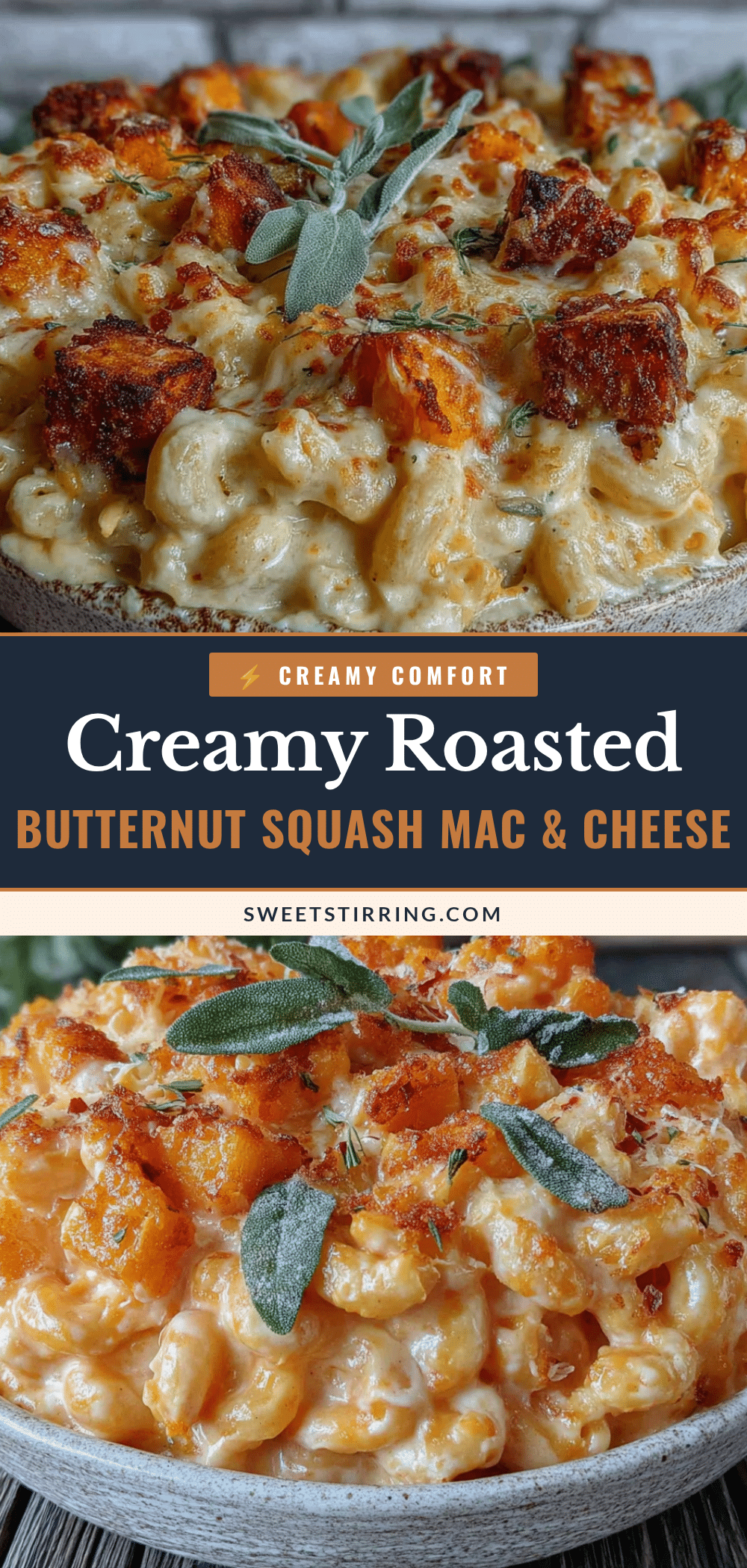
Creamy Butternut Squash Mac and Cheese with Sage (Easy!)

This creamy butternut squash mac and cheese with sage is a comforting fall dish that hides a velvety roasted squash puree in a rich, cheesy sauce. It’s quick, easy, and a crowd-pleaser that even squash skeptics will love.
- Prep Time: 15 minutes
- Cook Time: 30 minutes
- Total Time: 45 minutes
- Yield: 8 servings 1x
- Category: Main Course
- Cuisine: American
Ingredients
- 1 medium butternut squash (about 2–3 pounds), peeled, seeded, and cubed into 1-inch pieces
- 3 tablespoons olive oil
- 4 cloves garlic, smashed
- 8–10 fresh sage leaves plus extra for garnish
- ½ teaspoon salt
- ¼ teaspoon black pepper
- 1 pound pasta (cavatappi, shells, or elbow macaroni)
- 4 tablespoons unsalted butter
- 3 tablespoons all-purpose flour
- 2 cups whole milk, warmed
- 1 cup reserved pasta water
- 2 cups sharp cheddar cheese, freshly grated
- ½ cup Parmesan cheese, freshly grated
- ½ teaspoon nutmeg, freshly grated if possible
- Salt and pepper to taste
- ½ cup panko breadcrumbs (optional topping)
- 2 tablespoons butter, melted (optional topping)
- 2 tablespoons Parmesan, grated (optional topping)
- 1 tablespoon fresh sage, finely chopped (optional topping)
Instructions
- Preheat oven to 400°F (200°C). Toss cubed butternut squash with olive oil, smashed garlic cloves, sage leaves, salt, and pepper on a baking sheet. Spread in a single layer and roast for 25-30 minutes, flipping halfway, until fork-tender and caramelized.
- While squash roasts, bring a large pot of generously salted water to a boil. Cook pasta according to package directions until al dente (about 1 minute less than suggested). Before draining, reserve 1 cup of pasta water. Drain pasta and rinse with warm water.
- Let roasted squash cool for 5 minutes. Remove sage leaves (save for garnish) and squeeze roasted garlic from skins. Transfer squash and garlic to a food processor or blender. Add ½ cup reserved pasta water and blend until completely smooth.
- In a large skillet or Dutch oven, melt butter over medium heat. Whisk in flour and cook for 1 minute, stirring constantly, until nutty and slightly golden. Slowly pour in warm milk while whisking vigorously. Continue whisking until thickened, about 3-4 minutes.
- Reduce heat to low. Add squash puree and stir until fully incorporated. Gradually add grated cheddar and Parmesan, a handful at a time, stirring until each addition melts. Season with nutmeg, salt, and pepper. Taste and adjust seasoning.
- Add cooked pasta to the sauce and stir gently until coated. If sauce is too thick, add more reserved pasta water a tablespoon at a time until desired consistency.
- For optional topping: Mix panko, melted butter, Parmesan, and chopped sage. Sprinkle over mac and cheese in a 9×13 baking dish. Broil for 2-3 minutes until golden brown and bubbly. Watch carefully to avoid burning.
Notes
Don’t skip roasting the squash—it concentrates the natural sugars and adds deep flavor. Grate your own cheese for a smooth sauce. Warm the milk before adding to the roux to prevent lumps. Let roasted squash cool slightly before blending to avoid steam explosions. For a gluten-free version, use gluten-free pasta and a 1:1 gluten-free flour blend. For dairy-free, use unsweetened oat milk, vegan butter, and dairy-free cheddar. Leftovers keep in the refrigerator for up to 4 days; reheat with a splash of milk. Freezes well for up to 3 months.
Nutrition
- Serving Size: 1 cup
- Calories: 420
- Sugar: 8
- Sodium: 580
- Fat: 19
- Saturated Fat: 10
- Carbohydrates: 48
- Fiber: 5
- Protein: 18
Keywords: butternut squash mac and cheese, creamy mac and cheese, fall comfort food, vegetarian mac and cheese, easy mac and cheese, sage mac and cheese