Love this? Save it for later!
Share the inspiration with your friends
“The first time I tasted Ethiopian Doro Wat, I was honestly caught off guard. It wasn’t at some fancy restaurant or a food festival, but at a tiny, bustling market stall in Addis Ababa. The air was thick with the rich aroma of berbere spice, and the vendor was juggling orders while chatting with customers like it was no big deal. I remember clutching my cracked ceramic bowl, trying to savor every bite of that slow-braised chicken, wondering how something so simple could pack such a punch of flavor.”
That day stuck with me—not just the taste but the warmth of the experience. Months later, back in my own kitchen, I decided to recreate that unforgettable dish. I mean, you know that feeling when a recipe just sticks in your head, teasing you until you try it yourself? Well, this Flavorful Ethiopian Doro Wat Slow Braised Chicken recipe came from that craving and a few kitchen mishaps (yes, I almost burned the onions the first time). But, honestly, the slow braising method brought everything together beautifully.
Maybe you’ve been there too—searching for that perfect comfort meal that’s both hearty and exotic. This recipe stayed with me because it’s not only packed with bold, smoky spices but also because it’s made with patience and love. It’s a dish that invites you to slow down, savor the moment, and enjoy layers of flavor that build gradually. So let me tell you how you can bring a taste of Ethiopia right into your home.
Why You’ll Love This Recipe
This Flavorful Ethiopian Doro Wat Slow Braised Chicken recipe has been tested through many kitchen trials and family dinners, earning its spot as a go-to comfort meal with a twist. Here’s why it’s worth making:
- Slow and Easy: While it takes time to braise, the hands-on work is minimal—perfect for letting the kitchen do the heavy lifting while you relax.
- Simple Ingredients: Mostly pantry staples and a handful of spices like berbere and niter kibbeh (or butter), no need to hunt down rare items.
- Perfect for Special Occasions: Whether it’s a weekend feast or a cozy dinner with friends, this dish always impresses without stress.
- Deep, Layered Flavors: The slow braise melds the spicy, smoky, and slightly tangy notes together, creating a rich, soulful dish.
- Family-Approved: Even those skeptical about spicy food tend to come back for seconds (or thirds!).
What really makes this recipe different is the way the chicken absorbs the berbere and slow-cooked onions, creating a texture that’s tender yet full of bite. Plus, the traditional hard-boiled eggs soak up the sauce, making every bite a new flavor experience. Honestly, it’s not just another chicken stew—it’s a journey on your plate. And if you love dishes like the spicy Ethiopian misir wat, this one’s a must-try.
What Ingredients You Will Need
This recipe uses straightforward, wholesome ingredients to build complex flavors without fuss. Most are pantry staples or easy to find at specialty markets, and substitutions are simple if you need them.
- Chicken: 3 pounds (1.4 kg) of bone-in, skin-on chicken thighs or drumsticks (for best flavor and tenderness)
- Berbere Spice Blend: 3 tablespoons (I like Madre Spice brand for authentic flavor) – this is the heart of the dish
- Onions: 3 large red or yellow onions, finely chopped (slow-cooking these is key for sweetness)
- Garlic: 4 cloves, minced (fresh is best for that punch)
- Ginger: 1 tablespoon, freshly grated (adds brightness)
- Niter Kibbeh (Ethiopian spiced butter): 4 tablespoons, or substitute with unsalted butter mixed with a pinch of cardamom and fenugreek
- Tomato Paste: 2 tablespoons (adds depth and a touch of acidity)
- Chicken Broth or Water: 2 cups (480 ml), to create the braising liquid
- Hard-Boiled Eggs: 6, peeled (traditional and adds richness)
- Lemon Juice: 1 tablespoon (for a subtle tang at the end)
- Salt and Pepper: To taste
- Optional: Berbere spice can be adjusted for heat; use less if you prefer milder dishes.
If you want to make it gluten-free, just double-check the berbere blend ingredients. And if you can’t find niter kibbeh, regular butter with a pinch of aromatic spices works well.
Equipment Needed
- Large heavy-bottomed pot or Dutch oven: Essential for even heat distribution during slow braising.
- Wooden spoon or heat-resistant spatula: For stirring the delicate onion mixture without mashing it.
- Sharp chef’s knife and cutting board: For prepping onions, garlic, and ginger.
- Small saucepan: To make niter kibbeh if you choose to prepare it yourself.
- Measuring spoons and cups: For accurate spice and liquid measurements.
I’ve tried this with thinner pans, but the Dutch oven really helps prevent burning the onions. If you don’t have one, a heavy skillet with a lid works in a pinch. For niter kibbeh, some prefer a spice grinder to toast and crush the spices fresh—it’s worth the extra effort if you have the time.
Preparation Method
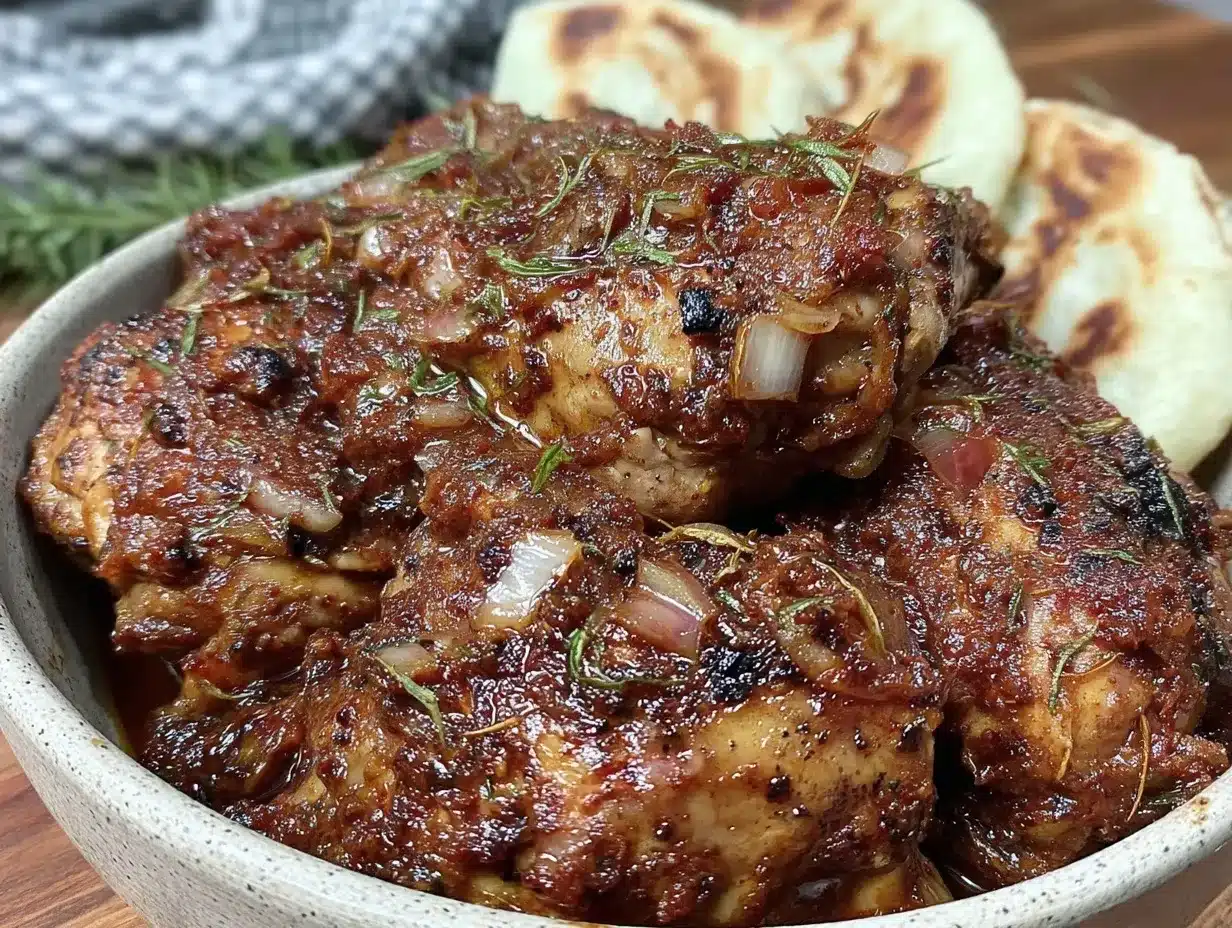
- Prep the Chicken: Rinse and pat dry the chicken pieces. Season lightly with salt and pepper. Set aside for 10 minutes while you prepare the onions.
- Slow-Cook the Onions: Heat the niter kibbeh (or butter) in your Dutch oven over medium-low heat. Add the chopped onions and cook gently, stirring often. This step can take 45-60 minutes. Don’t rush! The onions should be deeply caramelized, soft, and jam-like but not burnt.
- Add Garlic, Ginger, and Berbere: Stir in the minced garlic and grated ginger, cooking for 2-3 minutes until fragrant. Then add the berbere spice blend and tomato paste. Cook for another 5 minutes, stirring frequently to toast the spices and develop flavor.
- Brown the Chicken: Push the onion mixture to the sides of the pot and add chicken pieces in a single layer. Brown them on all sides for about 5-7 minutes. This step seals in juices and adds richness.
- Add Liquid and Simmer: Pour in chicken broth or water, just enough to cover the chicken halfway. Bring to a gentle simmer, cover, and let cook on low heat for 45 minutes to 1 hour, turning the chicken halfway through. The sauce should thicken and the chicken be tender.
- Add Hard-Boiled Eggs: Nestle peeled hard-boiled eggs into the sauce during the last 15 minutes of cooking to soak up the flavors.
- Finish with Lemon Juice and Taste: Stir in the lemon juice and adjust salt and pepper. Let the stew rest for 10 minutes before serving to deepen the flavors.
Watch the pot carefully during the onion caramelization—they can switch from perfect to burnt in seconds. Also, if the sauce reduces too much before the chicken is tender, add a splash more broth or water.
Cooking Tips & Techniques
One of the trickiest parts of this recipe is the slow caramelization of onions. I’ve learned that patience is key here—rushing leads to bitter burnt bits, which will throw off the whole flavor.
Use a heavy-bottomed pot to avoid hot spots. Stir frequently but gently to keep the onions from sticking and breaking down too much. When adding berbere, toast it just enough to release its aroma but don’t let it burn.
Braising at a low simmer rather than a boil helps keep the chicken tender and the sauce thick and glossy. If the sauce looks too thin near the end, uncover the pot for a few minutes to reduce it naturally.
Finally, peeling the hard-boiled eggs the day before can save time. I sometimes add a bit of black pepper and a pinch of salt to the eggs to enhance their flavor.
Variations & Adaptations
- Vegetarian Version: Replace chicken with firm tofu or hearty mushrooms, adjusting cooking time accordingly.
- Spice Level: Cut back on berbere for a milder stew, or add a pinch of cayenne for extra heat.
- Slow Cooker Adaptation: After browning onions and chicken, transfer everything to a slow cooker and cook on low for 6-8 hours. Add eggs in the last 30 minutes.
- Seasonal Twist: Toss in some chopped carrots or potatoes for extra heartiness during colder months.
- Dairy-Free: Use coconut oil or olive oil instead of butter or niter kibbeh.
Personally, I tried adding a splash of red wine during the braise once, which gave a subtle depth, but it’s not traditional. Feel free to experiment a little as you make it your own.
Serving & Storage Suggestions
Serve this slow braised chicken hot with traditional injera bread or over fluffy rice. The warmth of the stew paired with the tangy, spongy injera is unbeatable. Garnish with fresh cilantro or a slice of lemon for brightness.
Leftovers keep well in the refrigerator for up to 3 days, and the flavors actually deepen overnight. Reheat gently on the stovetop over low heat to avoid drying out the chicken.
You can freeze portions for up to 2 months; thaw overnight in the fridge before reheating. Just be mindful that the texture of hard-boiled eggs changes after freezing, so you might want to add fresh eggs when reheating.
Nutritional Information & Benefits
This dish is rich in protein from the chicken and eggs, while the berbere spice mix offers antioxidants and anti-inflammatory properties from ingredients like chili, garlic, and fenugreek. Onions add fiber and vitamins, making this a balanced, nutrient-dense meal.
For those watching carbs, serving it with injera can be swapped for cauliflower rice or steamed greens. The recipe is naturally gluten-free if you skip the traditional bread.
It’s a wholesome choice that combines comfort food with health benefits, perfect for anyone wanting a hearty yet nourishing meal.
Conclusion
If you’re craving something that’s both comforting and packed with flavor, this Flavorful Ethiopian Doro Wat Slow Braised Chicken recipe fits the bill perfectly. It’s a dish that asks for patience but rewards you with deep, smoky, spiced goodness that just sticks with you. Honestly, I keep coming back to it whenever I want a meal that feels like a warm hug after a long day.
Feel free to tweak the spices or cooking time to suit your taste, and don’t forget the hard-boiled eggs—they really make it special. I’d love to hear how you make it your own or any stories you have about discovering Ethiopian flavors. Drop your thoughts and experiences below!
Remember, good food is about sharing moments and memories—this dish does both beautifully.
FAQs
What is the best cut of chicken for Doro Wat?
Bone-in, skin-on thighs or drumsticks work best as they stay juicy and absorb the spices well during slow braising.
Can I make Doro Wat without berbere spice?
You can substitute with a mix of smoked paprika, cayenne, and ground fenugreek, but the authentic flavor mainly comes from berbere, so it’s worth trying to find it.
How long should I simmer the chicken for?
Typically, 45 minutes to 1 hour on low heat is ideal until the chicken is tender and the sauce thickens.
Is it traditional to add hard-boiled eggs to Doro Wat?
Yes! Hard-boiled eggs are a classic addition, soaking up the spicy sauce and adding richness.
Can I prepare Doro Wat in a slow cooker?
Absolutely. After browning the ingredients, transfer to a slow cooker and cook on low for 6-8 hours. Add eggs towards the end.
Pin This Recipe!
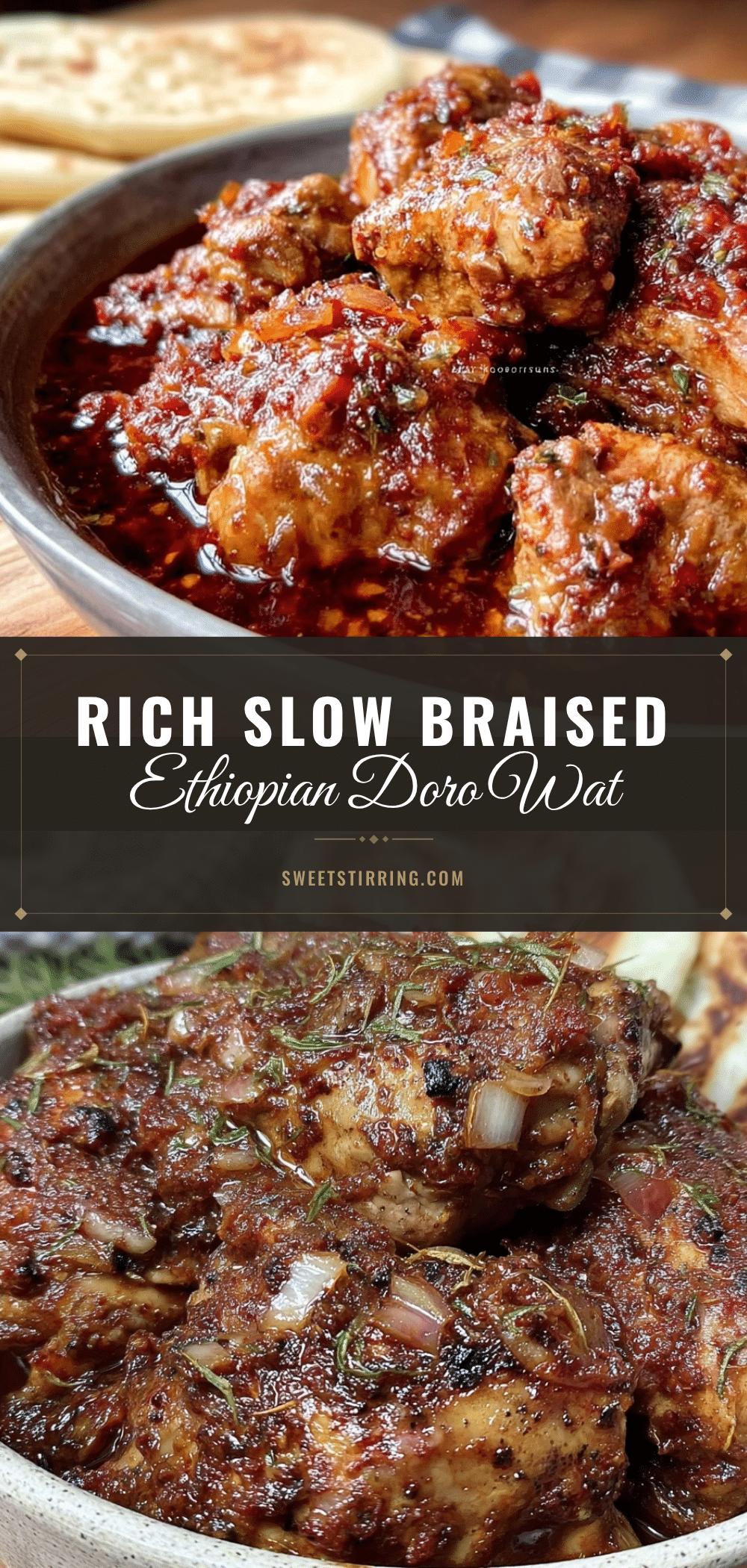
Flavorful Ethiopian Doro Wat Slow Braised Chicken
A rich and hearty Ethiopian chicken stew slow-braised with berbere spice, caramelized onions, and traditional hard-boiled eggs, perfect for a comforting and exotic meal.
- Prep Time: 15 minutes
- Cook Time: 1 hour 15 minutes
- Total Time: 1 hour 30 minutes
- Yield: 6 servings 1x
- Category: Main Course
- Cuisine: Ethiopian
Ingredients
- 3 pounds bone-in, skin-on chicken thighs or drumsticks
- 3 tablespoons berbere spice blend
- 3 large red or yellow onions, finely chopped
- 4 cloves garlic, minced
- 1 tablespoon freshly grated ginger
- 4 tablespoons niter kibbeh (Ethiopian spiced butter) or unsalted butter with a pinch of cardamom and fenugreek
- 2 tablespoons tomato paste
- 2 cups chicken broth or water
- 6 hard-boiled eggs, peeled
- 1 tablespoon lemon juice
- Salt and pepper to taste
Instructions
- Rinse and pat dry the chicken pieces. Season lightly with salt and pepper. Set aside for 10 minutes.
- Heat the niter kibbeh or butter in a large heavy-bottomed pot or Dutch oven over medium-low heat. Add the chopped onions and cook gently, stirring often, for 45-60 minutes until deeply caramelized and jam-like but not burnt.
- Stir in the minced garlic and grated ginger, cooking for 2-3 minutes until fragrant. Add the berbere spice blend and tomato paste, cooking for another 5 minutes while stirring frequently to toast the spices.
- Push the onion mixture to the sides of the pot and add chicken pieces in a single layer. Brown them on all sides for about 5-7 minutes.
- Pour in chicken broth or water to cover the chicken halfway. Bring to a gentle simmer, cover, and cook on low heat for 45 minutes to 1 hour, turning the chicken halfway through.
- Nestle peeled hard-boiled eggs into the sauce during the last 15 minutes of cooking to soak up the flavors.
- Stir in the lemon juice and adjust salt and pepper to taste. Let the stew rest for 10 minutes before serving.
Notes
Patience is key when caramelizing onions to avoid burning. Use a heavy-bottomed pot for even heat. If sauce reduces too much, add more broth or water. Peeling hard-boiled eggs a day ahead saves time. For a slow cooker adaptation, cook on low for 6-8 hours after browning ingredients and add eggs in the last 30 minutes.
Nutrition
- Serving Size: 1 serving (approxima
- Calories: 450
- Sugar: 6
- Sodium: 550
- Fat: 28
- Saturated Fat: 10
- Carbohydrates: 12
- Fiber: 3
- Protein: 38
Keywords: Ethiopian, Doro Wat, slow braised chicken, berbere spice, comfort food, traditional Ethiopian stew