Love this? Save it for later!
Share the inspiration with your friends
“I never thought a street food stall could teach me so much about wok cooking,” my friend Jason confessed one humid Saturday evening in Kuala Lumpur. We were parked on plastic stools, watching a wizened uncle toss noodles with such flair that smoke curled up in a mesmerizing dance. That smoky aroma—wok hei, they called it—filled the air, teasing the senses. It was the moment I first tasted authentic Malaysian Char Kway Teow, and honestly, it changed my noodle game forever.
Char Kway Teow, literally “stir-fried rice cake strips,” might seem simple at first glance. But that smoky, slightly charred flavor you get only from a screaming-hot wok at just the right angle? That’s the magic. I remember trying to replicate it at home—burning the garlic, overcooking the prawns, and almost setting off the smoke alarm more times than I can count. Yet, I didn’t give up because that plate of noodles pulled me back every time.
Maybe you’ve been there—attempting to capture a taste that transports you to bustling hawker centers, where the chatter blends with sizzling sounds. This recipe isn’t just about noodles; it’s about the story behind every bite, the dance of heat and ingredients, and yes, a little trial, error, and a cracked wok handle along the way. Let me tell you why this Flavorful Malaysian Char Kway Teow with Authentic Wok Hei is the one you’ll want to keep coming back to.
Why You’ll Love This Recipe
After countless attempts and tweaks, this recipe stands out—not just because it tastes amazing but because it’s been tested, tweaked, and approved by both street vendors and home cooks alike. Here’s why I think you’ll love making and eating this dish:
- Quick & Easy: Ready in about 25 minutes, perfect for when you crave something satisfying without the fuss.
- Simple Ingredients: No need for hard-to-find exotic items; your local Asian market or even a well-stocked pantry will have everything.
- Perfect for Casual Dinners: Whether you’re cooking for one or a crowd, it’s a crowd-pleaser that feels special but isn’t complicated.
- Crowd-Pleaser: Kids, adults, picky eaters—everyone loves the smoky, savory flavor combo.
- Unbelievably Delicious: The wok hei flavor gives it a smoky depth that sets it apart from ordinary stir-fries.
What makes this really different? It’s the technique—how you handle the wok, the timing of adding ingredients, and the balance of flavors from sweet soy sauce to a hint of spice. Plus, I blend the traditional with a few modern shortcuts to make it approachable without losing authenticity. Honestly, it’s the kind of recipe that makes you close your eyes with the first bite and say, “Yep, this is exactly what I wanted.”
What Ingredients You Will Need
This recipe uses simple, wholesome ingredients to deliver bold flavor and that signature satisfying texture without the fuss. Most are pantry staples or easy to find at your local Asian market.
- Flat rice noodles (kway teow): Fresh is best, but dried soaked in warm water for 30 minutes works fine.
- Prawns, peeled and deveined: Medium-sized, fresh or frozen, thawed.
- Chinese lap cheong (Chinese sausage), thinly sliced: Adds a lovely sweet-savory depth.
- Eggs: Large, beaten.
- Bean sprouts: Fresh, rinsed and drained.
- Garlic: Minced, about 3 cloves for that aromatic base.
- Chives or green onions: Cut into 1-inch pieces.
- Light soy sauce: For seasoning and saltiness.
- Dark soy sauce: Adds color and a touch of sweetness.
- Oyster sauce: For umami richness (I recommend Lee Kum Kee brand for consistent flavor).
- Chili paste or fresh chilies: Adjust to your heat preference.
- White pepper: Freshly ground if possible, adds subtle warmth.
- Cooking oil: Use a high smoke point oil like peanut or vegetable oil.
If you want to make this gluten-free, swap soy sauces for tamari or coconut aminos. For a vegetarian twist, you can replace prawns with firm tofu and omit lap cheong, adding mushrooms for texture instead. In summer, fresh bean sprouts are crisp and perfect, but frozen can work in a pinch.
Equipment Needed
- Wok: The heart of this recipe. A well-seasoned carbon steel wok is ideal for authentic wok hei, but a large non-stick skillet can work with some adjustments.
- Spatula or wok chuan: A sturdy metal or wooden spatula to toss and stir.
- Knife and cutting board: For prepping ingredients efficiently.
- Mixing bowl: For beating eggs and combining sauces.
- Colander or sieve: To drain noodles and rinse bean sprouts.
Personally, my carbon steel wok has seen better days with a few burn marks and a slightly warped handle, but it still delivers that smokey flavor like no other. If you don’t have a wok, a cast iron skillet can mimic the high heat needed, but keep the batch smaller to avoid crowding. Remember, a hot pan is key—so preheat your wok thoroughly before adding ingredients.
Preparation Method
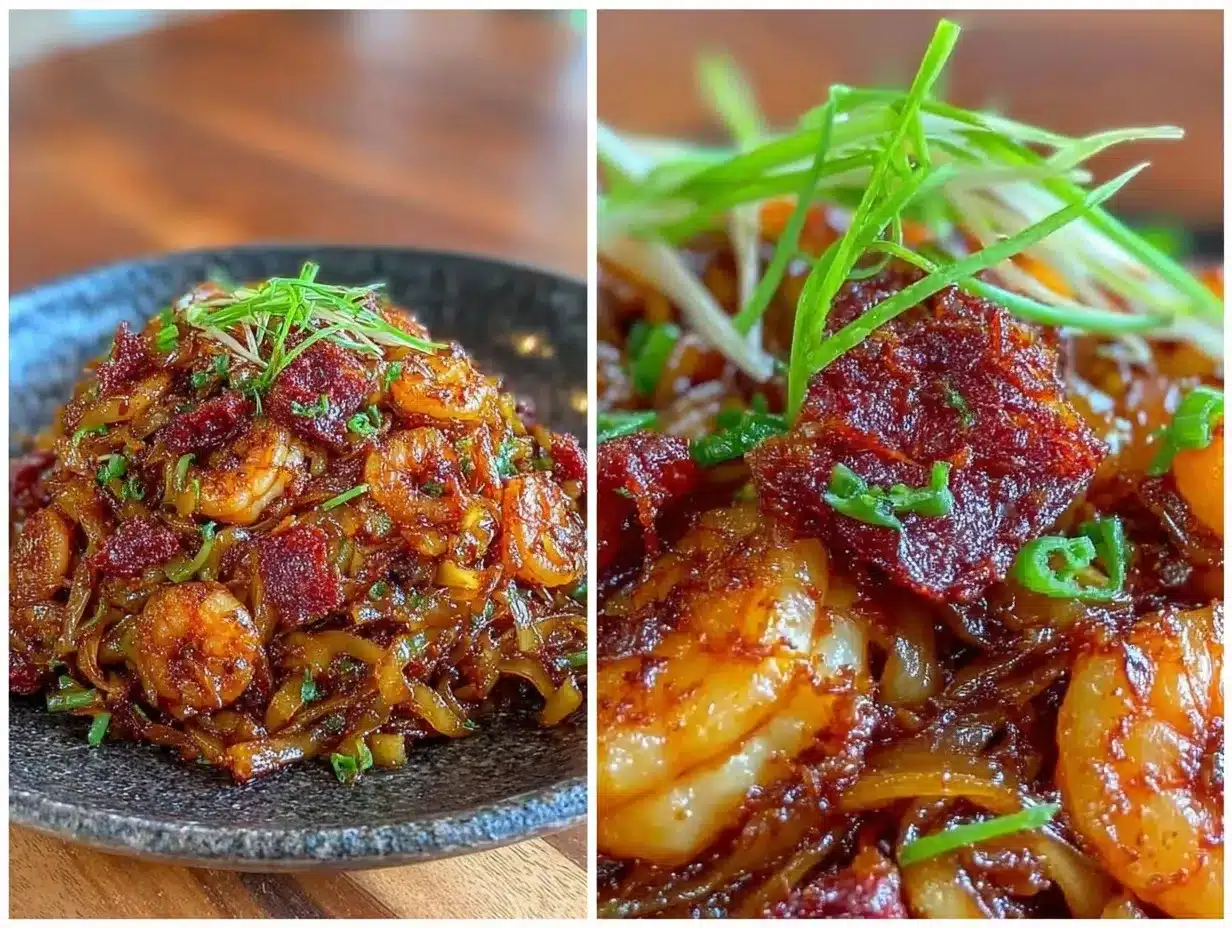
- Prep the noodles: If using dried flat rice noodles, soak them in warm water for about 30 minutes until pliable but not mushy. Drain well and set aside. Fresh noodles can be gently separated by hand.
- Mix the sauce: In a small bowl, combine 2 tablespoons light soy sauce, 1 tablespoon dark soy sauce, 1 tablespoon oyster sauce, and a teaspoon of chili paste (adjust to taste). Stir well and set aside.
- Heat the wok: Place your wok on high heat and add 2 tablespoons of oil. Wait until it’s shimmering but not smoking excessively.
- Cook the aromatics: Toss in minced garlic and sliced lap cheong. Stir-fry quickly (about 20 seconds) until fragrant and the sausage starts to release its oil.
- Add prawns: Stir-fry for about 1–2 minutes until they turn pink but remain tender. Remove prawns and lap cheong onto a plate temporarily.
- Scramble eggs: Add a bit more oil if needed, pour in beaten eggs, and lightly scramble until just set but still soft.
- Add noodles and sauce: Immediately add drained noodles and pour the sauce over. Toss vigorously to coat every strand, making sure the noodles start to sizzle and slightly char.
- Return prawns and sausage: Mix them back into the noodles and continue stir-frying for 2-3 minutes until everything is heated through and the noodles have a slight crisp edge (this is the elusive wok hei).
- Finish with bean sprouts and chives: Toss in bean sprouts and chives, stir quickly (about 30 seconds) to keep the sprouts crunchy and vibrant.
- Final seasoning: Sprinkle a pinch of white pepper, give a last toss, and serve immediately.
Pro tip: Don’t overcrowd the wok. If you have a large batch, cook in batches to keep the heat up and get that authentic wok hei flavor. Also, keep your ingredients within arm’s reach; once the wok is hot, things move fast!
Cooking Tips & Techniques
Getting that authentic wok hei can be tricky, but here’s what I’ve learned from many smoky nights and slightly charred noodles:
- High heat is your best friend: A screaming-hot wok is essential. If your kitchen has no ventilation, open windows—trust me, your smoke alarm will thank you later.
- Prep everything beforehand: Stir-frying is fast. Have all ingredients chopped, sauces mixed, and noodles ready to go.
- Use oils with high smoke points: Peanut oil is traditional and perfect for that crisp stir-fry flavor.
- Don’t stir too much: Let the noodles sit for a few seconds between tosses to develop that slight char.
- Avoid overcooking protein: Prawns cook quickly; remove them early to avoid rubberiness.
- Season carefully: Balance salty, sweet, and spicy elements; taste as you go.
My first few attempts often ended with soggy noodles or burnt garlic. One time, I even forgot to add the oyster sauce (facepalm moment). But patience and practice turned those mistakes into a recipe I’m proud of—and that’s the journey worth savoring.
Variations & Adaptations
This recipe is pretty flexible, so feel free to customize:
- Vegetarian version: Skip prawns and lap cheong. Add firm tofu cubes and shiitake mushrooms for that meaty texture.
- Spice it up: Add extra chili paste or fresh bird’s eye chilies for a fiery kick.
- Low-carb option: Swap flat rice noodles for shirataki noodles or spiralized vegetables like zucchini noodles.
- Different proteins: Try chicken slices or thinly sliced beef for a twist on the classic.
- Cooking method: If you don’t have a wok, a cast iron skillet on high heat works great, just avoid overcrowding.
One time, I added a splash of Shaoxing wine during stir-fry for a subtle aromatic boost—it worked surprisingly well! Play around with what you have; the heart of the recipe is in the technique and balance.
Serving & Storage Suggestions
Serve your Char Kway Teow piping hot, straight from the wok, to enjoy the best texture and that smoky aroma. Garnish with extra fresh chives or a wedge of lime for brightness. It pairs beautifully with a simple cucumber salad or a cold glass of teh tarik (Malaysian pulled tea) to balance the savory richness.
If you have leftovers, store them in an airtight container in the refrigerator for up to 2 days. Reheat gently in a hot skillet with a splash of oil to revive the texture. Avoid microwaving if you want to keep the noodles from getting mushy.
Flavors deepen slightly after resting, but the wok hei fades, so fresh is always best. Still, leftovers make a quick lunch that reminds you of that street-side stall in Kuala Lumpur.
Nutritional Information & Benefits
Each serving of this Char Kway Teow packs approximately 450-500 calories, depending on portion size and protein choice. It offers a balanced mix of carbohydrates from the noodles, protein from prawns and sausage, and healthy fats from the cooking oil.
Key ingredients like garlic and chili offer natural antioxidants, while bean sprouts add fiber and vitamins. For those mindful of sodium, adjust soy sauce quantities or opt for low-sodium versions. This recipe is naturally gluten-free if you use tamari instead of soy sauce.
From a wellness perspective, it’s a satisfying meal that fuels you without feeling heavy, especially when paired with fresh veggies on the side.
Conclusion
This Flavorful Malaysian Char Kway Teow with Authentic Wok Hei recipe isn’t just about cooking noodles—it’s about capturing a moment, a taste, and a tradition that’s close to my heart. Whether you’re a seasoned cook or just starting, the balance of smoky, savory, and slightly sweet elements makes this dish unforgettable.
Feel free to tweak it to your taste and kitchen setup. I love this recipe because it reminds me that sometimes, the best dishes come from a bit of smoke, a lot of heat, and a dash of patience.
If you give this a try, please share how it goes and any twists you discover—let’s keep the wok hei alive together!
FAQs
What is wok hei and how do I get it?
Wok hei is the smoky, charred flavor unique to high-heat stir-frying in a well-seasoned wok. To get it, use very high heat, a dry and hot wok, and avoid overcrowding ingredients.
Can I use dried noodles instead of fresh flat rice noodles?
Yes, soak dried flat rice noodles in warm water for about 30 minutes until pliable. Drain well before using to avoid soggy noodles.
What if I don’t eat seafood—can I skip the prawns?
Absolutely! You can replace prawns with chicken, beef, tofu, or mushrooms depending on your preference.
Is there a vegetarian version of Char Kway Teow?
Yes, omit the prawns and lap cheong, and use tofu, mushrooms, and extra vegetables for a tasty vegetarian twist.
How do I avoid the noodles sticking together?
Drain noodles well and toss them with a little oil before cooking. Stir-fry quickly on high heat without overcooking to keep them separate and tender.
By the way, if you enjoy rich, savory noodle dishes like this, you might appreciate the satisfying flavors of crispy garlic chicken—another family favorite in my kitchen. And for a different noodle adventure, the spicy Sichuan noodles offer a punchy, fiery contrast worth trying on a cool evening.
Pin This Recipe!
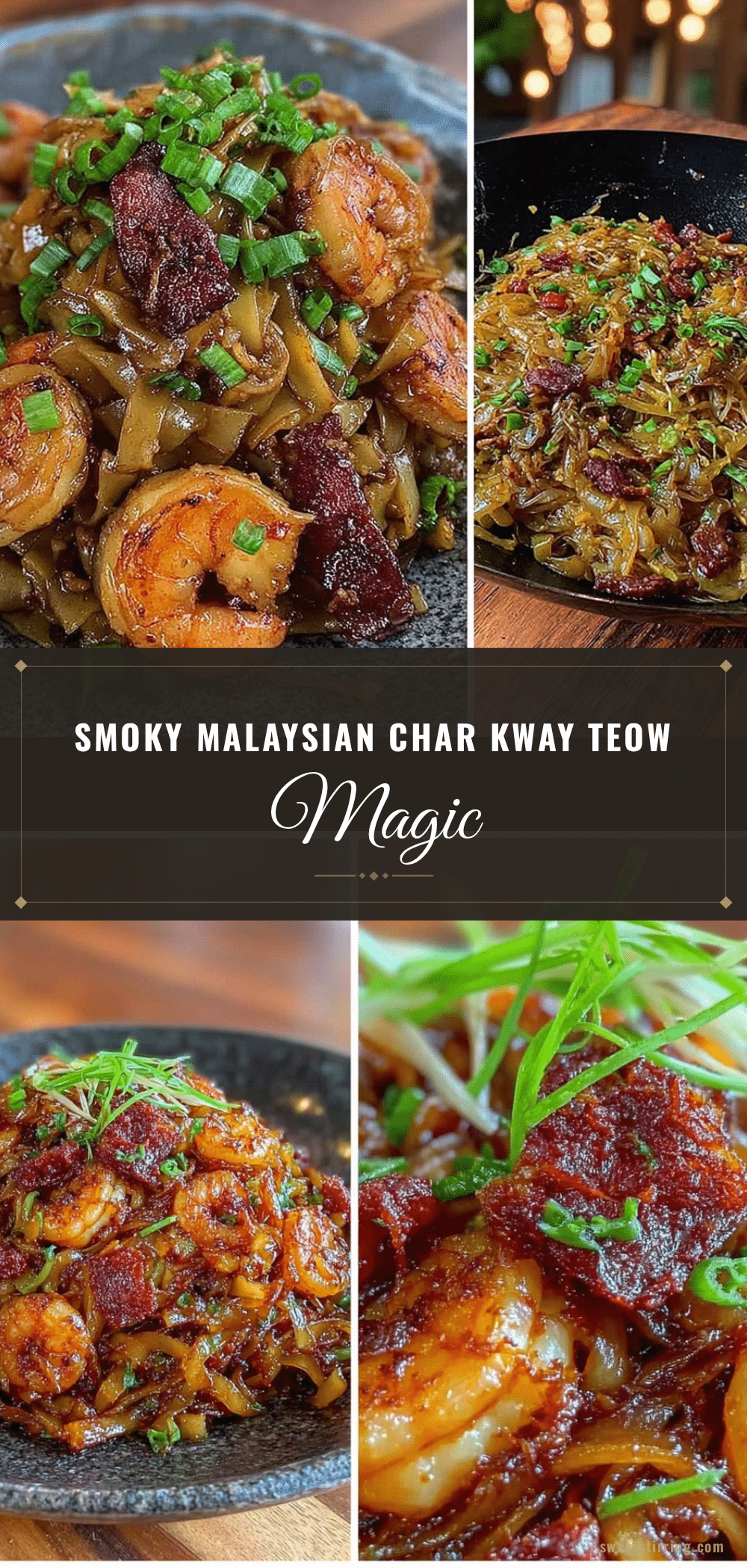
Flavorful Malaysian Char Kway Teow Recipe Easy Authentic Wok Hei
An authentic Malaysian stir-fried flat rice noodle dish known for its smoky ‘wok hei’ flavor, combining prawns, Chinese sausage, eggs, and bean sprouts in a savory sauce. Quick and easy to prepare, perfect for casual dinners.
- Prep Time: 35 minutes
- Cook Time: 15 minutes
- Total Time: 50 minutes
- Yield: 3 servings 1x
- Category: Main Course
- Cuisine: Malaysian
Ingredients
- 8 oz flat rice noodles (kway teow), fresh or dried soaked in warm water for 30 minutes
- 6 oz medium-sized prawns, peeled and deveined
- 2 oz Chinese lap cheong (Chinese sausage), thinly sliced
- 2 large eggs, beaten
- 1 cup fresh bean sprouts, rinsed and drained
- 3 cloves garlic, minced
- 1/2 cup chives or green onions, cut into 1-inch pieces
- 2 tablespoons light soy sauce
- 1 tablespoon dark soy sauce
- 1 tablespoon oyster sauce
- 1 teaspoon chili paste or fresh chilies (adjust to taste)
- 1/4 teaspoon freshly ground white pepper
- 2 tablespoons cooking oil (peanut or vegetable oil)
Instructions
- If using dried flat rice noodles, soak them in warm water for about 30 minutes until pliable but not mushy. Drain well and set aside. Fresh noodles can be gently separated by hand.
- In a small bowl, combine 2 tablespoons light soy sauce, 1 tablespoon dark soy sauce, 1 tablespoon oyster sauce, and 1 teaspoon chili paste (adjust to taste). Stir well and set aside.
- Place your wok on high heat and add 2 tablespoons of oil. Wait until it’s shimmering but not smoking excessively.
- Toss in minced garlic and sliced lap cheong. Stir-fry quickly (about 20 seconds) until fragrant and the sausage starts to release its oil.
- Add prawns and stir-fry for about 1–2 minutes until they turn pink but remain tender. Remove prawns and lap cheong onto a plate temporarily.
- Add a bit more oil if needed, pour in beaten eggs, and lightly scramble until just set but still soft.
- Immediately add drained noodles and pour the sauce over. Toss vigorously to coat every strand, making sure the noodles start to sizzle and slightly char.
- Mix prawns and sausage back into the noodles and continue stir-frying for 2-3 minutes until everything is heated through and the noodles have a slight crisp edge (wok hei).
- Toss in bean sprouts and chives, stir quickly (about 30 seconds) to keep the sprouts crunchy and vibrant.
- Sprinkle a pinch of white pepper, give a last toss, and serve immediately.
Notes
Use a well-seasoned carbon steel wok for authentic wok hei flavor. Avoid overcrowding the wok to maintain high heat. Use oils with high smoke points like peanut oil. For gluten-free, substitute soy sauces with tamari or coconut aminos. Vegetarian version can replace prawns and lap cheong with tofu and mushrooms. Reheat leftovers gently in a hot skillet to preserve texture.
Nutrition
- Serving Size: 1 plate (approximate
- Calories: 475
- Sugar: 5
- Sodium: 900
- Fat: 18
- Saturated Fat: 4
- Carbohydrates: 55
- Fiber: 3
- Protein: 22
Keywords: Char Kway Teow, Malaysian noodles, wok hei, stir-fry, flat rice noodles, prawns, Chinese sausage, easy Asian recipe