Love this? Save it for later!
Share the inspiration with your friends
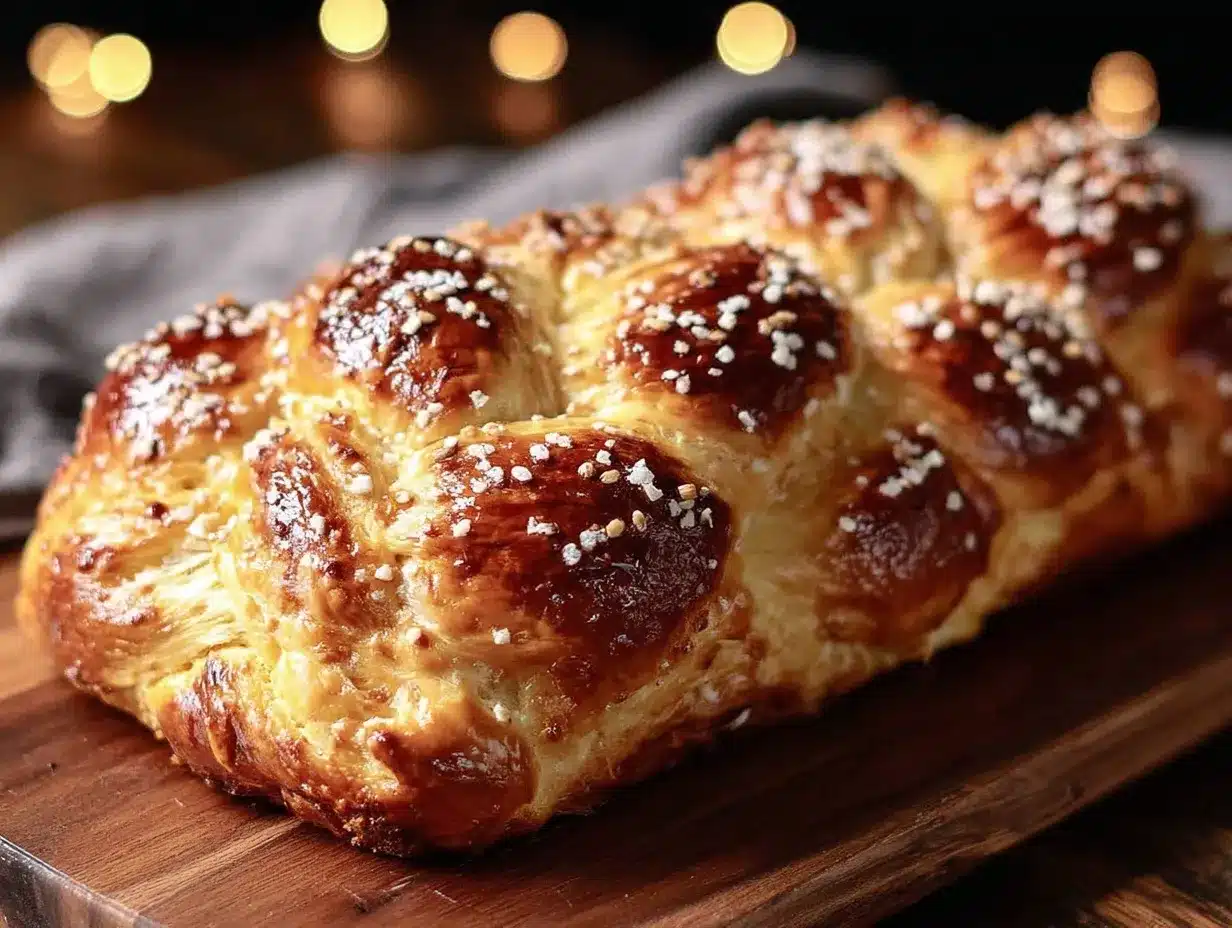
“The kitchen smelled like sunshine that spring morning,” my neighbor Katya said as she handed me a warm loaf of her Ukrainian Paska bread. I wasn’t expecting much—just a simple Easter tradition, I thought. But as I broke into that golden, braided loaf, the rich saffron aroma hit me like a gentle embrace. Honestly, it was nothing like the usual bread I’d tasted before.
Katya told me she learned this recipe from her grandmother, a woman who never wrote anything down but always made the most incredible Paska bread each Easter, glowing with a saffron hue that seemed almost magical. I was skeptical at first—braided bread always felt intimidating. But watching Katya weave the dough with such care, and then tasting that perfect combination of sweet, tender crumb and fragrant saffron, well… it changed my whole idea of what Easter bread could be.
Maybe you’ve been there, standing in the kitchen, wondering if you can pull off that braided bread masterpiece that looks so delicate yet rich with tradition. Let me tell you—this recipe stayed with me because it’s achievable, comforting, and honestly, a little bit joyful to make. Plus, the saffron glow? It’s like a warm Easter morning captured in every bite. So, grab your mixing bowl and a little patience—this Perfect Ukrainian Paska Braided Easter Bread with Saffron Glow is about to become your holiday favorite too.
Why You’ll Love This Recipe
Making this perfect Ukrainian Paska braided Easter bread is like creating a little piece of tradition in your own kitchen, and here’s why it stands out from other Easter breads you might find:
- Quick & Easy: While braided breads can seem tricky, this recipe comes together in under 3 hours including rising time, ideal for busy holiday mornings or last-minute baking plans.
- Simple Ingredients: You likely have most of these staples on hand—flour, eggs, butter—with a pinch of saffron giving it that signature glow without needing specialty shops.
- Perfect for Easter or Spring Celebrations: This bread shines on holiday tables, brunches, or even as a sweet breakfast treat after Easter church services.
- Crowd-Pleaser: Kids and adults alike can’t resist the soft, slightly sweet crumb and the beautiful braided shape that makes it look fancy without fuss.
- Unbelievably Delicious: The subtle saffron adds a unique floral earthiness that pairs beautifully with the rich, buttery dough. It’s comfort food with a little twist.
This isn’t just another braided bread recipe. My secret? The saffron bloom is steeped gently before adding, ensuring every bite has that warm, golden hue and delicate flavor. Plus, the dough is enriched with just enough eggs and butter to stay tender but firm enough to hold the beautiful braid shape. It’s the kind of recipe that makes you close your eyes after the first bite—trust me, I’ve been there more times than I can count.
What Ingredients You Will Need
This recipe uses simple, wholesome ingredients to deliver bold flavor and satisfying texture without the fuss. Most are pantry staples, and the saffron is the star that gives this Paska its signature glow. Feel free to swap some items if needed, and I’ll share tips along the way.
- All-purpose flour – 4 cups (480g), sifted for lightness (I like King Arthur for best texture)
- Active dry yeast – 2 ¼ teaspoons (one packet), to get that perfect rise
- Whole milk – 1 cup (240ml), warmed to about 110°F (43°C) to activate yeast (use dairy-free milk like almond or oat if needed)
- Granulated sugar – ½ cup (100g), for that gentle sweetness
- Unsalted butter – ½ cup (115g), softened (adds richness and tender crumb)
- Large eggs – 4, room temperature (3 for dough, 1 for egg wash)
- Saffron threads – ¼ teaspoon, soaked in 2 tablespoons warm milk for 10 minutes (this gives the bread its beautiful golden glow and delicate flavor)
- Salt – 1 teaspoon, to balance sweetness
- Vanilla extract – 1 teaspoon, for subtle warmth
- Optional: raisins or dried fruit – ½ cup (soaked in warm water for 10 minutes and drained), if you want a little extra texture and sweetness
For best results, pick saffron that is fresh and aromatic—cheap saffron loses flavor quickly. I usually buy mine from a trusted spice shop or online source like Simply Saffron. If you don’t have saffron, you can omit it, but honestly, it’s what makes this Paska so special.
Equipment Needed
- Large mixing bowl – for combining ingredients and rising dough
- Measuring cups and spoons – precise measurements matter here for the perfect crumb
- Stand mixer with dough hook (optional) – makes kneading easier but hand kneading works just fine (expect about 10 minutes of elbow grease)
- Small bowl – to soak saffron and for egg wash
- Baking sheet or round baking pan – lined with parchment paper or lightly greased
- Pastry brush – for applying egg wash to get that beautiful shiny crust
- Clean kitchen towel – to cover dough during rising
If you don’t have a stand mixer, no worries! I’ve made this dough by hand many times. Just be patient with kneading until the dough feels smooth and elastic. A budget-friendly alternative to a pastry brush is a clean, food-safe paintbrush you keep just for baking.
Preparation Method
- Activate the yeast: In a small bowl, combine the warm milk (about 110°F / 43°C) with 1 tablespoon of sugar and the active dry yeast. Let it sit for 5-10 minutes until foamy and bubbly. If it doesn’t foam, your yeast might be old—start over with fresh yeast.
- Soak the saffron: While the yeast activates, place the saffron threads in 2 tablespoons of warm milk and set aside for at least 10 minutes. This step is key to unlocking that golden color and flavor.
- Mix wet ingredients: In the large mixing bowl, whisk together the eggs (reserve one for egg wash), remaining sugar, softened butter, vanilla extract, and salt. Stir in the saffron milk along with its threads to infuse the dough.
- Combine dough: Add the activated yeast mixture to the wet ingredients and stir gently to combine. Then, gradually add the sifted flour, about 1 cup (120g) at a time, mixing with a wooden spoon or dough hook attachment until a rough dough forms.
- Knead the dough: Turn the dough onto a lightly floured surface and knead for about 8-10 minutes until smooth and elastic. The dough should be slightly tacky but not sticky. If too sticky, sprinkle a little more flour; if too dry, add a teaspoon of warm milk.
- First rise: Place the dough in a lightly greased bowl, cover with a clean towel or plastic wrap, and let rise in a warm spot for 1 to 1.5 hours, or until doubled in size. I usually place mine near the oven or a sunny window.
- Optional add-ins: If using raisins, fold them gently into the risen dough.
- Shape the braid: Punch down the dough to release air. Divide into three equal ropes about 16 inches (40 cm) long. Lay them side by side and pinch one end together. Braid the ropes tightly but gently, and pinch the other end to seal. Tuck the ends under to form a neat oval or circle shape.
- Second rise: Place the braided dough on a parchment-lined baking sheet. Cover again and let rise for 30-45 minutes until puffed but not doubled.
- Prepare egg wash: Beat the reserved egg with 1 tablespoon of water. Brush gently over the braid to give it that shiny, golden crust.
- Bake: Preheat your oven to 350°F (175°C). Bake the Paska for 30-35 minutes until deep golden brown. If the top browns too fast, tent loosely with foil.
- Cool and enjoy: Let the bread cool completely on a wire rack before slicing. The aroma will fill your kitchen and the saffron glow will be impossible to resist.
Cooking Tips & Techniques
There’s a bit of art in making the perfect braided Paska bread, but a few tricks make it easier:
- Don’t rush the yeast: If your yeast isn’t bubbling, the bread won’t rise well. Always use warm milk, not hot—110°F (43°C) feels warm to the touch but not scalding.
- Knead patiently: The dough should become smooth and elastic. I once gave up too early, and the bread turned dense. Stick with it!
- Saffron soaking: Soaking saffron in milk releases both color and flavor. Skipping this step means a paler loaf and muted taste.
- Braiding: Keep your ropes even in thickness for a uniform braid. If you want a show-stopper, try a four- or five-strand braid for more intricate patterns.
- Egg wash: Brush gently and evenly for that perfect shine. Avoid pooling egg wash at the base, or it can burn.
- Oven temperature: If your oven runs hot, check at 25 minutes to avoid burning. Tent with foil if needed.
- Multitasking: While the dough rises, clean up or prepare your Easter dishes. I find this keeps the process enjoyable without feeling like a chore.
Variations & Adaptations
This recipe is welcoming to tweaks and personal touches, so feel free to try these ideas for different takes on the classic:
- Gluten-Free Version: Use a gluten-free flour blend designed for bread (like Bob’s Red Mill 1-to-1). Expect a slightly different texture but still delicious.
- Vegan Adaptation: Swap eggs for flax eggs (1 tablespoon ground flax + 3 tablespoons water per egg) and use plant-based butters and milk. The saffron flavor shines through regardless.
- Fruit and Nuts: Add chopped dried apricots, candied orange peel, or toasted walnuts for a festive touch. I once threw in some chopped pistachios for a surprise crunch—highly recommended.
- Spices: Add a pinch of cardamom or cinnamon to the dough for extra warmth and complexity.
- Cooking Methods: If you have a Dutch oven or cast-iron pot, you can bake the Paska inside for a more even crust. Just lower oven temp to 325°F (160°C) and check for doneness.
Serving & Storage Suggestions
Serve this Paska bread slightly warm or at room temperature, sliced thick and slathered with butter or honey. It pairs wonderfully with strong black coffee, herbal teas, or even a glass of chilled kefir for that authentic Eastern European vibe.
For storage, wrap the bread tightly in plastic wrap or store in an airtight container at room temperature for up to 3 days. If you want to keep it longer, slice and freeze portions in freezer bags for up to 2 months. To reheat, thaw at room temperature and warm briefly in a toaster oven or microwave.
The flavors actually deepen after a day or two, so if you’re not rushing, waiting a bit can make the bread even more satisfying. Just remember, fresh is always best!
Nutritional Information & Benefits
This Paska bread offers more than just comfort; here’s a rough idea of what each serving provides:
- Calories: Approximately 250 per slice (1/12 of loaf)
- Protein: 6 grams from eggs and milk, supporting muscle repair and energy
- Carbohydrates: Around 40 grams, providing quick energy
- Fat: 7 grams, mostly from butter and eggs, offering richness and satiety
- Contains essential vitamins like B12 and riboflavin from dairy and eggs
Thanks to saffron, you get a small boost of antioxidants, and the enriched dough means this bread is more nourishing than your average white bread. Keep in mind it contains gluten, dairy, and eggs, so it’s not suitable for those with allergies to these ingredients. For a lower-carb option, you might want to check out recipes like this almond flour bread that fits different dietary needs.
Conclusion
This Perfect Ukrainian Paska Braided Easter Bread with Saffron Glow is more than just a holiday treat—it’s a slice of tradition, warmth, and a little kitchen magic all braided together. Whether you’re new to bread making or have been tackling loaves for years, this recipe welcomes you with open arms and a golden crust.
I love that it’s approachable yet impressive, and the saffron touch makes it feel special without fuss. Feel free to make it your own, add your favorite dried fruits, or try a new braid style. I’d be thrilled to hear how your Paska turns out or what twists you add—drop a comment or share your photos!
So, grab your mixing bowl and saffron threads, and let this Easter bread bring a little golden glow to your celebrations. Happy baking!
FAQs
What is the best way to store leftover Paska bread?
Wrap the bread tightly in plastic wrap or store in an airtight container at room temperature for up to 3 days. You can also freeze sliced portions for up to 2 months and reheat as needed.
Can I make this Paska bread without saffron?
Yes, you can omit the saffron, but the bread will lose its signature golden color and unique flavor. Consider adding a pinch of turmeric for color if you don’t have saffron.
How do I know when the bread is fully baked?
The crust should be deep golden brown, and the internal temperature should reach about 190°F (88°C). A tap on the bottom should sound hollow.
Can I prepare the dough the night before?
Absolutely! After the first rise, punch down the dough, shape it, then refrigerate overnight. Let it come to room temperature and rise again before baking.
Why is my Paska bread dense instead of fluffy?
Common causes are under-kneading, old yeast, or rising in a cold place. Make sure to knead until elastic, use fresh yeast, and let the dough rise in a warm spot.
Pin This Recipe!
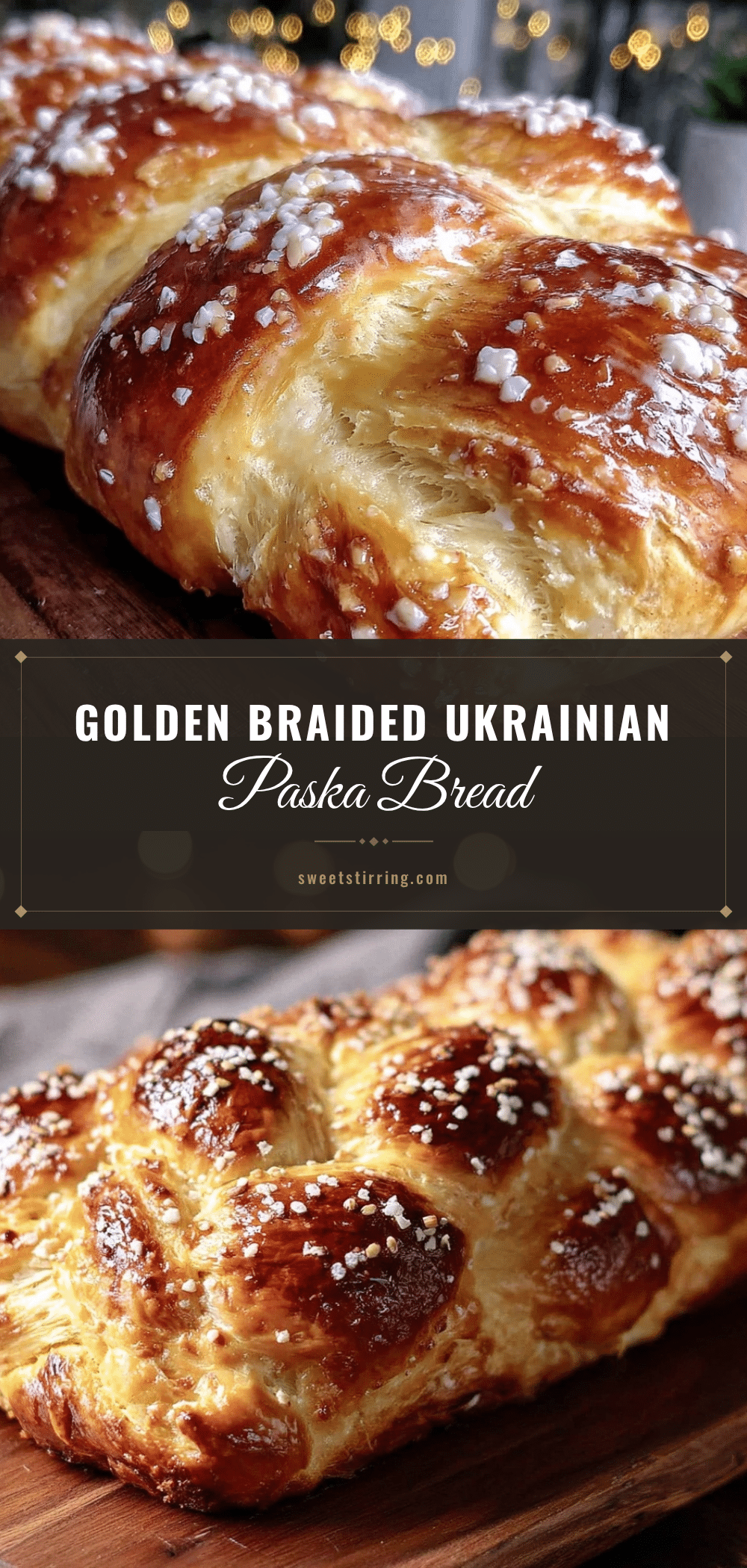
Perfect Ukrainian Paska Braided Easter Bread Recipe with Saffron Glow
A traditional Ukrainian Easter bread with a beautiful saffron glow, featuring a soft, slightly sweet crumb and a tender, braided texture. This recipe is approachable, comforting, and perfect for holiday celebrations.
- Prep Time: 30 minutes
- Cook Time: 30-35 minutes
- Total Time: 2 hours 30 minutes
- Yield: 12 servings 1x
- Category: Bread
- Cuisine: Ukrainian
Ingredients
- 4 cups (480g) all-purpose flour, sifted
- 2 ¼ teaspoons active dry yeast (one packet)
- 1 cup (240ml) whole milk, warmed to about 110°F (43°C)
- ½ cup (100g) granulated sugar
- ½ cup (115g) unsalted butter, softened
- 4 large eggs, room temperature (3 for dough, 1 for egg wash)
- ¼ teaspoon saffron threads, soaked in 2 tablespoons warm milk for 10 minutes
- 1 teaspoon salt
- 1 teaspoon vanilla extract
- Optional: ½ cup raisins or dried fruit, soaked in warm water for 10 minutes and drained
Instructions
- Activate the yeast: In a small bowl, combine the warm milk (about 110°F / 43°C) with 1 tablespoon of sugar and the active dry yeast. Let it sit for 5-10 minutes until foamy and bubbly.
- Soak the saffron: Place the saffron threads in 2 tablespoons of warm milk and set aside for at least 10 minutes.
- Mix wet ingredients: In a large mixing bowl, whisk together the eggs (reserve one for egg wash), remaining sugar, softened butter, vanilla extract, and salt. Stir in the saffron milk along with its threads.
- Combine dough: Add the activated yeast mixture to the wet ingredients and stir gently to combine. Gradually add the sifted flour, about 1 cup at a time, mixing until a rough dough forms.
- Knead the dough: Turn the dough onto a lightly floured surface and knead for about 8-10 minutes until smooth and elastic. Adjust flour or milk as needed to achieve a slightly tacky but not sticky dough.
- First rise: Place the dough in a lightly greased bowl, cover with a clean towel or plastic wrap, and let rise in a warm spot for 1 to 1.5 hours, or until doubled in size.
- Optional add-ins: If using raisins, fold them gently into the risen dough.
- Shape the braid: Punch down the dough, divide into three equal ropes about 16 inches long. Braid the ropes tightly but gently, pinch ends to seal, and tuck under to form a neat oval or circle.
- Second rise: Place the braided dough on a parchment-lined baking sheet, cover, and let rise for 30-45 minutes until puffed but not doubled.
- Prepare egg wash: Beat the reserved egg with 1 tablespoon of water. Brush gently over the braid.
- Bake: Preheat oven to 350°F (175°C). Bake the Paska for 30-35 minutes until deep golden brown. Tent with foil if browning too fast.
- Cool and enjoy: Let the bread cool completely on a wire rack before slicing.
Notes
Use fresh, aromatic saffron for best flavor and color. If saffron is unavailable, turmeric can be used for color but flavor will differ. Knead dough until smooth and elastic to avoid dense bread. Let dough rise in a warm spot. Egg wash gives a shiny golden crust. Tent with foil if bread browns too quickly.
Nutrition
- Serving Size: 1 slice (1/12 of loa
- Calories: 250
- Fat: 7
- Carbohydrates: 40
- Protein: 6
Keywords: Ukrainian Paska, Easter bread, braided bread, saffron bread, traditional bread, holiday bread, homemade bread