Love this? Save it for later!
Share the inspiration with your friends
The summer I decided to finally get serious about my morning routine, I wasn’t expecting a smoothie bowl to become the highlight of my day. It was a typical Thursday at the local farmer’s market, and while I was scanning the stalls for something fresh, the quiet guy who runs the little tropical fruit stand—yeah, the one you’d never peg as a breakfast guru—started chatting about this “mango pineapple smoothie bowl” he swore by. I mean, who’d think a guy selling coconuts and papayas would drop a recipe that’s both healthy and protein-packed?
He pulled out a crumpled index card, all stained and worn from use, and explained how the combination of mango and pineapple with a scoop of protein powder made the perfect, energizing breakfast. Honestly, I was skeptical at first, but the way he described the creamy texture and bright tropical flavors sounded like something I needed to try. I forgot my shopping list in the excitement, made a mess knocking over a basket of bananas, and left with both fruit and that recipe card tucked in my bag.
Since then, the Healthy High-Protein Mango Pineapple Smoothie Bowl has become my go-to morning treat. It’s refreshing, filling, and surprisingly simple to whip up. Maybe you’ve been there—looking for something that feels like a treat but actually powers you through the day. Let me tell you, this recipe stays with you—not just for the flavor, but because it’s one of those rare breakfasts that feels like a little tropical vacation right in your own kitchen.
Why You’ll Love This Recipe
After trying countless smoothie bowls, I can confidently say this Healthy High-Protein Mango Pineapple Smoothie Bowl stands out for so many reasons. It’s been tested in my kitchen multiple times, with tweaks to get the perfect balance of fruit sweetness and protein power.
- Quick & Easy: Ready in under 10 minutes, making it perfect for busy mornings or last-minute breakfasts.
- Simple Ingredients: Uses common pantry and freezer staples, so you won’t need to hunt down anything exotic.
- Perfect for Breakfast or Post-Workout: The high-protein content helps fuel your muscles and keep you full till lunch.
- Crowd-Pleaser: Kids and adults both love the tropical flavors and creamy texture.
- Unbelievably Delicious: The natural sweetness of mango and pineapple combined with creamy yogurt and protein powder creates a flavor and texture combo that’s just right.
What makes this recipe different? Well, I blend in a little Greek yogurt for creaminess and a scoop of vanilla protein powder that doesn’t overpower the fruit. This isn’t just a smoothie bowl; it’s a thoughtfully crafted, nutrient-packed breakfast that feels indulgent without the guilt. Honestly, it’s the kind of recipe that makes you close your eyes after the first bite, savoring that perfect tropical burst while knowing you’re doing something good for your body.
What Ingredients You Will Need
This recipe uses simple, wholesome ingredients to deliver bold flavor and satisfying texture without the fuss. Most of these you probably already have in your kitchen or can find at your local market.
- Frozen Mango Chunks (about 1 cup / 150g) – adds natural sweetness and creaminess
- Frozen Pineapple Chunks (1 cup / 150g) – for that bright tropical punch
- Greek Yogurt (½ cup / 120ml, plain or vanilla) – adds creaminess and extra protein (I recommend Fage or Chobani for best texture)
- Vanilla Protein Powder (1 scoop / ~30g) – choose a clean, plant-based or whey option depending on your preference; this helps boost the protein content
- Unsweetened Almond Milk (½ cup / 120ml) – to blend the smoothie to just the right thickness (use dairy-free milk if needed)
- Chia Seeds (1 tablespoon) – optional, for added fiber and omega-3s
- Honey or Maple Syrup (1 teaspoon, optional) – if you like it sweeter, but often the fruit is enough
- Fresh Mango and Pineapple Slices – for topping and extra texture
- Granola or Toasted Coconut Flakes – optional toppings to add crunch
Feel free to swap frozen fruit for fresh when in season, or use frozen berries instead for a different flavor twist. Almond milk keeps it light, but regular milk or oat milk work just fine too. If you’re gluten-free or avoiding grains, pick a nut-based granola topping or skip it altogether.
Equipment Needed
- High-Speed Blender: Essential for getting that smooth, creamy texture without chunks. I use a Vitamix, but a Ninja or NutriBullet works well too.
- Measuring Cups and Spoons: For precise ingredient amounts — especially important with protein powder and liquids.
- Smoothie Bowls or Wide, Shallow Bowls: Helps with the presentation and makes it easier to add toppings.
- Spatula or Spoon: For scraping the sides of the blender and stirring toppings in.
If you’re on a budget, smaller personal blenders still do the job, just blend in smaller batches. Also, keeping your frozen fruit pre-portioned in ziplock bags saves prep time. Maintenance tip: clean your blender right after use to avoid any lingering smells or tough-to-remove residue.
Preparation Method
- Gather all ingredients: Measure out 1 cup frozen mango, 1 cup frozen pineapple, ½ cup Greek yogurt, 1 scoop vanilla protein powder, ½ cup almond milk, and optional chia seeds and sweetener. This prep takes about 2 minutes.
- Start blending: Add the frozen mango and pineapple chunks to the blender first. This helps create a thick base without overloading your blender blades.
- Add wet ingredients: Pour in the Greek yogurt and almond milk. The yogurt adds creaminess while the milk helps loosen the mixture just enough to blend smoothly. Blend on high for 30 seconds.
- Incorporate protein powder and chia seeds: Add your scoop of protein powder and chia seeds now, then blend again for 15-20 seconds until fully mixed.
- Check texture: The smoothie should be thick enough to eat with a spoon but not too stiff. If it’s too thick, add a splash more almond milk; if too thin, toss in a few more frozen fruit pieces and pulse a couple of times.
- Sweeten as needed: Taste your smoothie bowl. If you want it sweeter, add a teaspoon of honey or maple syrup and blend for 5 seconds.
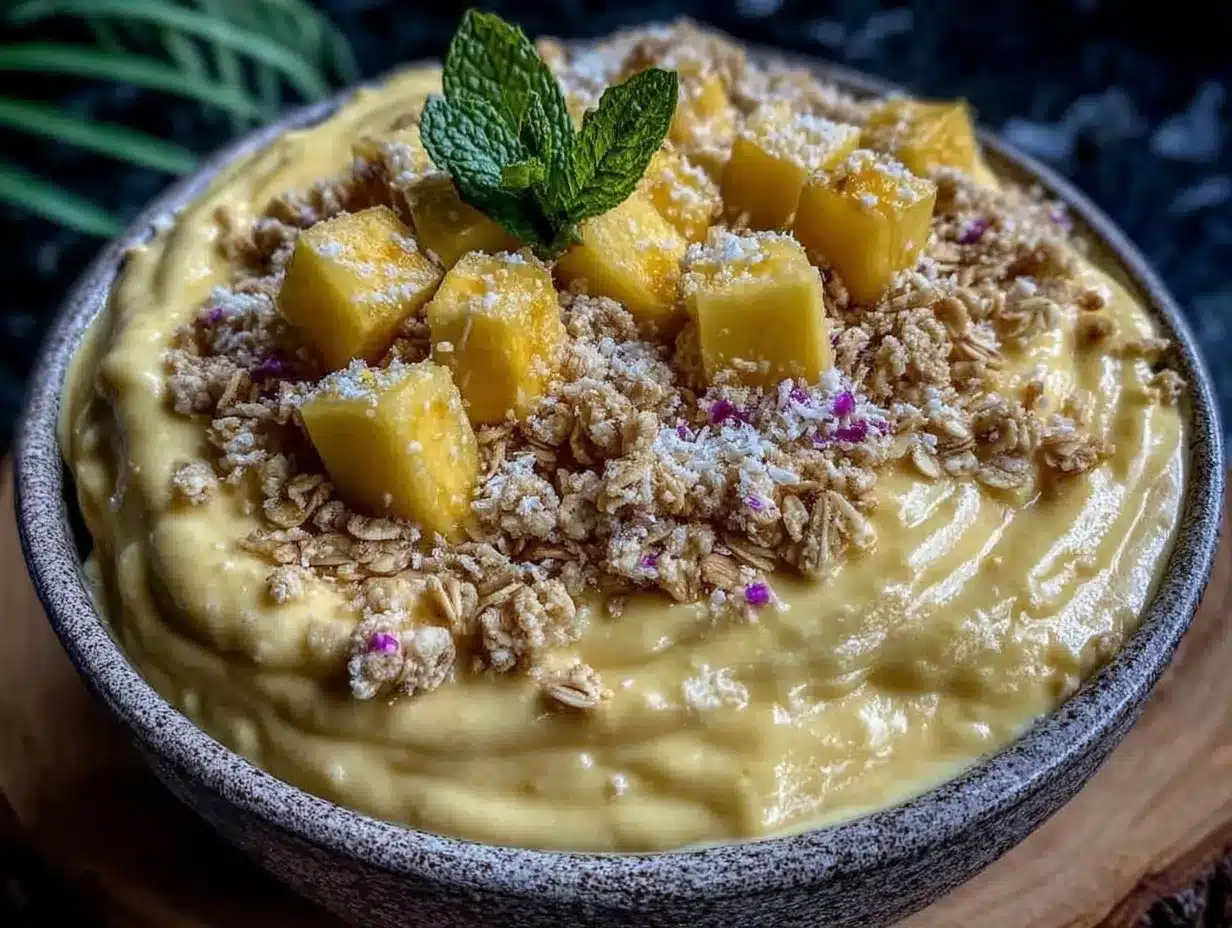
- Pour and decorate: Pour the smoothie mixture into your bowl. Top with fresh mango and pineapple slices, a sprinkle of granola or toasted coconut flakes, and a few chia seeds for an eye-catching finish.
- Enjoy immediately: This bowl is best fresh, but if you need to hold it, cover and refrigerate for up to 2 hours. Stir gently before eating.
Pro tip: If your blender struggles with frozen fruit, let the chunks thaw for 5 minutes before blending. Also, I like to prep toppings while the smoothie blends to save time—multitasking for the win!
Cooking Tips & Techniques
Getting the right texture is key for a smoothie bowl, and honestly, it can take a few tries to nail your personal preference. I learned that starting with frozen fruit at the bottom helps the blender blades work efficiently.
One mistake I used to make was adding too much liquid upfront—then my smoothie bowl was more like a drink, which defeats the purpose. Add liquids slowly and blend in stages.
Using Greek yogurt is a game changer—it boosts protein and gives that creamy mouthfeel you want. If you’re dairy-free, coconut or almond yogurt works well, but the texture changes a bit.
Timing matters, too. If you’re making this post-workout, blend it right after your session so it’s fresh and cold. If prepping ahead, store toppings separately to keep them crunchy.
Also, don’t underestimate the power of toppings—they add texture and flavor contrast. Toasted coconut flakes or a crunchy granola with nuts add that satisfying bite that makes you savor every spoonful.
Variations & Adaptations
- Dairy-Free Version: Swap Greek yogurt for coconut or almond yogurt and use plant-based protein powder.
- Green Boost: Add a handful of fresh spinach or kale for extra nutrients without altering the tropical flavor much.
- Berry Twist: Substitute half the mango or pineapple with frozen berries for a different flavor and antioxidant boost.
- Superfood Power: Mix in a teaspoon of spirulina or matcha powder for an energizing green smoothie bowl.
- Nut Butter Addition: Stir in a tablespoon of almond or peanut butter for added richness and healthy fats.
Personally, I’ve tried adding a little fresh ginger for a zingy kick. It’s unexpected but really refreshing. Also, this recipe adapts nicely if you prefer it thinner—just add more milk and enjoy it as a tropical smoothie drink instead.
Serving & Storage Suggestions
Serve your Healthy High-Protein Mango Pineapple Smoothie Bowl chilled, ideally right after blending for the best texture and flavor. Presentation-wise, a wide bowl shows off the colorful toppings beautifully—think bright mango slices, golden pineapple, and a sprinkle of toasted coconut or crunchy granola.
This bowl pairs wonderfully with a hot cup of green tea or a fresh-pressed citrus juice for a balanced morning vibe. If you’re planning a brunch, serve alongside light avocado toast or a simple egg dish.
To store, cover the smoothie bowl tightly with plastic wrap or a reusable lid and refrigerate for up to 24 hours. The texture thickens and flavors mellow with time, so give it a quick stir before eating. Avoid freezing once blended, as it will become icy and lose its creamy texture.
If you have leftovers of the base smoothie (before adding toppings), you can freeze it in ice cube trays and blend fresh cubes for a quick smoothie next time.
Nutritional Information & Benefits
This Healthy High-Protein Mango Pineapple Smoothie Bowl packs roughly 300-350 calories per serving, with about 25 grams of protein depending on your protein powder choice. It’s rich in vitamins C and A thanks to the tropical fruits, which support immune health and skin vitality.
The Greek yogurt and protein powder provide muscle-building amino acids, while chia seeds add fiber and healthy omega-3 fats. Plus, this recipe is naturally gluten-free and can be made dairy-free easily.
As someone who values balanced nutrition, this bowl hits the trifecta of taste, texture, and wholesome ingredients. It’s a satisfying way to start the day or refuel after exercise without feeling heavy.
Conclusion
This Healthy High-Protein Mango Pineapple Smoothie Bowl is more than just a pretty breakfast—it’s a delicious, nourishing way to fuel your mornings or power through the afternoon slump. Whether you’re new to smoothie bowls or a seasoned fan, this recipe’s tropical flavors and creamy texture offer something fresh and satisfying.
Feel free to tweak the ingredients and toppings to match your taste and dietary needs—maybe add a little more pineapple for zing or swap in your favorite protein powder. I keep coming back to this recipe because it reminds me of that unexpected chat at the farmer’s market and how simple ingredients can surprise you.
If you try it, I’d love to hear your twists or favorite toppings—share your experience in the comments below and let’s keep the tropical vibe going!
FAQs
- Can I use fresh fruit instead of frozen? Yes! Fresh mango and pineapple work well, but you might want to add a few ice cubes to keep the smoothie bowl thick and cold.
- What protein powder works best? Vanilla-flavored whey or plant-based powders blend nicely without overpowering the fruit flavors.
- Can I prepare this smoothie bowl the night before? You can prepare the base and store it in the fridge overnight, but add toppings fresh before serving to keep them crunchy.
- Is this recipe suitable for a vegan diet? Yes, if you use plant-based protein powder and dairy-free yogurt.
- What if I don’t have Greek yogurt? You can substitute with regular yogurt or coconut yogurt, though the protein content and texture might differ slightly.
For a taste experience that’s both healthy and indulgent, this recipe stands out. If you enjoy recipes with fresh fruit and protein, you might also appreciate my take on crispy garlic chicken or the vibrant flavors in a tropical fruit salad.
Pin This Recipe!
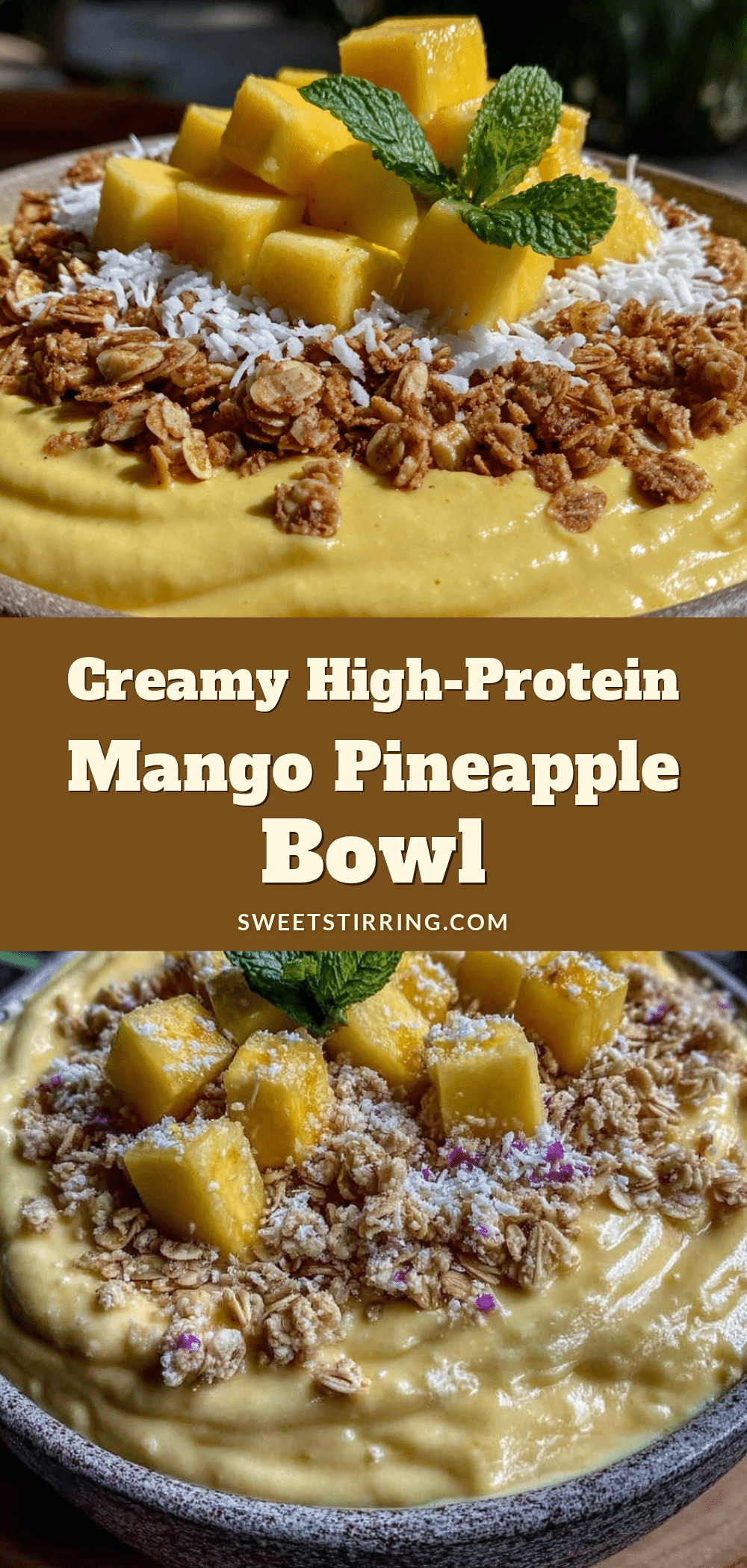
Healthy High-Protein Mango Pineapple Smoothie Bowl
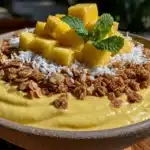
A refreshing and protein-packed tropical smoothie bowl featuring mango, pineapple, Greek yogurt, and vanilla protein powder. Perfect for a quick breakfast or post-workout fuel.
- Prep Time: 5 minutes
- Cook Time: 5 minutes
- Total Time: 10 minutes
- Yield: 1 serving 1x
- Category: Breakfast
- Cuisine: Tropical
Ingredients
- 1 cup frozen mango chunks (about 150g)
- 1 cup frozen pineapple chunks (about 150g)
- ½ cup Greek yogurt (120ml, plain or vanilla)
- 1 scoop vanilla protein powder (~30g)
- ½ cup unsweetened almond milk (120ml)
- 1 tablespoon chia seeds (optional)
- 1 teaspoon honey or maple syrup (optional)
- Fresh mango and pineapple slices (for topping)
- Granola or toasted coconut flakes (optional, for topping)
Instructions
- Gather all ingredients: Measure out 1 cup frozen mango, 1 cup frozen pineapple, ½ cup Greek yogurt, 1 scoop vanilla protein powder, ½ cup almond milk, and optional chia seeds and sweetener.
- Add the frozen mango and pineapple chunks to the blender first to create a thick base.
- Pour in the Greek yogurt and almond milk. Blend on high for 30 seconds.
- Add the protein powder and chia seeds, then blend again for 15-20 seconds until fully mixed.
- Check the texture; if too thick, add a splash more almond milk; if too thin, add a few more frozen fruit pieces and pulse a couple of times.
- Taste and add honey or maple syrup if desired, blending for an additional 5 seconds.
- Pour the smoothie mixture into a bowl and top with fresh mango and pineapple slices, granola or toasted coconut flakes, and a few chia seeds.
- Enjoy immediately or cover and refrigerate for up to 2 hours, stirring gently before eating.
Notes
If blender struggles with frozen fruit, let chunks thaw for 5 minutes before blending. Add liquids slowly and blend in stages to achieve desired texture. Use dairy-free yogurt and plant-based protein powder for vegan or dairy-free versions. Prepare toppings while blending to save time. Store smoothie bowl covered in fridge up to 24 hours; avoid freezing after blending.
Nutrition
- Serving Size: 1 bowl (about 12-14
- Calories: 300350
- Sugar: 25
- Sodium: 100
- Fat: 5
- Saturated Fat: 1
- Carbohydrates: 35
- Fiber: 6
- Protein: 25
Keywords: smoothie bowl, mango, pineapple, high protein, healthy breakfast, tropical, Greek yogurt, protein powder