Love this? Save it for later!
Share the inspiration with your friends
My college roommate, Sarah, asked why I couldn’t just roast the squash with the seeds still inside. I started to explain why that wouldn’t work — then stopped. It was a Tuesday evening in November, the kind where the wind rattles the windowpanes and you’re desperate for something warm. I was in the middle of my usual ritual: peeling, cubing, and meticulously scraping out the seeds before roasting. It takes time. It’s messy. I thought it was the only way to get a clean, sweet flavor.
Sarah just shrugged and tossed a whole, unpeeled butternut squash into the oven. She said the skin protects the flesh from drying out and that the seeds release oils that baste the meat from the inside. Honestly, I thought she was joking. I mean, roasted seeds are great, but cooking them *inside* the vegetable? It sounded like a recipe for mush. But I was tired. I was also curious. So, I let her take the lead.
When we pulled the roasting pan out, the squash was soft. The skin had blistered and browned. I cut it open, expecting a soggy, seed-filled disaster. Instead, the flesh was incredibly tender, and the seeds had loosened, sliding out in large, oily clumps. More importantly, the flavor was deeper. Richer. There was a nutty sweetness that I had never achieved with my careful, separate roasting method. I felt a little sheepish admitting it, but she was right. The “lazy” way was actually the superior way.
That moment changed how I make soup. It taught me that sometimes, the most intuitive approach is the right one. This creamy maple roasted butternut squash soup isn’t just about the ingredients; it’s about trusting the process. It’s about letting the vegetable do the work for you. I’ve made this soup dozens of times since that night, and it’s become my go-to for chilly evenings. Maybe you’ve been there too, stuck in a rut of “how it’s always been done,” only to discover a better path. This recipe stays with me because it reminds me that cooking doesn’t have to be complicated to be delicious.
Why You’ll Love This Recipe
This recipe is the ultimate comfort food, but it’s also surprisingly sophisticated. After years of testing different methods, from boiling to steaming, I can confidently say that roasting is the only way to go. The dry heat of the oven caramelizes the natural sugars in the squash, creating a depth of flavor that boiling simply can’t match. This isn’t just a soup; it’s a hug in a bowl.
- Quick & Easy: While roasting takes time, active prep is minimal. You can toss it together in under 15 minutes, making it perfect for busy weeknights when you want something wholesome without the stress.
- Simple Ingredients: No fancy grocery trips needed. You likely already have onions, garlic, broth, and maple syrup in your kitchen. This recipe relies on pantry staples to deliver bold flavor.
- Perfect for Fall: The combination of earthy squash and sweet maple is the definition of autumn. It’s great for cozy dinners, holiday potlucks, or even a light lunch.
- Crowd-Pleaser: Even picky eaters love this. The texture is silky smooth, and the sweetness is balanced by savory herbs. Kids and adults alike always ask for seconds.
- Unbelievably Delicious: The texture and flavor combo is next-level comfort food. The maple syrup adds a subtle caramel note that elevates the entire dish.
What makes this recipe different from the rest is the roasting technique. By roasting the squash whole (or at least with the skin on), we preserve more nutrients and flavor. Then, blending it with a touch of coconut milk or cream creates an ultra-smooth consistency without being heavy. It’s the kind of soup that makes you close your eyes after the first bite. It’s comfort food reimagined—healthier, faster, but with the same soul-soothing satisfaction. Perfect for impressing guests without stress, or turning a simple meal into something memorable.
What Ingredients You Will Need
This recipe uses simple, wholesome ingredients to deliver bold flavor and satisfying texture without the fuss. The key is quality. Since there are so few components, each one needs to shine. I recommend using organic butternut squash if possible, as it tends to be sweeter and less fibrous. You can find these at most local grocery stores or farmers’ markets during the fall.
For the Roasted Base
- Butternut Squash: One large squash, halved lengthwise. Look for one that feels heavy for its size, which indicates moisture content.
- Extra Virgin Olive Oil: Two tablespoons. I prefer California Olive Ranch for its balanced flavor profile.
- Garlic Cloves: Four to five cloves, peeled. Fresh is best here; jarred garlic lacks the necessary punch.
- Yellow Onion: One medium onion, quartered. Leave the skin on while roasting to prevent it from burning.
- Thyme Sprigs: Three to four fresh sprigs. Fresh thyme adds a floral, earthy note that dried thyme can’t replicate.
For the Soup Body
- Vegetable or Chicken Broth: Four cups. Use a low-sodium version so you can control the saltiness. Imagine Foods is a reliable brand.
- Maple Syrup: Two tablespoons. Must be 100% pure maple syrup. Avoid pancake syrup, which is just corn syrup with flavoring.
- Heavy Cream or Coconut Milk: Half a cup. For a richer texture, use heavy cream. For a dairy-free option, full-fat coconut milk works beautifully.
- Apple Cider Vinegar: One teaspoon. This adds a necessary acidity to cut through the sweetness.
- Salt and Black Pepper: To taste. Kosher salt is preferred for even distribution.
If you want to get creative, you can add a pinch of nutmeg or cinnamon, but I find the maple and thyme are enough. For a gluten-free option, this recipe is naturally gluten-free. If you’re watching your sugar intake, you can reduce the maple syrup to one tablespoon, though the flavor profile will be less complex.
Equipment Needed
You don’t need a lot of fancy gadgets to make this soup. A large roasting pan or two sheet pans are essential. I use a rimmed baking sheet because it prevents any oils from spilling over. A high-speed blender is ideal for achieving that silky smooth texture, but a standard blender or even an immersion blender will work fine. If you’re using a standard blender, be careful when blending hot liquids; remove the center cap and cover with a towel to let steam escape.
A large stockpot is needed for simmering the soup. If you don’t have one, a deep Dutch oven works just as well. I also recommend a fine-mesh sieve if you want an extra-smooth consistency, though it’s optional. For budget-friendly options, any sturdy metal sheet pan and a basic blender will suffice. Just make sure your blender is clean and dry before starting.
Preparation Method
- Preheat and Prep: Preheat your oven to 400°F (200°C). Line a large baking sheet with parchment paper for easy cleanup. This step takes about 5 minutes.
- Roast the Squash: Cut the butternut squash in half lengthwise. Scoop out the seeds and stringy pulp. Place the halves cut-side down on the baking sheet. Drizzle with olive oil and sprinkle with salt and pepper. Roast for 40-45 minutes, or until the flesh is tender when pierced with a fork. This is the most critical step for flavor development.
- Roast the Aromatics: While the squash is roasting, place the onion quarters and peeled garlic cloves on the same pan (or a second pan). Drizzle with a little more oil and roast for the last 15 minutes. This concentrates their sweetness.
- Combine: Once the squash is cool enough to handle, scoop the flesh into a large stockpot. Add the roasted onions and garlic. Pour in the vegetable broth. Bring to a boil over medium-high heat, then reduce to a simmer.
- Simmer: Let the mixture simmer for 10 minutes. This allows the flavors to meld together. The kitchen will smell amazing by this point.
- Blend: Remove from heat. Carefully transfer the soup to a blender. Add the maple syrup, cream (or coconut milk), apple cider vinegar, and fresh thyme leaves. Blend on high until completely smooth. This should take about 1-2 minutes.
- Season and Serve: Taste the soup. Add more salt, pepper, or maple syrup if needed. Return to the pot and warm through gently. Do not boil after blending, or the texture may separate.
Cooking Tips & Techniques
One common mistake is under-roasting the squash. If the squash isn’t fully caramelized, the soup will taste flat. Don’t rush this step. The edges should be browned, almost burnt in spots. That’s where the flavor is. Another tip is to roast the aromatics with the squash. This infuses the onions and garlic with the same smoky, sweet notes as the squash, creating a more cohesive flavor profile.
When blending, be cautious. Hot soup expands. If using a standard blender, blend in small batches. Always vent the lid to prevent pressure buildup. If you’re using an immersion blender, you can blend directly in the pot, which saves time and dishes. Just make sure the blender is fully submerged to avoid splattering.
For consistency, if the soup is too thick, add more broth, a quarter cup at a time. If it’s too thin, let it simmer a bit longer to reduce. Remember, the soup will thicken slightly as it cools. Adjust seasonings at the end, as blending can dilute the saltiness.
Variations & Adaptations
This recipe is versatile. For a spicy kick, add a pinch of cayenne pepper or a diced jalapeño while roasting. For a vegetarian option, ensure your broth is vegetable-based. If you’re gluten-free, this recipe is naturally safe. For a low-carb version, skip the maple syrup and use a sugar-free alternative, though the flavor will be less complex.
You can also swap the thyme for rosemary for a more piney flavor. Or add a dash of curry powder for an Indian-inspired twist. I once tried adding a sweet potato to the mix, which made the soup even creamier and sweeter. It was a hit. Feel free to experiment with different herbs and spices to suit your taste.
Serving & Storage Suggestions
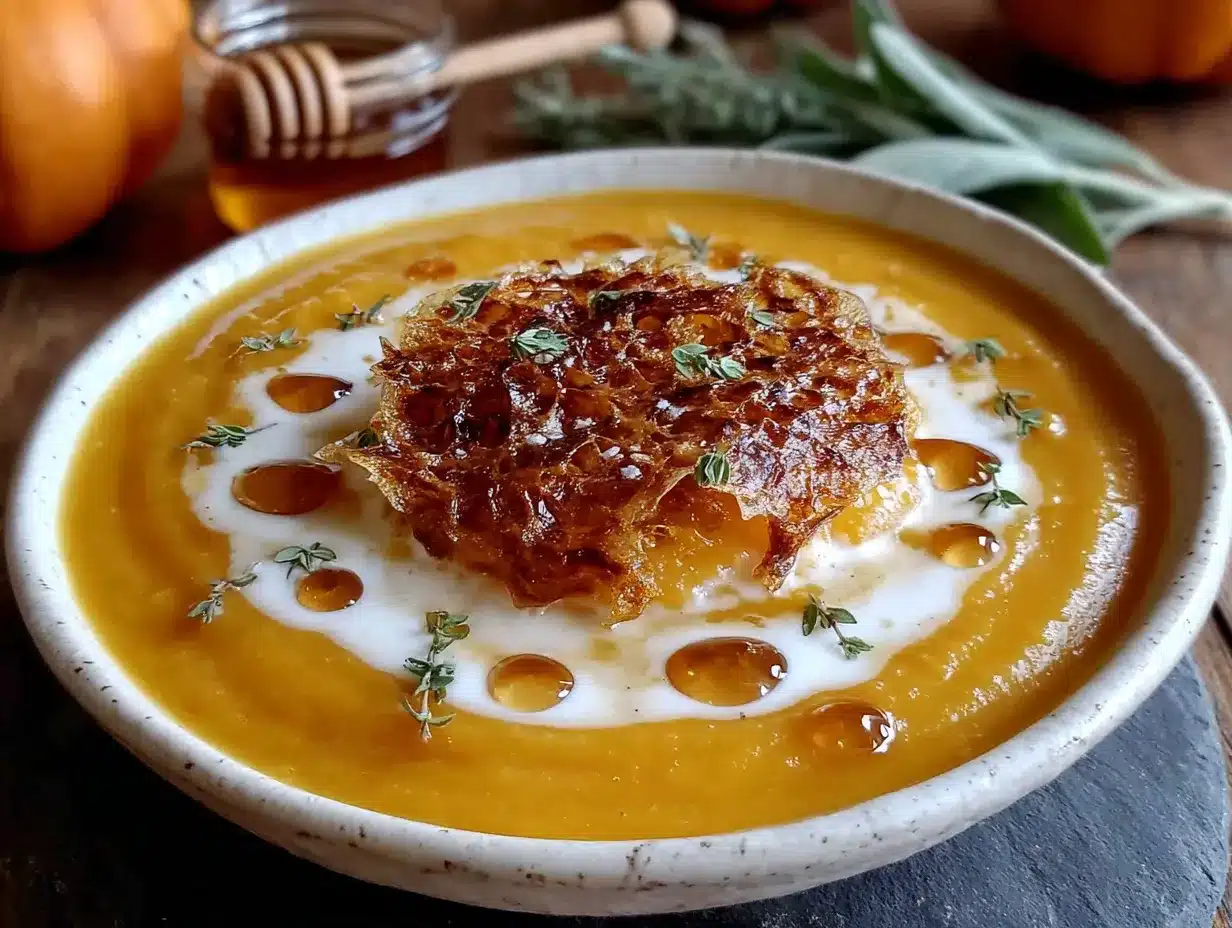
Serve this soup hot, garnished with a drizzle of cream, toasted pumpkin seeds, or fresh chives. It pairs beautifully with crusty bread or a green salad. For storage, let the soup cool completely before transferring to an airtight container. It can be refrigerated for up to 4 days or frozen for up to 3 months.
To reheat, warm gently on the stove over low heat, stirring occasionally. If frozen, thaw in the refrigerator overnight before reheating. The flavors often deepen after a day or two, making it even better the next day.
Nutritional Information & Benefits
This soup is rich in vitamins A and C, thanks to the butternut squash. It’s also a good source of fiber and potassium. The maple syrup adds natural sweetness, but use it in moderation. For a dairy-free version, use coconut milk, which adds healthy fats. This soup is suitable for gluten-free and vegetarian diets. It’s a nutritious, warming meal that supports immune health and digestion.
Conclusion
This creamy maple roasted butternut squash soup is a fall staple for a reason. It’s easy to make, incredibly delicious, and perfect for sharing. I love how simple it is yet how comforting it feels. Give it a try and see how it becomes your new favorite. Don’t forget to leave a comment below with your thoughts or any variations you tried. Happy cooking!
Frequently Asked Questions
Can I use frozen butternut squash?
Yes, you can use frozen squash, but it may release more water during roasting. Pat it dry before seasoning to ensure proper caramelization.
Is this soup dairy-free?
Yes, if you use coconut milk instead of heavy cream. The recipe is easily adaptable for dairy-free diets.
Can I make this in a slow cooker?
Yes. Roast the squash and aromatics first, then add them to the slow cooker with broth. Cook on low for 6-8 hours. Blend before serving.
Why is my soup not smooth?
Ensure you are blending for a full 1-2 minutes. If using a standard blender, blend in batches. For extra smoothness, strain the soup through a sieve.
Can I freeze this soup?
Absolutely. Freeze in portions for easy meals later. Thaw in the fridge and reheat gently. The texture may change slightly, but it will still be delicious.
Pin This Recipe!
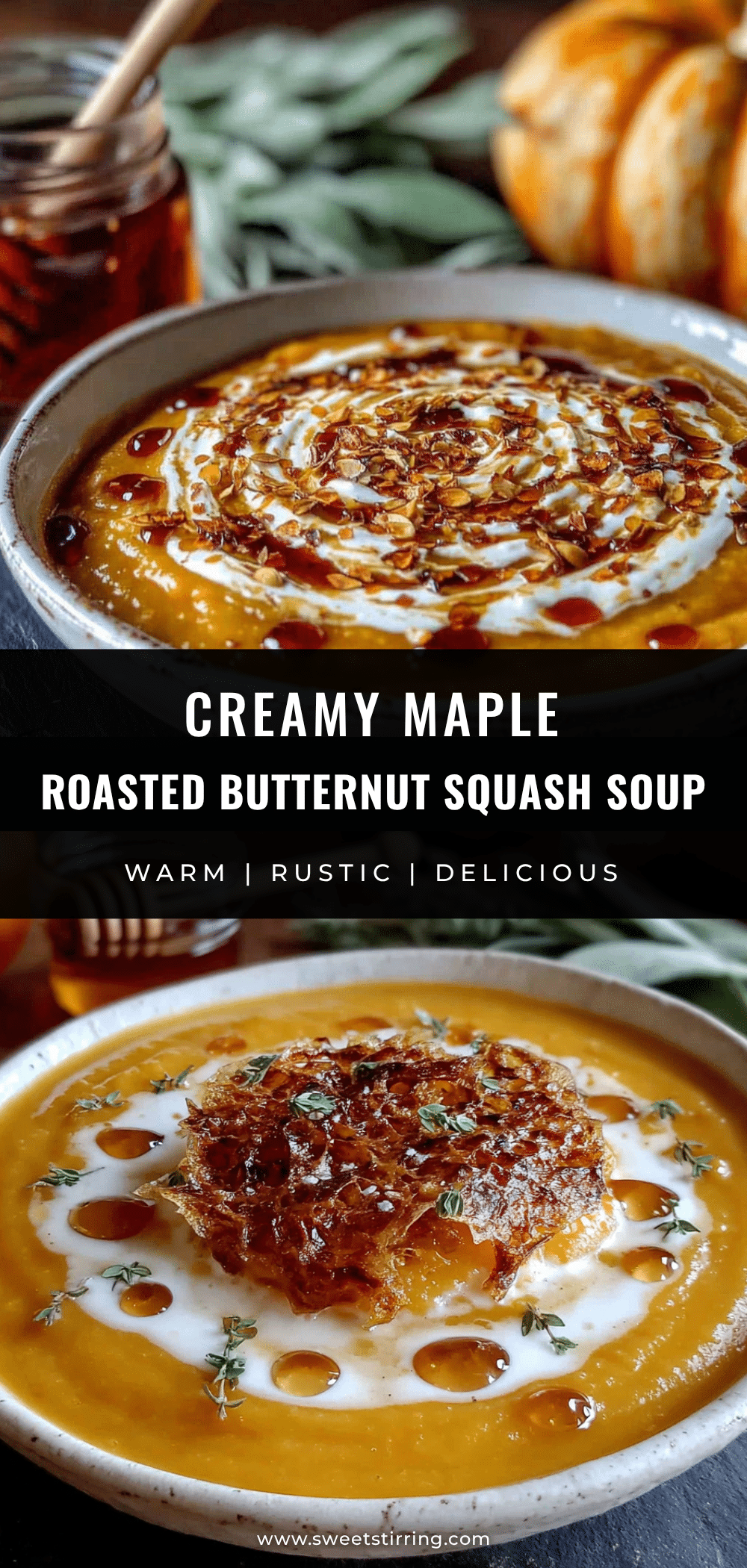
Creamy Maple Roasted Butternut Squash Soup

A comforting and sophisticated fall soup made by roasting butternut squash whole to preserve flavor and nutrients, then blending it with maple syrup, cream, and aromatic herbs for a silky smooth texture.
- Prep Time: 15 minutes
- Cook Time: 55 minutes
- Total Time: 70 minutes
- Yield: 4 servings 1x
- Category: Main Course
- Cuisine: American
Ingredients
- 1 large butternut squash, halved lengthwise
- 2 tablespoons extra virgin olive oil
- 4–5 garlic cloves, peeled
- 1 medium yellow onion, quartered
- 3–4 fresh thyme sprigs
- 4 cups vegetable or chicken broth (low-sodium)
- 2 tablespoons pure maple syrup
- 1/2 cup heavy cream or full-fat coconut milk
- 1 teaspoon apple cider vinegar
- Salt and black pepper to taste
Instructions
- Preheat oven to 400°F (200°C). Line a large baking sheet with parchment paper.
- Cut the butternut squash in half lengthwise and scoop out the seeds and pulp. Place halves cut-side down on the baking sheet. Drizzle with olive oil and sprinkle with salt and pepper. Roast for 40-45 minutes until tender.
- Place onion quarters and peeled garlic cloves on the same pan (or a second pan). Drizzle with a little more oil and roast for the last 15 minutes of the squash cooking time.
- Once the squash is cool enough to handle, scoop the flesh into a large stockpot. Add the roasted onions and garlic. Pour in the vegetable broth and bring to a boil over medium-high heat, then reduce to a simmer.
- Simmer the mixture for 10 minutes to allow flavors to meld.
- Remove from heat. Carefully transfer the soup to a blender. Add maple syrup, cream (or coconut milk), apple cider vinegar, and fresh thyme leaves. Blend on high until completely smooth.
- Taste and adjust seasoning with more salt, pepper, or maple syrup if needed. Return to the pot and warm through gently without boiling.
Notes
Roasting the squash whole or with skin on preserves nutrients and flavor. If using a standard blender, vent the lid to prevent pressure buildup. The soup can be made dairy-free by using coconut milk. For a low-carb version, reduce or omit maple syrup. Soup thickens as it cools; add broth to thin if necessary.
Nutrition
- Serving Size: 1 bowl
- Calories: 280
- Sugar: 18
- Sodium: 650
- Fat: 12
- Saturated Fat: 7
- Carbohydrates: 38
- Fiber: 6
- Protein: 4
Keywords: butternut squash soup, fall recipes, creamy soup, maple syrup, vegetarian, gluten-free, comfort food, roasted vegetables