Love this? Save it for later!
Share the inspiration with your friends
“I wasn’t always great at budgeting meals,” I admitted to my coworker one rainy Thursday afternoon while we waited for the bus. She laughed and said, “You? But you always bring the best lunches!” The truth is, it took a few chaotic weeks of overspending and last-minute takeout disasters before I realized I needed a plan. That’s how this budget-friendly family meal plan for $100 weekly came to be.
One evening, after a long day juggling work and errands, I sat down with a notepad and a cup of coffee, determined to figure out how to feed my family well without breaking the bank. I scribbled ideas, made a list, and yes—accidentally spilled some coffee on it (because, honestly, multitasking isn’t my strong suit). But that messy list turned into a reliable, easy-to-follow plan that kept us nourished, satisfied, and under budget every single week.
Maybe you’ve been there, too—wondering how to stretch every dollar in the grocery cart without sacrificing flavor or variety. This meal plan isn’t about eating bland food or sticking to the same dish every night. It’s about smart choices, simple ingredients, and meals that bring everyone to the table happily. Let me tell you, this plan stuck with me because it made weekday dinners doable again, and it can do the same for you.
Why You’ll Love This Recipe
After testing and tweaking this meal plan over several months, I can confidently say it hits all the right notes for busy families and budget-conscious cooks alike. Here’s why it might become your go-to strategy for weekly meals:
- Quick & Easy: Most recipes come together in under 30 minutes, perfect for those hectic weeknights when time feels like it’s running out.
- Simple Ingredients: You probably have many of these staples in your pantry already—no fancy or expensive items needed.
- Perfect for Family Meals: Designed with crowd-pleasing flavors that both kids and adults enjoy, making dinner time less of a battle.
- Crowd-Pleaser: From hearty stews to vibrant salads, these dishes consistently get thumbs-up around my table.
- Unbelievably Delicious: Don’t let “budget-friendly” fool you—flavor and texture shine through every meal.
What sets this meal plan apart is the focus on balance—mixing proteins, veggies, and carbs in ways that feel fresh yet familiar. For example, swapping pricey cuts for affordable alternatives or using seasonal produce to maximize flavor and minimize cost. It’s not just a list of recipes; it’s a flexible blueprint that respects your time and wallet without compromising taste.
Honestly, this plan feels like a little lifeline on those chaotic days. It’s comforting and practical, making mealtime something to look forward to rather than dread. I hope it brings that same relief to your kitchen.
What Ingredients You Will Need
This budget-friendly family meal plan relies on straightforward, wholesome ingredients that work together to create satisfying meals without fuss. Many of these are pantry staples, while others are seasonal or easily substituted depending on your preferences.
- Proteins:
- Ground turkey or chicken (lean, versatile, and affordable)
- Canned beans (black beans, chickpeas, and kidney beans) – great for fiber and protein
- Eggs (large, free-range if possible)
- Frozen fish fillets (like tilapia or pollock) – budget-friendly and easy to store
- Vegetables:
- Carrots (whole or baby, great for snacks and cooking)
- Onions (yellow or white, the base of many flavorful dishes)
- Frozen mixed vegetables (peas, corn, green beans) – cost-effective and quick to use
- Seasonal fresh vegetables like zucchini, bell peppers, or spinach (adjust based on availability)
- Carbohydrates:
- Brown or white rice (bulk bags save money)
- Pasta (whole wheat or regular – budget-friendly and filling)
- Rolled oats (perfect for breakfast or baking)
- Potatoes (Russet or red, versatile for different meals)
- Dairy & Pantry Essentials:
- Milk (or dairy-free alternatives like almond or oat milk)
- Cheese (block cheddar or mozzarella – buy in bulk and shred yourself)
- Canned tomatoes (diced or crushed, great for sauces and stews)
- Olive oil or vegetable oil (for cooking and dressings)
- Basic spices: salt, pepper, paprika, garlic powder, dried herbs (oregano, basil)
- Optional Add-ons:
- Fresh herbs like parsley or cilantro (adds freshness without breaking the bank)
- Yogurt (plain, can be used for dressings or snacks)
- Lemons or limes (for zest and bright flavor)
When shopping, I recommend checking out local farmers’ markets or discount grocery stores for fresh produce deals. Brands like Great Value or Kirkland often offer quality staples at lower prices, and buying in bulk really helps stretch your dollars further.
If you’re gluten-free, swapping pasta for quinoa or gluten-free pasta is easy here. Similarly, plant-based eaters can replace the meat with extra beans or lentils without losing heartiness.
Equipment Needed
Creating this meal plan doesn’t require special or expensive kitchen tools—just the basics to keep things efficient and straightforward.
- A good-quality non-stick skillet or frying pan (10-12 inches) for sautéing and browning meats and veggies.
- A medium to large pot with a lid for boiling pasta, cooking rice, or simmering soups and stews.
- Baking sheet or casserole dish for oven meals like roasted vegetables or baked fish.
- Mixing bowls of various sizes to prep ingredients and toss salads.
- A sharp chef’s knife and a sturdy cutting board—trust me, these make chopping much easier.
- Measuring cups and spoons for accuracy, especially with spices and grains.
For those on a tight budget, consider thrift stores or online marketplaces for gently used equipment—they often have hidden gems. I once found a nearly new cast iron skillet for under $10 that’s been my go-to ever since.
If you don’t have a rice cooker, no worries—just follow stovetop instructions carefully and watch the water-to-rice ratio closely. A simple kitchen timer or smartphone alarm helps keep track of cooking times so nothing burns or overcooks.
Preparation Method
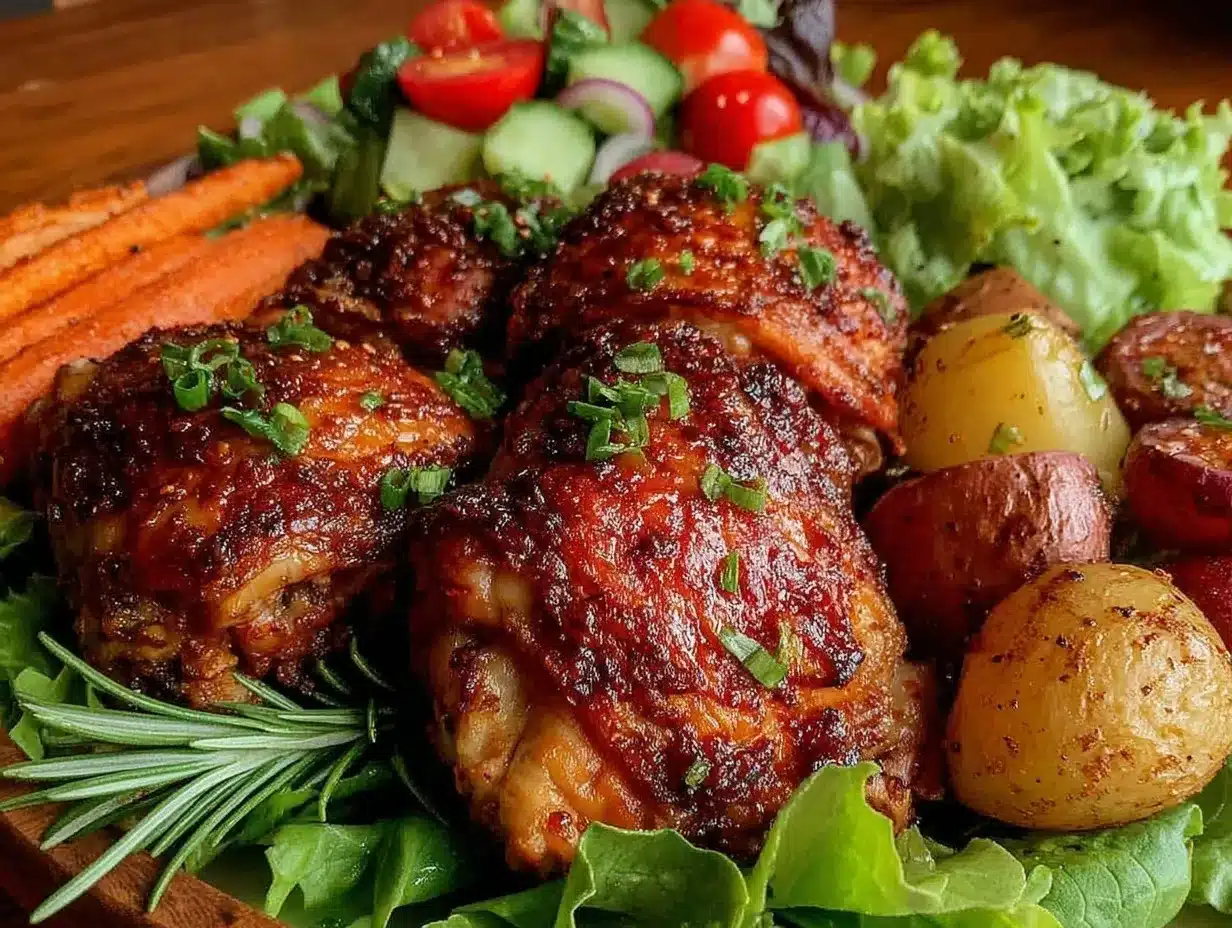
- Plan Your Weekly Menu (30 minutes): Start by selecting 5-6 main meals from the plan that balance protein, veggies, and carbs. Jot down needed ingredients and check your pantry first to avoid duplicates.
- Grocery Shopping (1-2 hours): Head to your preferred grocery store with your list. Stick to the list to keep costs down. Buying in bulk for staples like rice, beans, and oats saves money long-term.
- Prep Ingredients (45 minutes): When you get home, wash, peel, and chop vegetables you’ll need for the week. Portion out meats or proteins into meal-sized amounts and freeze what you won’t use immediately.
- Cook in Batches (1-2 hours): For efficiency, cook grains like rice or pasta in larger quantities and refrigerate leftovers. Prepare sauces or stews that keep well and can be reheated quickly.
- Assemble Meals Daily (10-15 minutes): Combine prepped ingredients with fresh touches—like a squeeze of lemon or a sprinkle of herbs—to keep meals vibrant. Heat and serve.
- Sample Recipe – Turkey & Vegetable Stir Fry:
- Heat 1 tbsp olive oil in a skillet over medium-high heat.
- Add 1 lb (450 g) ground turkey and cook until browned, about 5-7 minutes.
- Stir in 1 chopped onion and 2 cups (300 g) mixed frozen vegetables, cook 5 minutes.
- Season with 1 tsp garlic powder, 1 tsp paprika, salt and pepper to taste.
- Serve over 2 cups (370 g) cooked rice.
- Leftovers Storage: Cool meals completely before transferring to airtight containers. Use within 3-4 days or freeze for up to 3 months.
Remember, cooking times may vary slightly depending on your stove or oven. If you notice veggies getting too soft, reduce cooking time next round. Trust your senses—look for vibrant colors and tender textures as cues that your meal is ready.
Cooking Tips & Techniques
When working on a budget-friendly meal plan, a few tricks make a big difference:
- Batch Cooking: Making larger portions of staples like rice, beans, or roasted veggies means you’re not starting from scratch every day. It saves time and reduces stress.
- Ingredient Swaps: Don’t be afraid to substitute based on sales or what you have on hand. For example, canned beans instead of fresh, or frozen spinach instead of fresh leaves.
- Seasoning Smart: Simple spices go a long way. I learned the hard way that under-seasoned food quickly becomes boring, so a pinch of salt and a dash of garlic powder can totally transform a dish.
- Use All Parts: Save vegetable scraps like onion skins and carrot ends to make homemade broth. It’s free flavor and cuts down on waste.
- Don’t Overcrowd Pans: When sautéing, give ingredients room to brown nicely. Crowding causes steaming and can dull flavors.
- Multitask Wisely: While rice cooks, chop veggies or prep proteins. This keeps your workflow smooth and dinner on track.
One time, I tried to rush dinner by skipping the seasoning step—and trust me, it was a flavor flop. Since then, seasoning has become non-negotiable. You’ll get the hang of balancing spices and tastes with practice, so keep at it!
Variations & Adaptations
This meal plan is flexible enough to adjust for different tastes and dietary needs. Here are a few ideas I’ve tried and loved:
- Vegetarian Option: Swap ground turkey for extra beans and lentils. Lentil chili or bean-based tacos keep protein high and budget low.
- Seasonal Swaps: In summer, replace root veggies with fresh zucchini or summer squash. Roasted bell peppers add sweetness and color.
- Flavor Twists: Add a splash of soy sauce or a sprinkle of cumin to stir-fries for an international flair. A bit of lemon zest brightens heavier dishes.
- Gluten-Free: Use rice, potatoes, or gluten-free pasta instead of regular pasta to accommodate gluten sensitivities.
- Personal Favorite: I like adding a dollop of plain yogurt mixed with herbs as a quick sauce or dip. It makes even simple roasted veggies feel special.
Feel free to experiment with spices and ingredients that suit your family’s preferences. This plan is a starting point, not a strict rulebook.
Serving & Storage Suggestions
Serving meals at the right temperature and with a bit of flair makes all the difference. Warm dishes like stews and stir-fries taste best served hot, straight from the stove. For salads or cold sides, chill them beforehand for a refreshing contrast.
Pair these meals with simple sides: a crisp green salad, crusty bread, or fruit for dessert. Drinks like iced tea or infused water keep things light and budget-friendly.
Store leftovers in airtight containers in the fridge for up to 4 days. For longer storage, freeze portions in labeled bags or containers—great for those busy days when cooking isn’t an option. Reheat gently on the stove or microwave, adding a splash of water or broth if needed to keep moisture.
Flavors often deepen overnight, making next-day meals even tastier. I always recommend making a little extra intentionally.
Nutritional Information & Benefits
This meal plan combines protein, fiber, and essential vitamins without piling on excess calories or cost. For example, beans and lean meats deliver sustained energy, while vegetables provide antioxidants and fiber for digestion.
Many recipes here are naturally low in saturated fat and can be adapted to suit low-carb or gluten-free diets. Watch for allergens like dairy or gluten and swap accordingly—like using plant-based milk or gluten-free pasta.
From a personal wellness perspective, eating balanced meals regularly has helped me and my family stay energized and avoid midweek snack cravings. It’s comfort food with good-for-you ingredients, making it easier to stick with healthy habits.
Conclusion
Creating a budget-friendly family meal plan for $100 weekly is more than just saving money—it’s about feeding your loved ones well, reducing stress around mealtime, and reclaiming joy in the kitchen. This plan gives you a flexible, tasty framework that respects your time and wallet.
Feel free to customize based on your family’s tastes and what’s available seasonally. I love this plan because it’s practical, forgiving, and keeps my table full of smiles. Give it a try and see how it transforms your week.
If you try these recipes or have your own budget-friendly tips, please share in the comments—I’m always eager to hear how others make meal planning work for their families!
Remember, good food doesn’t have to cost a fortune. Here’s to happy, nourishing meals ahead.
FAQs
How can I stick to a $100 weekly grocery budget?
Focus on buying staple ingredients in bulk, plan meals around sales and seasonal produce, and prepare meals at home instead of ordering out. Batch cooking also helps reduce waste and cost.
Are these meals suitable for picky eaters?
Yes! The recipes use familiar flavors and simple ingredients that most kids and adults enjoy. You can adjust seasonings or swap veggies based on preferences.
Can I freeze meals from this plan?
Absolutely. Many dishes like stews, cooked grains, and roasted vegetables freeze well. Portion meals before freezing for easy reheating.
What if I don’t have time to cook every day?
Batch cooking and prepping ingredients ahead saves time on busy days. Cooking larger portions and storing leftovers means you can reheat without starting from scratch.
Is this meal plan healthy?
Yes, it balances protein, fiber, and vegetables with moderate carbs and healthy fats. You can tweak recipes to meet specific dietary needs or preferences.
Pin This Recipe!
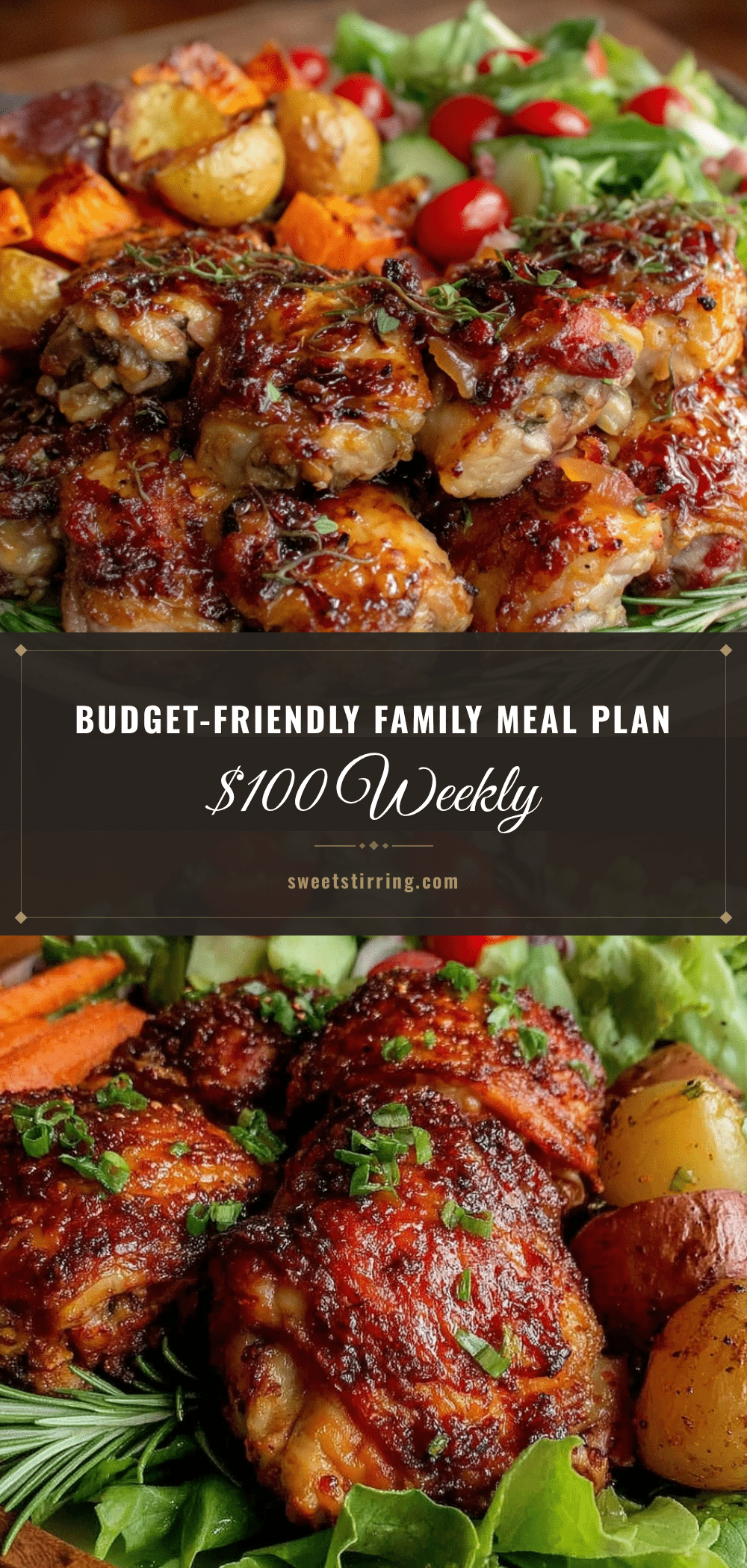
Budget-Friendly Family Meal Plan 2024 Easy Weekly Recipes Under 100 Dollars

A flexible and practical weekly meal plan designed to feed families well on a budget of $100, featuring quick, easy, and crowd-pleasing recipes using simple, wholesome ingredients.
- Prep Time: 1 hour 25 minutes
- Cook Time: 1 hour 15 minutes
- Total Time: 2 hours 40 minutes
- Yield: 4-6 servings
- Category: Main Course, Meal Plan
- Cuisine: American
Ingredients
- Ground turkey or chicken (lean, versatile, and affordable)
- Canned beans (black beans, chickpeas, and kidney beans)
- Eggs (large, free-range if possible)
- Frozen fish fillets (tilapia or pollock)
- Carrots (whole or baby)
- Onions (yellow or white)
- Frozen mixed vegetables (peas, corn, green beans)
- Seasonal fresh vegetables (zucchini, bell peppers, spinach)
- Brown or white rice
- Pasta (whole wheat or regular)
- Rolled oats
- Potatoes (Russet or red)
- Milk or dairy-free alternatives (almond or oat milk)
- Cheese (block cheddar or mozzarella)
- Canned tomatoes (diced or crushed)
- Olive oil or vegetable oil
- Basic spices: salt, pepper, paprika, garlic powder, dried herbs (oregano, basil)
- Optional: fresh herbs (parsley or cilantro), yogurt (plain), lemons or limes
Instructions
- Plan your weekly menu by selecting 5-6 main meals balancing protein, veggies, and carbs. Check your pantry to avoid duplicates. (30 minutes)
- Go grocery shopping with your list, sticking to it to keep costs down. Buy staples in bulk when possible. (1-2 hours)
- Prep ingredients by washing, peeling, and chopping vegetables. Portion meats or proteins into meal-sized amounts and freeze unused portions. (45 minutes)
- Cook in batches: prepare grains like rice or pasta in larger quantities and refrigerate leftovers. Make sauces or stews that keep well and reheat quickly. (1-2 hours)
- Assemble meals daily by combining prepped ingredients with fresh touches like lemon juice or herbs. Heat and serve. (10-15 minutes)
- Sample recipe – Turkey & Vegetable Stir Fry: Heat 1 tbsp olive oil in a skillet over medium-high heat. Add 1 lb ground turkey and cook until browned (5-7 minutes). Stir in 1 chopped onion and 2 cups mixed frozen vegetables, cook 5 minutes. Season with 1 tsp garlic powder, 1 tsp paprika, salt and pepper to taste. Serve over 2 cups cooked rice.
- Store leftovers in airtight containers. Use within 3-4 days or freeze for up to 3 months.
Notes
Batch cooking saves time and reduces stress. Substitute ingredients based on sales or dietary needs. Season well to enhance flavor. Use vegetable scraps to make broth and reduce waste. Avoid overcrowding pans to ensure proper browning. Multitask by prepping while cooking.
Nutrition
- Serving Size: Approximately 1 plat
- Calories: 0.4005
- Sugar: 48
- Sodium: 400600
- Fat: 1218
- Saturated Fat: 35
- Carbohydrates: 4560
- Fiber: 69
- Protein: 2535
Keywords: budget-friendly, family meal plan, weekly recipes, easy meals, affordable cooking, batch cooking, quick dinners, healthy family meals